
Our latest insights
Read the latest insights


Web Development
Front-End vs Back-End Web Dev: What’s the Difference?
Key differences between front-end vs back-end web development. Learn what a Full Stack Web Developer does. front-end vs back-end
The best way to understand the difference between front-end vs back-end web development is to think about your house. The part of your house that others see – for example, the way it’s painted a bright yellow, the pictures you chose to hang on your walls (perhaps you’ve always had a thing for Banksy street art) – is equivalent to front-end web development. But let’s say you go poking around in the roof, checking out the wiring, the plumbing, the electric circuitry, all the stuff happening behind the scenes – that’s like the back-end of your website.
In essence, the front-end, or “client side” of a website is where the user hangs out. It’s everything he or she sees (i.e. it happens in the browser). It includes the special font you’ve chosen, the drop-down menus, the size of the text etc. How do you put that all together? By using a combination of programming languages, including HTML, CSS and JavaScript that your computer browser controls.
The back-end, or “server side”, of a website is where the data is stored and it usually consists of three parts: a server, an application, and a database. Let’s say you want to take that trip to Hawaii. You’ve seen all the top movies featuring Hawaii – 50 First Dates, Tropic Thunder, The Descendents etc. – and now it’s time for your adventure in paradise. You open a website to book tickets and once you’ve entered the information, the website stores your information in a database that was created on a server. A database is like a massive Excel spreadsheet, but the server could be anywhere. Back-end developers need to understand databases, as well as server programming languages and architecture. If an application keeps crashing or is mind-numbingly slow or keeps throwing errors at you, it’s likely to be a back-end issue.
If you want to get all technical about it, a back-end web developer is involved with:
- Frameworks – these are libraries of server-side programming languages
- The Stack – includes the database, server-side frameworks, server and operating systems
- APIs – these structure how data is exchanged between a database and the software accessing it
So, what’s the difference?
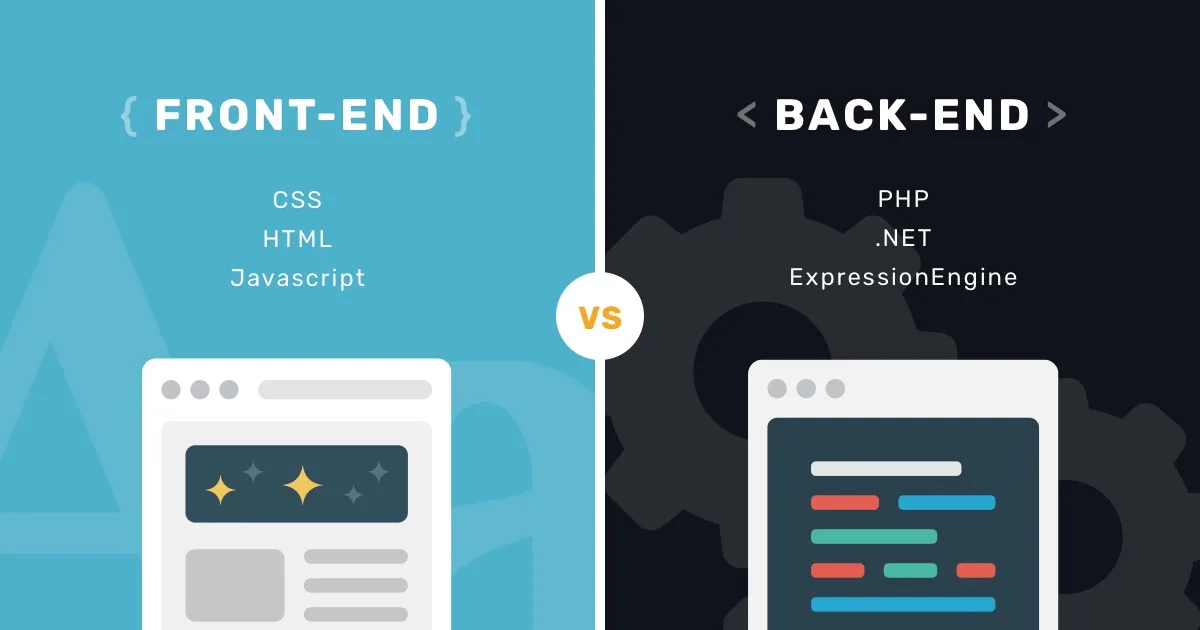
Here’s a breakdown of the key differences between front-end and back-end web development.
Responsibilities for front-end vs back-end web developers
Front-end Developers:
- Work with designers to bring mockups to delivery.
- Put together the architecture of the user experience and develop the user-facing code.
Back-end Developers:
- Give working functionality to whatever the user sees on a website.
- Security set-ups and hack preventions
- Reporting: generating statistics and analytics
- Backup
What languages should you know – front-end vs back-end web development?
Front-end Developers:
- HTML
- CSS
- Javascript (used to send requests from the browser to the back-end)
- AJAX (JavaScript + XML)
Back-end Developers:
- Database languages (including: SQL, MySQL)
- Web Server technologies (e.g. J2EE, Apache)
- Cloud computing integration (e.g. public or private cloud environments)
- Server side programming languages (e.g. Perl, Python, PhP, Ruby, C#, C++, Java)
What frameworks (platforms for developing software applications) should you know?
Front-end Developers:
- Bootstrap
- Foundation
- Backbone
- Angular JS
- Ember JS
- jQuery
Back-end Developers:
Skills required for front-end vs back-end web developers
Front-end Developers:
- Technical ability
- Coding aptitude and knowledge of various programming languages
- Understanding what is appealing
- Creativity
- Good communication skills
Back-end Developers:
- Technical and coding ability – understanding of back-end programming languages and frameworks (enjoyment of manipulating data and algorithms)
- Ability to work in a team
- Communication abilities
- Personality characteristics such as perseverance
- Accountability
Colleagues – front-end vs back-end web developers
Front-end Developers:
- Designers (they’ll come up with the logo and graphics and design wireframes)
- Photographers (pictures)
- Copywriters (they’ll write the text), but you’ll be the person who will put it all together.
Back-end Developers:
- Other programmers and software engineers
- Front-end developers
- Business stakeholders
Though it may appear very black and white, the distinction between front-end vs back-end web development isn’t always that obvious. Some people do both. Says Mark Lazarus, an e-commerce and web development expert: “I’m comfortable with a very wide range of technology, from frameworks such as Bootstrap, which has ready-to-use design templates for working with forms, buttons, navigation and other components, to Java (many companies prefer to use it and the skills are constantly in demand along with good pay). I found that one programming language led onto another and before I knew it, I was designing front-end and back-end of websites for myself and companies”. Mark is what one would call a Full Stack Developer. He is more of a generalist with cross-discipline skills.
Now that you understand the key differences between front and back-end web development, you should have a good idea about whether you want to focus on one of these areas or combine them. Hyperion offers a 3-month part-time Full Stack Web Developer course where you learn a very versatile skill set, including HTML, CSS, JavaScript, jQuery and Django.
Full Stack Web Development is certainly the way to expose yourself to a wide range of skills. And you shouldn’t be frightened of back-end programming languages. They have standardized styles and idioms that make writing (and reading) code logical and fun. Python, for example, is known for its readability and for its framework, Django. Dropbox was built with Python.
And the good news is that if you learn these skills, you’re unlikely to be replaced soon by a robot. Software developers have only a 12.8% chance of being automated in the future. That’s pretty low, so you’ll be almost certain to have transportable skills that are always in high demand.
Fast Facts

Guess how many internet pages there are? More than four billion, as of July 2017. And if you know how to build, maintain and code those pages, you are going to be very employable.
Guess the weight of the internet? One strawberry. You guessed that, right? “The billions upon billions of ‘data-in-motion’ moving electrons on the Internet add up to approximately 50 grams,” states the website, Lifewire. All those websites, all those designers and developers, and it all adds up to one delicious single strawberry!

News & Announcements
October 10, 2017
HyperionDev partner of choice for Injini
HyperionDev is excited to be part of Africa’s first EdTech incubator called Injini. Hyperion will play a pivotal role by providing mentor support for firms
Cape Town, South Africa
HyperionDev is very excited to be part of Africa’s first EdTech incubator called Injini. Hyperion will play a pivotal role by providing mentor support and guidance to the eight new startups, selected from across the African continent.
Injini will have its inaugural moment on Tuesday 10 October at 5.30pm at the Jameson Hall, University of Cape Town, where they will unveil its first ever cohort of startups that display innovations in the edtech sector.
In the historic hall that has hosted speeches by Nelson Mandela, Barack Obama and John F Kennedy, each of the 8 companies will give a lightning pitch on how their innovation will change African education.
The 8 companies are from 5 countries across Africa, with innovations ranging across technologies and stages of education, but united in their applicability to the most in need students, teachers and communities. There is more detail on them here
They include:
- A South Sudanese entrepreneur based in Juba who believes spreading reading via e-books and an online store can help heal a nation divided by civil war;
- A team of young South African engineers who have abandoned jobs at firms like Amazon to solve the higher education and youth unemployment crisis highlighted by #feesmustfall ;
- A Tanzanian team in their early 20s who have built an offline artificial intelligence search engine for students without internet access ;
- A Kenyan company with the first adaptive learning software for feature phones on the African continent.
The programme is a partnership between Jamie Martin – a former Special Adviser to UK Secretary of State for Education Michael Gove – and the Cape Innovation and Technology Initiative, the oldest technology incubator on the African continent.
Based in Cape Town, South Africa, it is open to EdTech entrepreneurs from across the African continent. At 6 months with follow on support it is longer than programmes in more developed markets, and builds on CiTi’s expertise in local business incubation. It places a strong emphasis on trialling ideas and measuring impact. It has established partners across South Africa, Africa and outside, ranging from government and business to education institutions and over 60 expert mentors and speakers.
Speaking ahead of Tuesday’s event, HyperionDev’s co-founder Riaz Moola said:
“Hyperion has built an online course platform that teaches students programming and tech skills in a novel way. Using our methodologies, we’re very proud to be offering mentor support and guidance to these eight startups via Injini, especially as we’ve harnessed the top technical educational talent from Africa and we work with a wide variety of the world’s leading tech firms to deliver quality content in software development. It’s great to be applying our knowledge and educational know-how to startups that are sure to make a difference in the African educational tech sector.”
The CEO of CiTi, Ian Merrington, added:
“CiTi, through its CapaCiTi programme, has been one of the most effective technology job creation and technology skills development programs on the continent. It has become abundantly clear to us that the skills requirements of Industry 4.0, will require a complete rethink of an already weak education system, if labour is to meet the demands of the new Tech driven economy. We believe that agile, tech savvy entrepreneurs are likely to be the best antidote to a stodgy outmoded education system and that our new EdTech Incubator is the key to unlocking and supporting these emerging solutions. Utilising technology to solve Africa’s education challenges may well become the catalyst to unlocking unprecedented economic growth on the African continent.”
Get your free ticket for the Launch of Injini on Tuesday 10th October 2017 at 17:30 here.
NOTES
HyperionDev courses: https://www.hyperiondev.com/courses/
News & Announcements
October 6, 2017
HyperionDev secures $230,000 in funding from Facebook
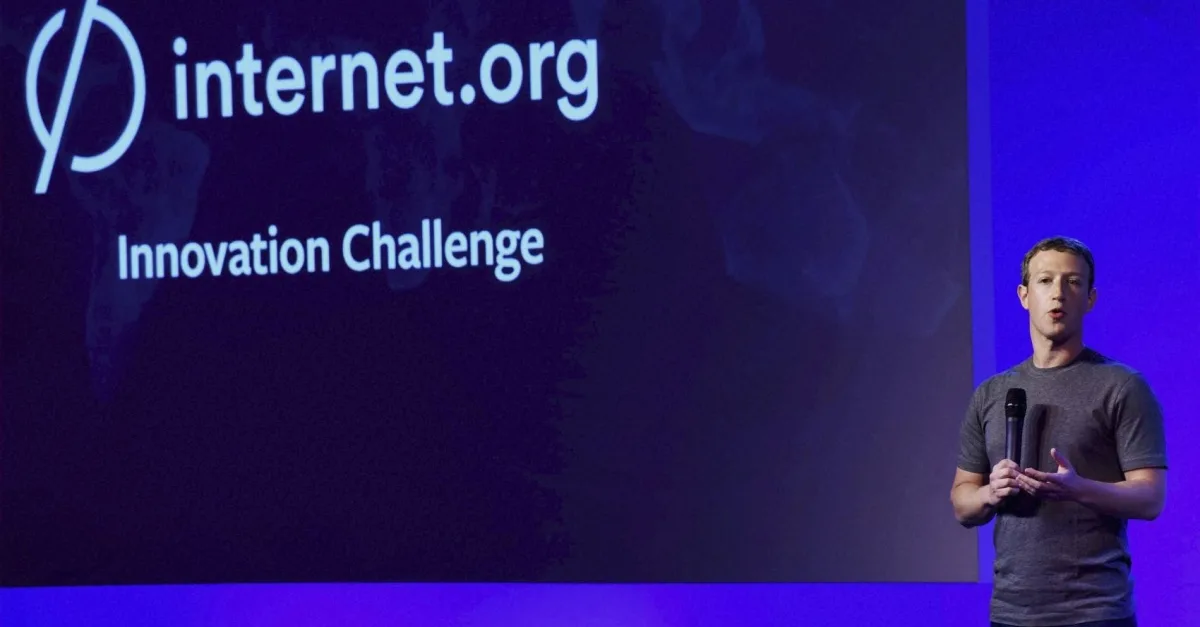
South African and UK-based edtech start-up secures $230,000 in funding from Facebook. HyperionDev recently won the Innovation Challenge Award, which was recently announced by Mark Zuckerberg.
South African and UK-based startup Hyperion Development, which runs the largest online course platform for programming and Computer Science education in Africa, was announced as the Innovation Challenge Award Winner in a recent press release from Facebook.
This builds on a funding award and partnership that HyperionDev secured with Google earlier this year, making it the first South African startup financially backed and supported by both Facebook & Google.
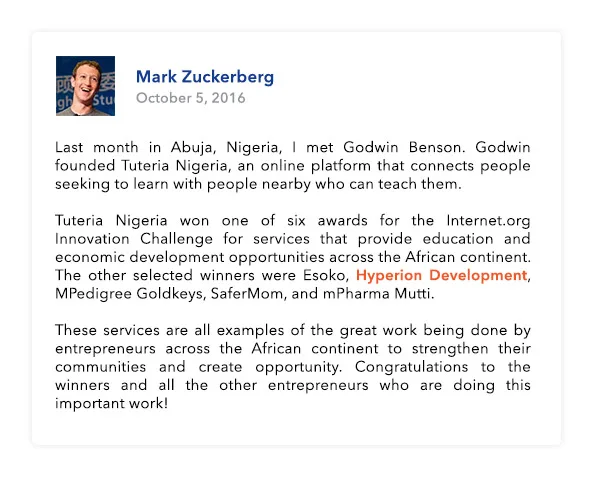
The award, run through Facebook’s Internet.org initiative in Africa, aimed to identify “leading examples of … online services that provide real value in the categories of education and economic empowerment”. Hyperion won the top prize in the category of education, and was the only South African company selected by Facebook. Facebook’s Founder, Mark Zuckerberg, congratulated winners under the scheme in a recent Facebook post:
HyperionDev offers part-time, online courses in Software Development & Computer Science which pair students with 1-on-1 expert mentors and tutors from around the globe.
The organisation has rapidly grown to over 10,000 students from 20 countries, and offers a range of introductory and advanced courses in everything from web development to data science and mobile app development. HyperionDev is already one of the largest trainers of popular programming languages such as Java and Python.
Riaz Moola, HyperionDev’s Founder & Director, said that “The Innovation Challenge Award will allow us to scale our offerings more rapidly and internationally, accelerating the growth of what is already a profitable and socially impactful business. We’re excited to work with Facebook and Internet.org to make software development education and careers open to all.”
For each course that HyperionDev sells, the company offers one low-income or unemployed youth in Africa a free course. This is critical in African economies such as South Africa, where youth unemployment stands at over 54%. HyperionDev’s paid and free courses allow students to access high-paying careers in the field of software development through the HyperionDev Careers platform, bypassing traditional university education.
HyperionDev – which operates out of offices in Cape Town, Johannesburg, Durban, and Cambridge – also hopes to finalise additional grant funding from Google, CapaCiti, The South African Department of Science and Technology, and the TK Foundation to bring the total amount raised to R7 million.
To take a course with HyperionDev and support education in Africa, visit www.hyperiondev.com.

Career Advice
How to Get a Job at Google
Riaz Moola's journey in software development and his top tips for landing a job at the tech Giant, Google. How to get a job at Google.
By HyperionDev CEO, Riaz Moola.
1. Overcome your inferiority complex
The university you went to, high school you studied at, or country you come from simply don’t matter when trying to get a job at Google. During my work at Google, I worked alongside people from Cambridge, Harvard, and Stanford but also graduates straight out of the University of KwaZulu-Natal, University of Cape Town, and University of Johannesburg.
Some of the most successful people at Google come from places and universities you haven’t heard off, and it’s a very internationally diverse place.
As a South African you have a great chance of joining Google, regardless of your background. You don’t even need to have worked at similar ‘tech giants’ before such as Amazon or Facebook. Having relevant experience/studies (which can be attained anywhere) will get you an interview, and your performance on these interviews will determine whether you get in – not the ranking of your university!

2. Prepare to fail

I was rejected from Google three times over three to four years before finally securing an internship that successfully converted into a full-time offer.
In fact, the role I secured at Google was after I responded to a rejection email after a failed application to Google’s Software Engineering internship in London. I simply asked if I could apply for another role – they directed me to the website again and I had little hope of a response. Three months later I had been accepted for an Associate Product Manager internship in Zurich.
Another thing to consider is that previous rejections don’t matter at all. I can remember clearly flunking first round interviews twice in a row with Google – being absolutely embarrassed and simply not being able to answer anything at all. This never had any impact on the future internship and full-time job offer I received. Don’t give up.
3. Be open-minded about roles and locations

When I first applied to Google, I was set on their Software Engineer (SWE) role, and only vaguely considered their Site Reliability Engineer (SRE) position. I simply didn’t think of any other positions, even after attending a workshop at their London offices about their Associate Product Manager (APM) position. At first, I dismissed the role as non-technical, ‘design and marketing’ – simply not right for a CS graduate like myself. I was completely wrong. The APM role was much better suited for me, and required a CS degree and a highly technical background. I interviewed much better for the APM role over SWE, and actually enjoyed answering interview questions and preparing.
Identify at the earliest opportunity all the possible roles open to you at Google, and prioritise applications to the roles that fit objectively with your strengths and interests, even if they seem unconventional. For example, it’s not as simple as ‘software engineering’. There are site reliability, security, product management, and testing roles that all fall under technical internships leading to full-time roles.
Don’t shun the opportunity to travel. Google may not have an engineering office in South Africa, but you’ll love to be in Europe or the US – especially for a summer internship. Google’s engineering offices are only in the best cities to live in – I was totally blown away by Zurich. It may be a once in a lifetime opportunity to live in these places.
4. Plan & Prepare

If you’re aiming for an internship, apply every possible holiday period, even if you fail each time. You’ll only be able to do internships while still a full-time student, and the earlier you start preparing for interviews and gaining confidence, the better. Sit down and check when applications open for the next round of internships, put it in your calendar and don’t forget.
Put aside at least 40-80 hours before your first round phone screen to prepare with mock interviews, example questions, and lots of practice. Plan the date of the phone screen (you have a choice) such that it isn’t at a time when you’re busy with exams, tests, or other work – you need to focus fully for this. Understand clearly how many interviews you will have in the whole process (it’s typically one or two phone screens, then 3-4 onsite interviews at one of their offices that they fly you to) and the type of questions that are asked.
5. Practice, Practice, Practice

There really is no easy way around this step. You’ve got to divide up the types of questions you will be asked for your role. There are a plethora of resources online with example questions and answers. For example, the Product Manager role will feature a mix of product questions – “Tell me about your favourite product”, estimation questions – “How many lightbulbs are in in the US?”, technical questions – “What is caching? How would you implement a cache in Python?”, and personality-type questions – “Tell me about a hard problem you solved?”.
Once you’ve identified the main categories of questions, pick your weakest. For me it was the estimation-style questions. At first, I simply couldn’t work out how to go about answering them. After picking up the ‘Cracking the PM interview book’ (far superior to ‘Cracking the coding interview’), and practicing around 30 estimation questions, I’ve found them much easier to do, and sometimes even do them for fun!
If your interviews will mostly be technical, definitely sign up for an advanced Python course with Hyperion. Mention to your tutor that you will be taking the Google interview tests and you’ll be moved to the advanced materials on computational complexity and data structures. It is of key importance that you focus on these aspects, which may only be touched on briefly in a Computer Science degree. You need to know Big O notation, sorting and searching algorithms, and data structures well enough to recite them in your sleep.
The outcome?

Get a job at Google – even an internship – will change your life forever. There simply is very little in the tech world that trumps having worked for Google. It will make securing future interviews easier, build confidence and teach you things that are hard to pick up elsewhere. Also, you will receive an invaluable perspective that can help define your future career, whether at Google or elsewhere.
Related article: 10 Steps to Switching to a Career in Coding

Career Advice
Is Your Job Safe from Robot Automation?
Which jobs will be automated in the future and what can you do to keep your job secure. Is your job safe from automation?
It’s a well-imagined theme of science fiction: robots vs people in mortal combat.
Certainly Elon Musk seems to agree. He claims artificial intelligence is humanity’s greatest threat, leading possibly to a third world war. Should we imagine the worst, or is a more moderate view called for? Although automation will hit all kinds of industries, it’s not as clearcut as you might think, and there could well be certain advantages if you play your cards right.
Watch this 3-minute video to see how robots can replace human workers in a warehouse.
Will your job be around in the future?
Let’s start where automation is likely to hit hard. Bookkeepers, for example, have a 97.6% chance of being automated. Contrasted with bookkeeping, right at the bottom end of the automation spectrum, are mental health and substance abuse social workers, who have a 0.3% chance of being automated, because their jobs require high levels of original thinking, negotiation and helping others. How are these percentages calculated? The researchers looked at jobs across four variable: does your job require that you come up with clever solutions, do you have to personally help others, does your work require negotiation and, interestingly, does your occupation need you to squeeze into small spaces (i.e. jobs that are routine, repetitive and predictable)?
Check out this nifty guide to assess the likelihood of your job being automated, but first see if your job is one of those that has a higher likelihood of being automated.


Whole sectors will become automated in the future. For example, this walk-out technology from Amazon means you can do retail shopping with no staff (using the same technology as self-driving cars):
Before becoming despondent, remember automation does not necessarily equate to job losses. Instead, jobs will be redefined with technology playing a much greater role. What does this mean for software developers? Good things. They have only a 12.8% chance of being automated, but there are vital factors worth considering. Mario Peshev, the CEO of DevriX and a digital consultant, on the Forbes website says: “A certain portion of the software development industry will become automated and obsolete to some extent”. This is particularly the case where elements are repetitive or could be bundled together. But, the software development industry “isn’t going anywhere”, especially where custom work and innovation is required.

Over the next few decades, software developer jobs that include these three aspects will still be in high demand:
Flexibility
This will include custom features, integrations, tailored admin, and user areas that are specifically adaptable for given industries. Workers who can cover all aspects, including the front-facing aspect of software development, the behind the scenes part, and the various systems operating in between, will be in high demand. Here your full stack web developer who is capable of using a combination of HTML, CSS and JavaScript to build everything a user sees and interacts with on a website, as well as developing the application, server and databases (using Java, PHP, .NET, Ruby, Python, Perl) that make up the back end or foundational structure of a website.
Performance
You will need coders who can help with a variety of performance issues as they relate to software applications – for example, where you are bundling together a number of tools or solutions, or where there is a massively large volume of users or data.
Security

In an application, there is a relationship between security and freedom of use. The more secure an application, the more steps or restrictions it includes. So ‘off the shelf’ solutions are, as a general rule, either super secure or usable but vulnerable. However, if you want something highly secure and usable, you would require a customised solution and people capable of implementing this.
Download the Programming Languages Guide 2017 to know which languages will be popular in the future.
In addition to the work required for building applications, think about what our homes, transport networks and work environments will look like. For example, it’s relatively easy to imagine the smart home – smart phones unlocking our front door, voice-activated virtual assistants controlling the lighting and the temperature, coffee machines activating when we get up etc. – and how it will get even better (although most of the technology already exists for the ideas listed above). But as technology continues assisting us in our day-to-day lives, you will need people who are able to design and implement it. Even if we think of a world with automation handling 90% of the tools, components and libraries out there, you will still needs millions of software developers who can support, extend and integrate these solutions.
This means you shouldn’t worry as long as you are can possess the technological skills required in the next few decades. Browse some courses we recommend you should take, especially if you are wanting to upskill or shift the focus of your sellable expertise.
Perhaps it’s best to think of tech as a job creator, and not a destroyer. And remember, it’s never too late to learn something new.

Masako Wakamiya, a retired banker from Japan, started taking online tutorials to learn how write software code at 82! She was frustrated by the lack of mobile games for the elderly and so made one of her own.
Think About
What will happen when robots or algorithms know us better than we know ourselves? Says the Guardian when reviewing Max Tegmark’s book Life 3.0: Being Human in the Age of Artificial Intelligence: “Instead of fearing assassin robots that try to terminate us, we should be concerned about hordes of bots who know how to press our emotional buttons better than our mother, and use this uncanny ability to try to sell us something.”

Software Engineering
5 Challenges Faced by Remote Developers
Coding lends itself to remote work. The 2017 Stack Overflow developer survey reported that 11% of respondents worked as full-time remote workers.
Coding lends itself to remote work. The 2017 Stack Overflow developer survey reported that 11% of respondents worked as full-time remote workers. Remote work, however, can be tricky. Not only do you have to stay up-to-date, but your working environment might not always be conducive to optimum output. Here are some suggestions to common challenges, including where and when to work and how best to learn new skills.

1 – Place
If you are working remotely, ensure you are working in the correct space. Working from the bedroom, for example, is not conducive to a healthy working environment. You need a space that is designated for work. Alternatively, when you leave the “office”, you need to be able to leave your worry and stress behind. Working from a space that is meant for other things, such as a bedroom or a kitchen, doesn’t allow for sufficient separation between your work and personal life.
Ideally, commute out of the bedroom to another work space. If you can, make use of an office or a coffee shop. If that’s not possible, try and use a separate section of your place that is only used for work. Keep it free from distractions – e.g. TVs. Also, if you’re working from home, it helps if you get dressed in the morning – this demarcates your work from your personal life.
2 – Time
Time management is frequently a struggle, particularly when you work from home. It’s very easy to start doing the laundry in the middle of your working day, for example. As a full-time remote developer, chances are you are already putting in more hours than the average commuting office employee. A 2014 Canada Life Group survey reported that telecommuters saw themselves as more productive than if they had to work in an office.
One way around this is to try and stick to a schedule: have specific times for work and personal tasks – perhaps you want to try an application like Wunderlist to manage your to-do and household lists. But remember, because you’re working from home, you don’t have the usual distractions that happen in an office. You could remain cooped up in your house for days. Take frequent breaks outside the house.
3 – Learn
In a formal office environment, it is easy to bounce ideas off of each other when you are in a jam. Informal water cooler discussions often lead to new directions. It is also easier to approach someone, because you can physically get up and walk over to them.
One of the challenges of working remotely is learning remotely 100% of the time. You can’t go to a pause area and discuss a problem with a colleague over a cup of coffee. While remote workers are seldom lonely, they can be alone. They are solely responsible for their own growth as a developer.
Try and set aside a single hour a day to spend on learning something new. Take your lunch hour (that is to say if you even take lunch) and spend it on self-improvement. It will serve a dual purpose. It will give your mind a break from what you are busy with at work and it will allow you to focus otherwise dead time to your advantage.
It is here too, that the right learning platform is essential. Here, online programs might work best for you.

4 – Learning Support
When it comes to learning, an important aspect is access to support. That is where the real juice is. Long distance institutions have been doing the same thing for years. You have an educator that is accessible via email. You can expect to receive feedback within a couple of days (or a week or two). How does that translate to online courses? Do they offer the same level of support? Do you have access to more than just help desk support? Do you have access to a professional developer that can review your work and provide same-day/next-day feedback (depending on your geographical location).
Perhaps you may want to consider an online coding bootcamp, which are structured, mentor-guided learning platforms that replicate the in-class experience. If your goal is to change careers (while maintaining your current job in the interim) or to upskill in an adjacent area from your key proficiencies, an online bootcamp is ideal.
5 – Coding fatigue
Lastly, how does one deal with the overwhelming nature of learning a new programming language or a new technology? Professionally, you write code all day long. Then, in order to learn something new, you need to write more code.
Choosing a good online course will break up the work items or modules into more manageable pieces. This will allow you to make real progress by being able to start a module, and complete it without spending hours and hours working at understanding it. Combining this with proper time management, will allow you to avoid the situation of code fatigue.
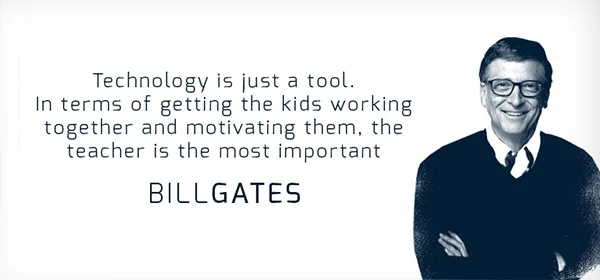
For remote developers, the crux of the matter is your support structure. Where a teacher isn’t traditionally available with online courses, it comes down to support. Does the online course provide enough support to allow you to learn?
- The area you learn in must be conducive to learning.
- The course you are taking must be easy consumed.
- The platform you take that course on needs to lend itself to proper and quick support.
As a remote developer, you need to take all these into account when deciding on a platform to work with.

Career Advice
What is an Online Coding Bootcamp?
Learn about the benefits and trends of an online coding bootcamp and what it entails. Read about Carl's experience on an online coding bootcamp.
When Carl, a US-based 38-year- old high school Math teacher, decided he wanted a career change, he wasn’t sure what to do next or what would work for him with his teaching schedule. ‘I was in no position to give up my job entirely,’ he says, ‘I needed the salary, but I knew I had free time in the evenings and on weekends for upskilling.’ Naturally his mind turned to coding, bearing in mind his aptitude for logical thinking, and his belief that there were job opportunities in that field.
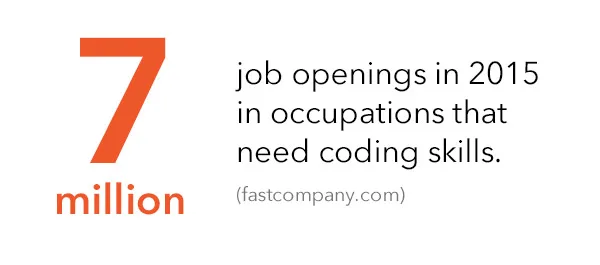
He was not wrong. Last year an international job market analytics company called Burning Glass released a report showing that there were 7 million job openings in 2015 in occupations that need coding skills. Based on 26 million US online job postings they found that half of all programming vacancies are in industries that are traditionally seen as outside of technology, including:
– Finance
– Manufacturing
– Health Care
So how best to gain these valuable coding skills? One option is to attend a coding bootcamp, a high-impact technical training program that focusses on market needs. It can last between 6 and 28 weeks, with prices ranging from $5000 to $21000. The goal is to teach students about 10% of a traditional computer science degree.
But for Carl, a coding bootcamp was not the way he wanted to go. ‘It was too expensive and I didn’t have that kind of time,’ he says. He also didn’t want to go the self-guided or Massive Open Online Course (MOOC) route. ‘Honestly, I knew I would need help when I got stuck,’ he states. After considering his options, he realised that an online coding bootcamp, which combined the mentoring of a coding bootcamp with the cost-effectiveness and flexibility of a MOOC, was the way to go. As Carl put it: ‘It’s the best of both worlds’.

Online bootcamps are structured, mentor-guided learning platforms that replicate the in-class experience. You should expect to devote between 5 to 30 hours per week to the course, but the flexibility of an online medium allows you to choose when those hours will take place.
If your goal is to change careers (while maintaining your current job in the interim) or to upskill in an adjacent area from your key proficiencies, an online bootcamp is ideal. In addition, if you’re wanting to build your own app, website or company, this kind of course will teach you to do this.
Mentoring is a vital advantage of the online bootcamp experience. Many coding students hit a wall when they become stuck with a MOOC and they have no one to help them. Says Riaz Moola, Founder and CEO of Hyperion Development, a leading online bootcamp educational provider: ‘Often a student is unable to get ahead when stuck on a learning wall. Rereading the same passages endlessly or repeatedly watching the same videos won’t let the student overcome the learning block. But an expert mentor will give valuable feedback swiftly, helping the student.’
Carl is happy with his choice. He is a month into his online coding course in backend web development. ‘It’s a challenge,’ he says, ‘but I feel like I’m learning something new every day.’
Interesting Fact: Many coding bootcamps in the US and Canada have an almost 100% post-course employment success rate. Most students end up in entry level jobs as programmers, but these can pay as much as $80 000 per year.

Software Engineering
5 Reasons Software Development is an Amazing Career
Why switching to a career in software development is an amazing career opportunity. Read to determine if software development is a potential career choice.
Why does 19200 Big Macs a year equal potential job security? Why can South African software developers buy more Big Macs than their American counterparts, and, what on earth do Big Macs and software development have in common anyway? All these questions are answered when considering 5 key reasons as to why software development is a great career to find yourself in:
1. You’ll be paid well
Altruism aside, remuneration for a particular career path is a big factor in choosing a job for many. In this sense, software development will not disappoint, as South Africa’s Career Junction’s 2015 Index shows that senior software developers will earn well over R500 000 a year, some of the highest earnings figures in the ICT/Computer Science field. Granted, a similar career in the United States will compensate more generously in absolute cash value, not considering cost of living, but this is where those 19 000 Big Macs come in.
The Economist’s Big Mac Index is a colloquial method of comparing salary to living costs, and, as found by the StackOverflow Developer Survey, can measure how much purchasing power developers have with their salaries. The result? South African devs can buy, equivalently, 19 215 Big Macs with their salary. This number is higher than the US, Australia, the UK and Canada. Quality of life, for South African developers then, is undoubtedly better, and the world’s second highest in these terms, after only Ukraine.
Greasy hamburger rolls aside, Buzz South Africa reports that on average, South African developers are the highest paid in the world relative to living expenses.

2. You’ll find a job easily
It’s highly unlikely you will find yourself on the other end of a McDonald’s counter, taking orders for those Big Macs either. The South African technology industry is desperate for people skilled in the art of UI wizardry, web development magic, apps, and those competent in handling a scrum whose name is not Fourie du Preez.
A cursory search of the CareerJunction job site alone reveals over 3000 available jobs as of writing, ranging from .NET developers, to UX specialists, to front-end developers. According to the CJI, software development vacancies are more than twice as likely as those in engineering, a field which itself was highly-ranked in terms of demand. Even overseas, the good news shows no signs of abating. CareerBuilders and EMSI surveyed 12 of the fastest-growing, highest paying careers, and software development came out on top for 2014.
3. No degree? No problem (mostly)
While there’s certainly nothing wrong with getting a degree or a PhD in a computer science/engineering-related field, it’s not mandatory either. Some of the biggest names in technology never even finished their university education, and ended up dropping out and still founding famous technology icons. Bill Gates of Microsoft, Steve Jobs of Apple and Mark Zuckerberg of Facebook are prime examples of being a software developer without a formal qualification. Closer to home, software development is placed 2nd in the top 10 list of jobs, according to Oxbridge Academy, which you can hold potentially without a degree.
The aforementioned StackOverflow Developer Survey corroborates this surprising trend, more than 70% of the 23000-strong group of respondents don’t have a degree to their name, despite working in software development. Some multinational tech companies with branches in South Africa forgo the degree requirement as well, opting for an entrance test, which, will allow applicants entry into job positions. This shows the nature of the industry in South Africa, and means that even if you don’t have a Computer Science/Engineering degree, you shouldn’t consider yourself out in the cold career-wise.It’s unlikely you’ll be left without a job as a software developer with skills, even if you don’t have a degree behind your name. These are some of the top jobs roles you can get into without a degree in South Africa.
4. You’ll be part of something amazing
Look at your smartphone. Look at your DSTv decoder, that information board you touch at the mall to find a shop, or that app that reminds you when Eskom is about to strike with load-shedding. These everyday scenarios are driven by software development, and once you become part of that world, why stop at an app? Self driving cars in California, DIY drones in Durban, machine learning in the palm of your hand, (yes, Google Now on Tap is adapting to your habits!) all these exciting prospects are available to software engineers, however you learn the language or whichever speciality floats your boat.
5. Your job is safer
“Traditional” jobs are being eclipsed more and more by software equivalents, and as the industry trends move ever more towards the digital world, one job in particular remains more in demand than ever. Correct; somebody has to design the algorithms and the software to power this new digital revolution! And that’s you. A software development career is a great way to future-proof your career into the digital hyperconnected world of the future. Read this article to find out which jobs will be automated in the future.

Software Engineering
What makes a Professional Programmer?
What does it take to become a professional programmer? From aptitude to study options as well as personality traits, we explore this.
We understand literacy to mean the ability to read and write. However, in present times and certainly in the future, basic literacy will also include coding. Why? Because technology is one of the fastest growing industries in the world today, according to a 2017 Forbes article. The question you need to be asking then is, ‘What is the best way for me to learn to code?’.
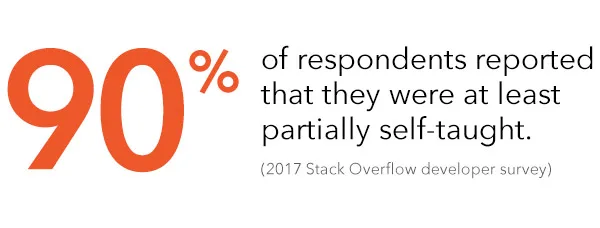
The good news is that you can teach yourself to code. The 2017 Stack Overflow developer survey found that 90% of respondents reported that they were at least partially self-taught. This means that many are where they are today, because they took decisive action to know more.
“Although Zuckerberg was studying computer science in college before he dropped out, he already knew how to program, having taught himself in middle school. By high school, Zuckerberg had already created an artificially intelligent music player that Microsoft attempted to buy for a million dollars. Zuckerberg declined the offer.” – Medium
What is the next step?
Simply put, an individual’s willingness and determination to learn to code code will determine his or her success. It’s not a case of whether a computer science degree is better than a coding bootcamp, or an online course is superior to teaching yourself to code. Rather, it comes down to determination.

Where you are determines your decision
At what stage of life are you at? Perhaps you’re about to finish high school and then a formal computer science degree might be your best route to follow. But even if this is the case, you need to remember that during your career you will be constantly learning, because information technology continues evolving at a rapid rate.
“Most good programmers do programming not because they expect to get paid or get adulation by the public, but because it is fun to program” – Linus Torvalds
However, if a full-time degree is not a realistic proposition – perhaps you’re looking for a career change – then a bootcamp or an online course would be best suited for you. Sometimes people realize that their current 9-to-5 is not what they want to do for the rest of their life. An online course or bootcamp offers everyone something, from an introduction to new subject matter to in-depth explanation of specific programming languages, and that is the true beauty of these courses.
“There is however a different breed of person that can be found in the lonely hours of the night, faces illuminated by the glow of a computer screen, vamping on technology.” – Dirk Strauss
At the end of the day, the answer to the question “what makes a professional programmer” is quite simply passion and determination. The fact that you are reading this is already a testament of your passion. What comes next, will be a testament of your determination.
Famous self-taught programmers include:

- Elon Musk – Taught himself to code at the age of 12.
- Steve Wozniak – Taught himself Fortran.
- Mark Zuckerberg – Taught himself to code in middle school.
- Grace Hopper – Her ideas lead to the creation of COBOL.
- Bill Gates – Taught himself to code in middle school.
- Fran Allen – Taught herself Fortran so that she could train research scientists.
- Margaret Hamilton – Studied math but wrote the software to enable Apollo’s moon landing.
Read about the 10 Steps for Switching to a Career in Coding.
Career Advice
The Programming Languages Guide 2017
An up-to-date analysis of today’s most popular programming languages. Find out which language is for you with real-world applications and salary data.
An up-to-date and thorough analysis of today’s most popular programming languages. Find out which language is for you with real-world applications and salary data in South Africa and abroad.
What the guide will discuss
● Ranking of programming languages popularity in 2017
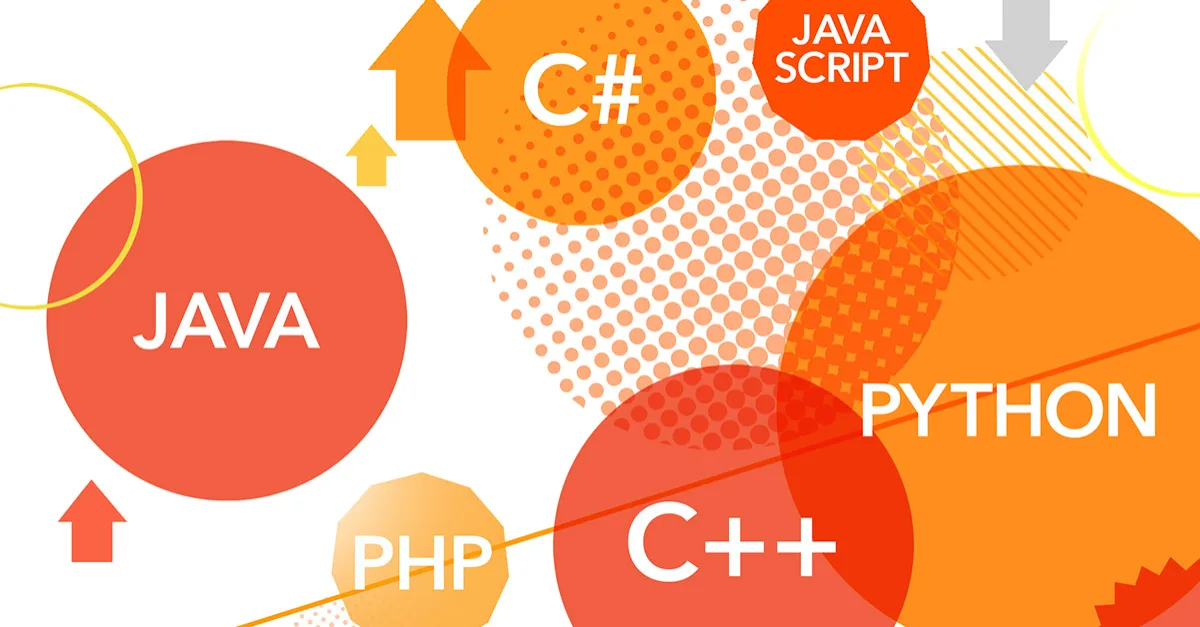
● In depth analysis of Python, Javascript, PHP, Java, C# and C++
● Real World Applications per programming language
● Programming Language Trends 2017
● Salary Data per language in South Africa and abroad in 2017
This guide will help you decide which language to learn first! Download your copy today and take an easy step towards your new coding career.

Student Success Stories
David Miller – From Sound Engineer to Developer
Read about David Miller's experience when studying with Hyperion and how he changed careers from sound engineer to software developer. Success stories.
Tell us a bit about yourself & your current occupation.
My name is David ‘Kenneth’ Miller aka ‘Humorous'”’Dangerous Dave’ or ‘Kenni’. I was the first twin born at City Park hospital in 1984, so that makes me 33 years old. I grew up on the Atlantic Seaboard in Camps Bay and Fresnaye. I was fortunate enough to attend Camps Bay Primary and High school. which gave me access to the ocean and the beautiful beaches. I’m super sporty, being a huge Golf, bodyboarding and outdoorsman. Regularly doing mountain hikes and runs.
When I finished school, I decided to study Sound Engineering at Cape Audio college, after which I pursued a career in Music. I taught myself how to Dj and eventually became a producer so I could produce my own music and play it live. My D J name is ‘Humorous’ also my alias. I have had the pleasure of traveling all around South Africa and abroad for the past 12 years and I really enjoyed it.
I also own a company called “Video Image Technologies” which rents out film gear to the film Industry and hires me as a technician.
Why did you take a coding course (are you looking to up-skill or start a new career?)
I took an interest in coding and development about a year ago the reason being is that I wanted to design my own platforms so I could change the direction of my career path, up my skills and travel more.
How did you hear about Hyperion?
I heard about Hyperion via Digital Portal.
Which Hyperion course/learning path did you or are you currently taking and why?
The ‘Full Stack Web Developer Course’ is the course I decided to enroll in.
The reason why is that it offers an all-around perspective to the in/outs of coding, not to mention that “Sobane Motlomelo ” helped me make up my mind. He is a great motivator!
How has/is the course helped/helping you so far towards your career goals and objectives.
I’m super glad that I took the jump and decided to get involved as it keeps me interested/excited. I reckon paying for something is always better than getting it for free because it keeps you focused, motivated and hungry to do more and your best. It’s definitely a lifestyle change and has helped me stay consistent/persistent towards becoming a ‘full stack developer” and creating a future that is looking bright.
At Hyperion, we believe that Machines cannot replace Humans, especially when it comes to education. Has/Is the current setup of our courses and 1:1 mentorship beneficial to you?
Investing in yourself is one thing but having a mentor as well as a bonus and a must. I know I can ask questions when I don’t understand anything and my mentor can explain whatever I don’t understand as I work. Having someone to answer you about a certain problem is the best thing since sliced cheese ‘haha’. (The course is structured well and well organised 🙂
What aspects of the course did you/are you enjoying and what would you like to see in future courses?
I’m enjoying everything so far and reckon a monthly get together lunch to chat about progress would be great. It would be great if I could meet my mentor in person and other people who are doing the course, as it feels like I’m being supported when I need it.
Any other comments and/or advice to prospective students?
Self-motivation, and hungry to do more than is prescribed in the course, is the name of the game!
Read more success stories here.

Career Advice
10 Steps to Switch to a Career in Coding
Even if you didn’t do a degree in computer science at a university, it's still possible to pursue a career in software development. Here are 10 steps to switch to a career in coding.
So you didn’t do a degree in computer science at a university, but you want a career in software development. Why? Because you know software development is often well-paid, can offer flexibility, is likely to be stimulating and is part of a growth industry. Perhaps you want to become an app developer, a back-end web engineer or a website developer: all careers on the up. But is it still possible? Actually, yes. Here’s 10 steps on how to switch to a career in coding and succeed.
1. Don’t underestimate what you do know
First, sit down and think about what you do know. Believe it or not, that philosophy major you did has its uses. What are they? You’ve probably picked up analytical skills, critical reading skills, the ability to assemble and simplify large tracts of information, clear writing, and even people skills, such as working in groups or pairs. Think of your old career as a stepping stone. Don’t undersell yourself when putting together your CV. Also, people who blend a variety of seemingly disparate skills are often in high demand, because they now have a unique professional profile – for example, think of a software developer who has done a fashion degree. Think how better placed you’d be for a job designing websites or apps for a clothing retailer than someone who doesn’t know fashion.

2. Now decide on the best route for learning what you don’t know
There are a variety of options to achieve this, from an online MOOC (Massive Open Online Courses), which is free, to a coding bootcamp, which can be face-to-face or online. Coding bootcamps are great for the following reasons:
- Offering a focused environment
- Mentorship when you need it
- Teaching you the essentials to land a job
- Assuming no prior knowledge, plus will teach you the basics
- Offering a network of motivated peers
- Instituting progress checkpoints
- Providing career services
However, face-to-face bootcamps can be expensive and inflexible. You may want to opt for an online bootcamp, like those offered at Hyperion Development, where you would have your own mentor. These are ideal when you want the benefits of a face-to-face bootcamp but are on a budget and need to be able to learn in a flexible manner from anywhere because of time constraints and existing commitments.
3. Give yourself an actual project
What do you feel passionate about? Animal rights? Archery? Fitness? Think about creating a website, an app, a game, some software. Have a look at codeconquest for some great coding project ideas. Now do it.
4. Showcase what you know
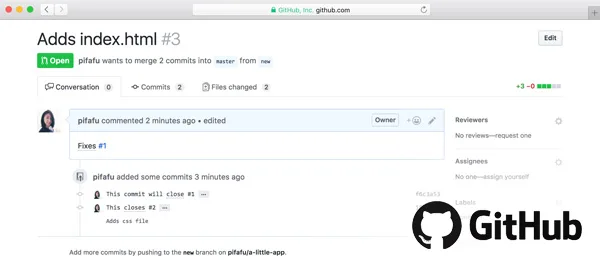
You’ve been doing a few projects, a little bit of coding, and now can put some stuff together. It’s time to open an account with GitHub, a software development platform, where you can host and review code, manage projects, and build software alongside millions of other developers. Add your existing code to share with prospective employers or start new projects to keep yourself relevant. GitHub accounts are free, and it’s the best place to swap ideas and code with other programmers online.
<Tip> Be selective with what you show on your GitHub profile. A public repository allows anyone to read your code. Hiring managers might well check out your code there. Only make substantial or interesting projects available for viewing.

5. Understand that you will need to invest in your career change
From books to classes to subscriptions, training to become a software developer is going to cost something. Accept this. However, off-play it against the expected salary you’re likely to earn. Check out these figures for interest.
An entry-level software developer in 2017 in South Africa will earn R234 502 per year.
Hired in their 2017 ‘State of Global Tech Salaries’ notes that the average software engineer in Seattle will earn $126 K, in New York – $120K, in Austin – $110K, in London – $73K, in Paris – $55K, and in Singapore – $90K annually.
6. Prepare yourself for the interview
Programming interviews are likely to be different from interviews you’ve had in the past. They can involve coding challenges, writing pseudocode, pair programming and feedback. Try and find out as much as you can about coding interviews before going to your first one by researching them online. Here are some brilliant ideas from Quora for how to prepare for a tough coding interview, including cheat-sheets, book suggestion and online resources.
7. Find a Mentor
Chris Myers, a startup founder and CEO of a financial management solutions company, says on Forbes that if he could give young professionals one piece of advice it would be to find a mentor. “I firmly believe that mentorship is the best path to career success, hands down,” he says. See if you can find a software developer who is willing to mentor you. You need to see it as a two-way relationship – do what you can to reciprocate, even if it’s just occasionally buying the person a cup of coffee.
8. It’s not just about skills, it’s also about personality
To be successful at something you don’t just need the knowledge or the ability, you also require the right personality set. Psychology Today lists a number of traits of successful people, including being able to face (and conquer) your fears, staying focused and flexible, not giving up on your dreams, staying upbeat and seeing stumbling blocks as stepping stones in disguise. When it comes to software developers the following personality traits, according to Bloc, are useful:
- Curiosity
- Grit
- Communication
- Attention to detail
- Divergent thinking or thinking outside the box
- Modesty
- Ability to work in a team
9. Wherever you can, dip your feet into the water
You need to try out stuff to see how you find it. Try this free trial for a beginner introduction to coding microdegree for starters. Other things worth trying include:
- Programming challenges: you can choose from a wide variety of languages, including Ruby, Python, SQL, C++ etc.
- Watching YouTube videos to learn programming. Click here for 30 excellent channels to get you started:
- Hanging out with fellow developers. Go to Stack Overflow, where, each month, over 50 million developers meet to discuss programming.
10. Accept that your journey probably won’t be linear
If you’re juggling a career as well as other commitments, you may only be able to focus on developing your programming skills for a few hours per day. Accept that you won’t progress in a linear fashion. Instead, you’ll go through spurts and stalls.
Remember, there are many software developers out there who started coding only recently, but still landed themselves good jobs. According to Stack Overflow’s 2017 Developer Survey, 36.9% of people learnt to program only one to four years before beginning their careers as developers.
Believe in yourself and trust that you will get to where you want to be. Develop the right mental attitude, optimistic but realistic, for the long and exciting journey of becoming a software developer.
To browse our courses in software development, click here. Otherwise, continue reading more articles related to software development here.

Web Development
10 Different Types of Software Development
There are many types of software development, ranging from Web and Mobile Development to Data Science and Machine Learning. We explore 10 different types of software development.
Software development is an incredibly in-demand and rewarding field to be a part of in today’s competitive job market. In fact, it was recently declared the #1 best job in the US, according to job demand, salary expectations and career reviews. The Bureau of Labor Statistics even projected a 30% employment growth in the software development field by 2026. While the demand for software developers is high, the diversity in the type of work software developers do is just as widespread. Furthermore, the more advanced your skill set is, the more opportunities you have to work in various types of software development fields/areas. Here are the 10 types of software development:
- Web Development
The golden child of the current and future generations of coders, developing for the web means coding those many web-pages you browse through over your morning coffee. It’s diverse and ranges in complexity, from a <h1> “Hello World” </h1> to many dozens of interconnected files only the original developer knows how to organize.
Web development today is exploding thanks to the emergence of new web technologies and Application Programming Interfaces (APIs) which let websites “plug in” to other useful features. The Web today can deliver ‘apps’ that feel native, because browsers now are so much more than a URL bar and an Ad-blocker these days. If you’re looking to get started as a web developer, check out HyperionDev’s part-time online course in Full Stack Web Development.
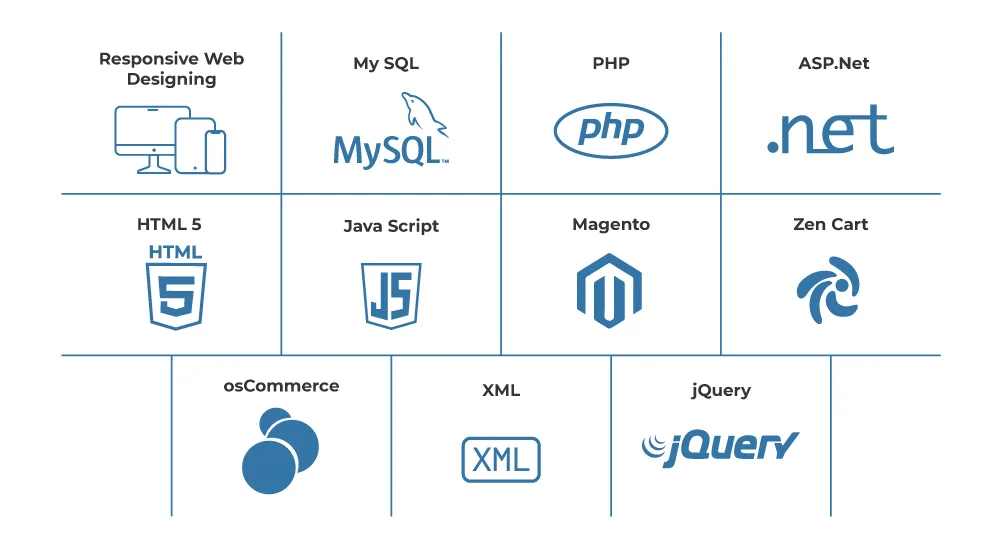
What you need to know: HTML, Javascript, Django, C/C++, ASP.NET, PHP, Python, Ruby, Rails etc.
2. Mobile Development
This one probably was unheard of 9 years ago, but today it’s all the rage. Mobile Development could better be described as “App Development” and involves creating applications that run on mobile devices, such as iPhones, Android devices, and recently, the Windows 10 platform. Most popular OS’s are built with their own programming languages but some traditional languages are being used as well.
The versatility of mobile development allows anything from Candy Crush games, to console-like quality games in the palm of your hand. Games aren’t the only thing to focus on either; there are all sorts of apps for pretty much anything, from the ordinary, like finding a restaurant for lunch or catching up with news, to the random, such as reminding you to drink water throughout the day, or morphing your photographed face into a zombie.
What you need to know: Android, Swift (for iOS), Objective C, HTML5, Java, C#
3. Data Science
Data is the new gold! Large data sets provide no value to anyone unless you know what to do with them. That’s where data scientists come in – they are able to find value in data just as much as the everyday person finds value in gold. In order to pull out valuable actionable insights, data scientists need to mine through and manipulate loads of data using analytical approaches. Think crunching large data sets, potentially using some cluster-computing approach, and developing a scientific application based on the findings of your data.
The applications of this are cooler than you think: it’s actually what and how machines think. Machines need large amounts of data to “learn” from, in order to ‘make their own decisions’ on given situations, and data science ensures this data is presented in the correct form to be used in AI applications. HyperionDev’s Data Science Short Course teaches you the basics of data science in Python if you’re looking to learn more.
What you need to know: C/C++, MATLAB, Python
4. Application Development
This is the “original” type of programming. These are ‘standard’ applications that perform their duties on traditional desktop operating systems, such as Windows, Mac, or Linux. It’s often considered a programme, executed on demand by the user, that opens its interface in the confines of the OS that it’s running in. Application development is basically the process of creating a computer program or set of programs that can assist the daily functionalities of the user or business.
What you need to know: Java, VB.NET, C/C++,C#, Python.
5. Back-end Development
Back-end development is the work that goes on behind the scenes to make sure the front-end program churning away does so without bringing half your computer to a standstill.
The back-end, or “server side”, of a website is where the data is stored and it usually consists of three parts: a server, an application, and a database. Back-end developers need to understand databases, as well as server programming languages and architecture. If an application keeps crashing or is mind-numbingly slow or keeps throwing errors at you, it’s likely to be a back-end issue.
Finally, database management is a prime aspect of back-end development. Database management is the backbone of any system that holds large amounts of data. Think companies’ client database, such as Facebook’s; one billion users’ details have to be organized somehow, and back-end developers make this their job.
What you need to know: Python, Java, C and C++, (my)SQL, dBase and Oracle for databases
6. Software Tools Development
Not used by most consumers, but critical in the software development industry, this type of development builds tools for other software developers to test their code with. Beyond simply testing, developing this software will ensure other developers’ code conforms to industry standards and remains maintainable. Developing programs to (amongst other things) test other programs is no easy task, but tech giants like Microsoft and Google employ software devs by the bucketload to design applications for testing other projects on-the-go.
What you need to know: Java, Python, C++
7. API Development
API Development, or the development of Application Programming Interfaces, is the art of building something extensible. Developers build programs that act as puzzle pieces, across different operating systems, on desktop, mobile and the web. They allow 3rd-party developers to interact with the tools or functions the API relates to. API development is the laying of a foundation of standard procedures, types, tools, GUI interaction methods, and database access rules that programmers building other applications can use for that particular API.
What you need to know: APIs are written for specific platforms or functions, and each API will have the programming language of the platform/device/site/service it’s designed for
8. Embedded Systems Development
With the rise of the “Internet of Things” and just about everything but the kitchen sink being connected to the internet these days, embedded systems development has boomed. This type of software development deals with the coding skills needed for embedded systems like Raspberry Pi’s, Arduinos, Beaglebones, etc. The embedded software is specialized for the particular software that your machine or device runs on.
What you need to know: Embedded C, Assembler, Python, Arduino (an embedded C derivative), Java
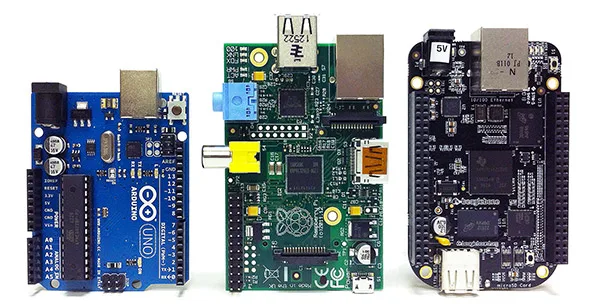
From left, the Arduino Uno, Raspberry Pi and Beaglebone Black, all use embedded development languages. (mcmelectronics.com)
9. Security Software Development
Otherwise known as hacking. You may be asking yourself, “Is that really a type of software development?” Certainly, and it’s a critical field to be working on these days. Penetration testers (“white-hat” ethical hackers) and cyber-security experts work together for the good of companies and their systems and data. The cyber-security team develops software to keep important company assets safe from theft, viruses and other malicious attacks.The pentester, or penetration tester, then tries to ‘hack’ into the system to find where the vulnerabilities, or weak spots, are. This way, there’s less chance of your “black-hat” actual malicious hacker getting into your important data.
What you need to know: the programming language relevant to the system that needs to be tested
10. Cloud Computing
Whilst the traditional idea of local storage for files has stuck around in some parts of the world, the notion is slowly changing, and cloud computing services are becoming more prevalent. Cloud computing services use networks of remote servers hosted on the Internet to store and manage data rather than using a personal computer or local server. Developers involved in cloud computing software development develop the software that powers cloud storage applications, such as Amazon Web Services (AWS), OneDrive storage and GitHub.
What you need to know: Java, XML, R, Erlang, Google’s Go!, Clojure and others

We’ve discussed 10 different types of software development in this piece, as well as what you need to know to be successful in each field. Software development is an increasingly lucrative and in-demand field, and getting your hands dirty in any of the above types of software development will offer promising career prospects. Interested in learning more about software development and whether it’s the career for you? You can register for a free trial on any of HyperionDev’s online coding bootcamps in Web, Mobile and Software Development.
Career Advice
The South African Developer Report 2017
Hyperion Development has compiled this report to highlight the South African educational routes into a developer career, as well as compare qualifications.
Hyperion Development has compiled this report to highlight the South African educational routes into a developer career, as well as compare these qualifications to allow potential students to make informed decisions about their future.
Becoming a developer in South Africa is more attractive now than ever before. Industry skill shortage and the movement towards online functionality means high demand and very high earning potential for developers. In an increasingly automated world, more and more people are exploring the “future proof” career of software development. Traditional Computer Science education has proven outdated and the gap between “student” and “employment” is demanding to be bridged.
Key findings:
Download the full report for crucial insights into the different paths students can take to break into this thriving industry, the benefits and what it takes to be a developer in South Africa today.
View another popular resource, The Programming Languages Guide 2017
Still have questions?
Contact our Admissions Team, and a real person will get back to you.