
Our latest insights
Read the latest insights


Career Advice
How school leavers can finance their bootcamp
Are you looking to fund your bootcamp? Here’s how you can apply for up to 100% financing for your coding journey with Manati.
We all know that tech skills are the future of work and the world. As thousands of businesses and millions of people move online to work, play, and connect, the skills to work with software, data, or websites will become even more essential.
However, it can be difficult or expensive if you’re a school leaver trying to learn these essential tech skills. That’s why we’ve partnered with Manati: so that you (and your parents) can have easier access to an essential tech skills education without breaking the budget, and in a payment plan that fits your long-term career and education plans.
With Manati, you can quickly and easily apply to get up to 100% of your bootcamp financed upfront. That means you can focus on what’s important: learning to code and developing practical, job-ready developer skills for your tech career. Best of all, these loan providers allow you to apply with a sponsor (such as your parents or other family members).
Here’s how financing with Manati works at HyperionDev.
How Manati loans and financing works
Manati is perfect for students – that’s why it’s in their name! They partner with banks to offer you very good interest rates on your study loan, and have an application process that is quick and easy, and which allows you or your parents to sign up for funding in as little as 7 working days.
Based on your family’s income and the other information you supply, Manati and the bank will work together to make an affordable and personalised payment plan that best fits your career goals and your family’s circumstance. They cover the entire cost of the bootcamp in one upfront payment, so that you can learn to code stress-free; and once you graduate, the tuition is repaid over a period of 10 months to a maximum of 5 years.
What you need to apply for a Manati loan
To apply, simply choose your bootcamp and complete any necessary applications for your chosen study path. Once you’ve completed this process, you can apply for Manati funding through your payment dashboard, by clicking on the Manati partner icon on your bootcamp course page or by contacting your personal admissions consultant.
To complete your application, you or your parents will need to supply the following documents:
- A copy of your Identity Document and your sponsor’s Identity Document
- Proof of Residence for you and your sponsor
- Latest payslip for you and your sponsor
- Latest 3-month bank statement for you and your sponsor
For more information on how Manati funding works and so see if you qualify, visit our funding page or you can speak to one of our Admissions consultants.
At HyperionDev, we understand that there are many barriers and challenges that stand in the way of school leavers looking for a world-class tech education. Our model and education philosophy has always been to make our essential tech skills education available to everyone (no matric or previous coding experience required) with no need to pay hundreds of thousands of rands in tuition or spend years studying just to graduate as job-ready.
Our funding partnership with Manati is the latest effort to make our bootcamps more accessible to you and thousands of other Matrics and school leavers who worry about how they’ll afford to learn how to code at a leading education institute.
If you’d like to explore your funding options with a person who cares about your access to a great coding education, please contact one of our admissions consultants. They’ll help you to navigate all your options when it comes to funding your post-school coding bootcamp.

Career Advice
How to fund your coding bootcamp
From scholarships and payment plans to work sponsorships and study loans, we explore how you can fund your coding bootcamp.
So you’ve made your decision. You’ve been checking out our online coding bootcamps, and have decided to become a software engineer, full stack web developer, or data scientist on a mentored, intensive bootcamp. There’s just one final obstacle in the way: how do you pay for it?
Here are some ways that can fund most or even all of your coding bootcamp.
Payment plans to save on tuition fees
At HyperionDev we offer a variety of payment plans, from paying the full amount upfront (with an added discount), to paying a monthly fee, to paying your bootcamp fees in agreed installments. Make sure you speak to your admissions consultant about all your available options, so that you can make the best financial decision for you.
HyperionDev offers several payment plans that make it easier to manage the cost of a bootcamp, with significant discounts on upfront or full payments.
Bursaries and Scholarships
Scholarships and bursaries can reduce or even totally eliminate the cost of your coding bootcamp. At HyperionDev we offer merit-based scholarships for students from the US, UK and South Africa, making our bootcamps that much more accessible to those who would otherwise be left out.
You could be eligible for a partial scholarship for your coding bootcamp, so be sure to check our website or speak to an admissions consultant about how our scholarships work.
Work sponsorships
If you’re planning on doing your coding bootcamp while working, it could be a good idea to talk to your boss or manager. There are many benefits to employers to invest in their employees’ skills.
Companies understand that long-term skills development is cheaper than cold hiring to fill positions. It’s cheaper and simpler for your employer to pay for someone who they know and trust to upskill and move into a developer role, than spending months and thousands of rand on the often months-long hiring process for a brand-new software engineer.
If you can demonstrate how your upskilling will be of direct benefit to the company, very often your boss will agree to pay for some of it. Businesses want to develop you. It’s better retention, future-proofing their workforce, and it carries tax rebates for skills development.
Get a study loan from our funding partners
To make our affordable coding bootcamps even more accessible, we’ve recently launched brand-new partnerships with financial services providers to fund up to 100% of your bootcamp, repaid in a payment plan that fits your career plans.
With our funding partner Manati, you can finance up to 100% of your bootcamp and pay it back over up to 36 months, cutting down the cost of your bootcamp to as little as R790 per month.
How to get funding through Student Hero
Student Hero loans pay for your bootcamp in full, and allow you to repay this amount over a period of 36 months. With Student Hero, you can get your bootcamp paid for as long as you are currently employed or have a sponsor during your period of study. You can apply for funding under your own name only if you are currently employed and will remain employed while studying,
To apply for Student Hero, simply choose your bootcamp and complete any necessary applications for your chosen study path.
You’ll need to provide:
- A copy of your Identity Document and/or your sponsor’s Identity Document
- Proof of Residence for you or your sponsor
- The latest payslip for you or your sponsor
- The latest 3-month bank statement for you or your sponsor
If you want to learn more about how the loan financing works or if you are eligible, you can chat to a Student Hero consultant here.
Often our goals might seem out of our reach, especially with tight budgets and increasingly uncertain times. However, there are a multitude of available paths to that goal. Keep looking, keep persevering, and your goals will be an inch closer every day.
If you want to learn coding to become a web developer, software engineer, or data scientist, and can’t figure out how you’ll pay for it, please don’t hesitate to contact one of our admissions consultants to discuss the financing options available to you for your coding education.
Student Success Stories
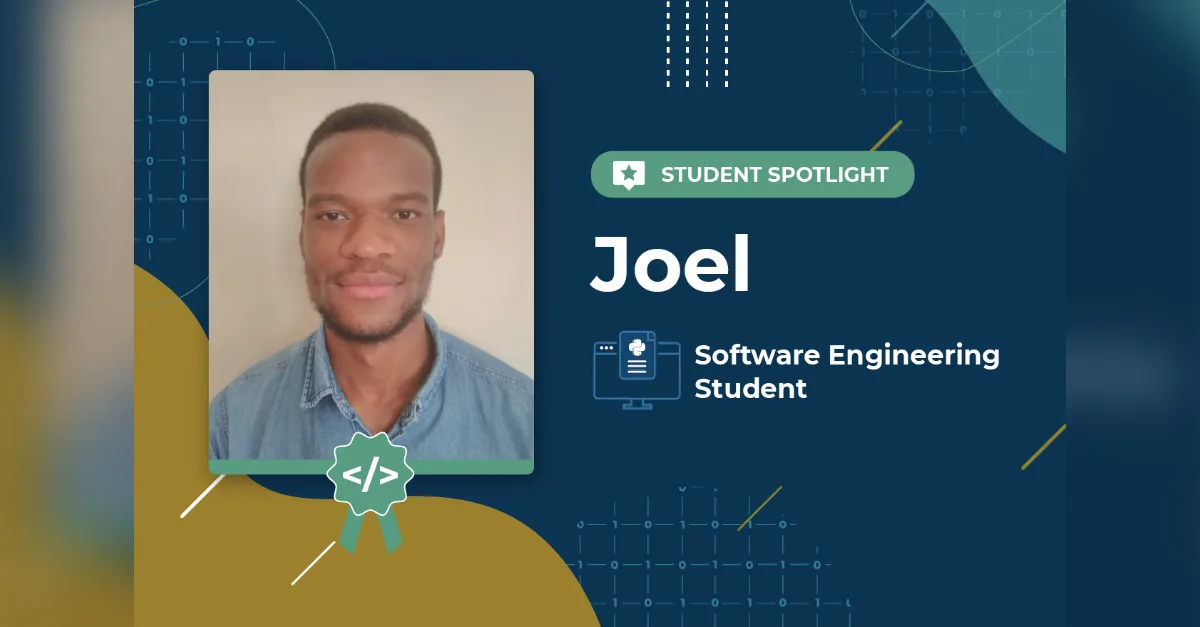
Student Spotlight: Joel Issosa – Software Engineer
When Joel Issosa’s chosen university program didn't turn out to be what he wanted, he knew he needed to make a change. He took a chance to pursue both his personal passion and an in-demand tech skill in a HyperionDev software engineering bootcamp. Here is his journey in learning to code.
Joel Issosa thought he knew what he wanted to do at university, until he tried it out. A short time into his Archives and Records Management course, he realised that the program didn’t align with any of his interests. Joel decided to join a HyperionDev coding bootcamp instead. That way, he would be able to follow his passion for technology as well as develop a skill that is in high demand.
He decided to enrol in an online, part-time Software Engineer bootcamp at HyperionDev, so that he could learn these essential tech skills without having to quit his job. We asked Joel a few questions about what led him to join a coding bootcamp, his experiences on the bootcamp so far, and his plans for the future.
Why did you decide to join a HyperionDev coding bootcamp?
I was studying Archives and Records management with the University of South Africa but I decided to drop it as it did not align with my interests. I decided to take this software engineering bootcamps because I wanted to dive deeper into the realm of coding. I am currently working part-time which allows me to study part-time as well.
What do you most enjoy about your bootcamp?
I enjoy solving the complexity of the tasks given as it allows me to think out of the box and utilise my abilities to try and solve the problem that’s in front of me. The software engineering bootcamp gives me the excitement of being able to create real software right at my fingertips.
What was it like having your own mentor during your coding bootcamp? How did they help you?
My mentor has been great and he helped me in so many ways. Whenever I needed him he would help me to solve something that I could not, and he helped me think more like a programmer or software engineer, rather than just act like a teacher guiding a student. I loved it!
What excites you about the future of programming and software engineering?
The fact programmers are going to be job secured as they play a vital role in any company. With things becoming more digital, programmers will constantly be needed everywhere in the world and in almost any industry.
What is your advice for people thinking about coding as a career?
Coding is not what it is portrayed to be. We often watch movies and see just how easy those coders make something so complex seem, but it really isn’t that bad. Anyone can learn how to code with the right motivation no matter how old, but that doesn’t mean that it will be easy.
HyperionDev offers online coding bootcamps in Full Stack Web Development, Data Science or Software Engineering, which can be taken full-time or part-time to suit your schedule. You can also trial one of these courses for free. If online learning is not your thing, you could join a face-to-face Web Developer or Software Engineering course in Cape Town or Johannesburg.
Start learning the essential tech skills that are key to almost every industry by signing up for your free trial at HyperionDev.com
Student Success Stories
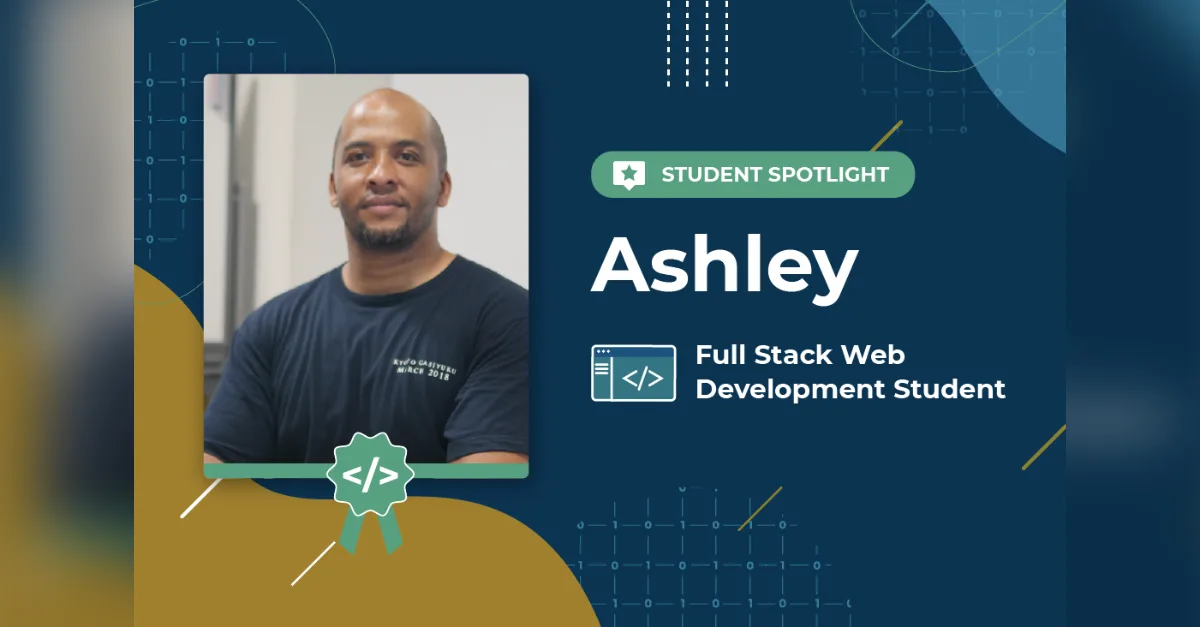
Student Spotlight: Ashley Chaplin – Full Stack Web Development student
Ashley had never considered web development as anything more than a part-time personal interest – until thousands of businesses went online and remote, making web development a new essential skill. He signed up for a HyperionDev bootcamp to turn his personal interest into a vital career skill.
Ashley Chaplin has always been interested in web development. He enjoyed playing around with websites and web development platforms, but turning this into more than just part-time experimentation had never been a personal goal – until the global lockdown happened.
With the lockdown forcing thousands of businesses to migrate to online and remote work, Ashley decided it was time to fully develop this essential tech skill. He joined an online, full-time Full Stack Web Developer bootcamp, so that he could follow his ambition to become a professional web developer. We asked Ashley a few questions about what led him to join a coding bootcamp, his experiences on the bootcamp so far, and his plans for the future.
Why did you decide to join a coding bootcamp?
I have been using platforms such as WordPress and Wix for the last few years, assisting with the look and design of websites using these pre-coded components. With the onset of the COVID-19 pandemic, I decided to dive deeper into web development to understand how these pre-coded components were constructed, but more importantly to fully focus on web-development as a career.
What were you doing before this? If you’re studying your course part-time, what work are you currently doing?
I had completed my Master’s in Japan and returned to South Africa to visit my family before returning. Unfortunately, global lockdowns changed my plans significantly, so I decided to take action and really improve my web development skills.
What do you most enjoy about your bootcamp?
It challenges you. Some may view this negatively, but for me this is the best way to learn. Failure leads to success. Every time I break the site I am working on, I know that fixing it and making it better with more efficient coding will be my success.
What excites you about the future of programming or web development?
The 4th Industrial age includes machine-learning and AI, but also the advent of ecommerce and the vital importance of websites and these websites’ efficient functionality. I view the Corona pandemic as a war – and every war has inspired innovation. I believe that in the last 7 months, new innovations have emerged in the tech space – and behind every innovation is a programmer.
What app (or website) would you have loved being involved in as a coder – and why?
Wix.com. I think it’s an amazing site. Coding the many components and making it easy for anyone to create a website is amazing, and I believe that this website is true value for money.
What is your advice for people thinking about coding or web development as a career?
They have to be willing to put in the time. It’s a challenge but seeing what you are creating become functional and working is exciting. Any change involves some pain and difficulty. Do not shy away from it but push through it and your success is assured.
You can also learn the essential tech skills needed to join the rapidly growing field of web development through our in-depth coding bootcamps. We specialise in mentored, 1-on-1 learning that is designed to get you writing industry-standard code for real problems, so that you can join the tech industry without years of study or a mountain of student debt.
Our bootcamps can be taken online or on our campuses in Joburg and Cape Town, and full-time or part-time to fit your schedule. Best of all, they focus on job skills and practical learning so that you can do what professional programmers do, and have a portfolio of real coding projects you can use to land your first tech job.
Student Success Stories
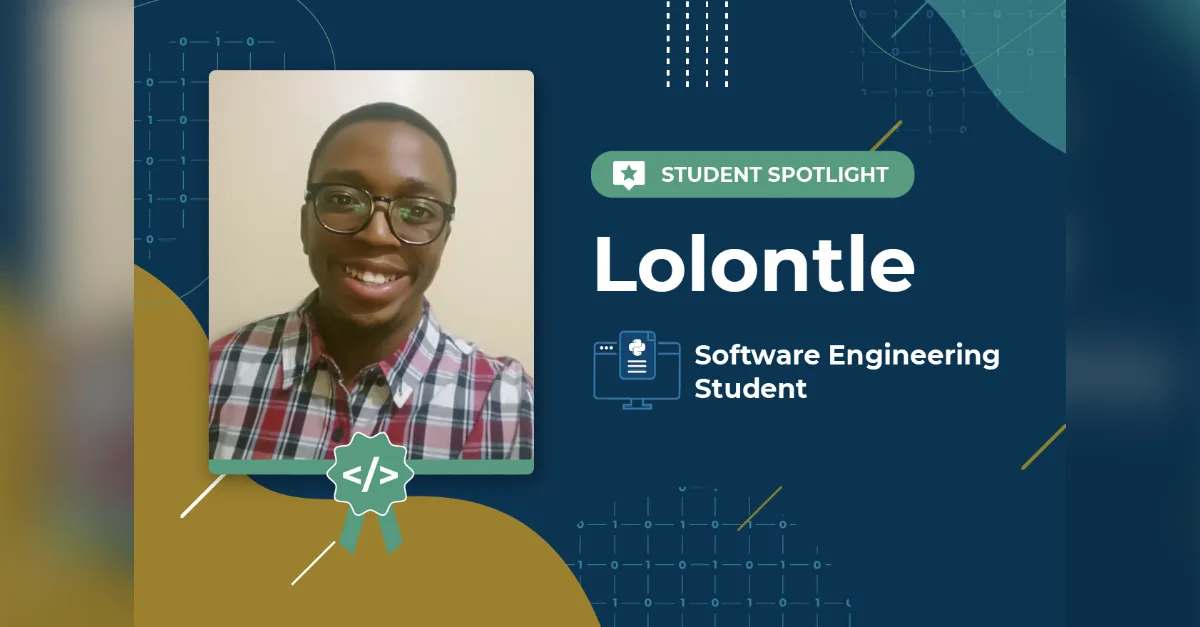
Student Spotlight: Lolontle Moatshe – Software Engineer
As the global lockdown pushed thousands of businesses to go remote and online, Lolontle Moatshe realised that there would not be a better time to turn his passion for technology into an essential professional skill. He signed up for a bootcamp to learn software engineering. Here is his story in learning to code.
Over the past couple of years, 24-year old Lolontle Moatshe has realised how significant and central technology is to everything we do – and 2020 confirmed that realisation. As thousands of businesses moved online and remote to cope with the ‘new normal’. Lolontle knew that tech skills would be essential to get ahead in this changing career space. So he enrolled in an online, part-time Software Engineer bootcamp.
Lolontle has big ideas for his career, and dreams of launching his own tech start-up, creating the next killer app, or working with NGOs to help build up other people with these newly learnt essential tech skills. We asked Lolontle a few questions about what led him to join a coding bootcamp, his experiences on the bootcamp so far, and his plans for the future now that he has graduated from his HyperionDev bootcamp in software engineering.
Why did you decide to join a coding bootcamp?
I wanted to follow my passion for coding, technology, and helping people
What were you doing before this?
Before studying this software engineering course, I was unemployed, so I am looking for new and exciting opportunities.
What did you most enjoy most about your coding bootcamp?
What I enjoy the most about my course was collaborating with other students on challenging projects and learning something new every day.
What excites you about the future of programming or software engineering?
What excites me about the future of programming is the impact it’s going to have on many people’s lives including my own.
What was your personal mentor like? How did they help you?
Tavonga, my mentor, was amazing. He was patient with me and always willing to help me, even when I wasn’t the easiest to deal with. He was available throughout my bootcamp, to help me when I was struggling.
What app (or website) would you have loved being involved in as a coder – and why?
The app I would’ve loved to be a part of would be the Tyme Bank or Bank Zero. Why? Because I think the apps are very innovative and disruptive in an industry which has been dominated by big corporates which charge high fees for banking. I would’ve loved to be a part of this disruption!
What is your advice for people thinking about coding as a career?
My advice for people thinking about coding as a career is that you’ve got to be resilient and be eager to learn, it is not always easy but it is very rewarding. HyperionDev ignited my passion for coding and has given me the best foundation for learning and developing as a programmer.
If you want to make a fresh start, follow your coding passion for software engineering, or learn essential tech skills, our coding bootcamps are your best bet. HyperionDev offers online bootcamps in Full Stack Web Development, Data Science or Software Engineering, with free trials that teach you all the basics that you need to know.
All of our bootcamps are available full-time or part-time to suit your schedule, and with our dedicated campuses in Johannesburg and Cape Town, there’s a bootcamp for every learning style and preference.
Find out more about our bootcamps at HyperionDev.com

News & Announcements
November 10, 2020
HyperionDev Black Friday deal | Get up to 40% off your coding bootcamp
Gain essential tech skills and get up to 40% off your HyperionDev coding bootcamp this Black Friday. Register now and start anytime until March 2021.
Behind every doctor’s appointment, banking transaction, and essential business is a developer.
The international demand for career professionals who can work with websites, software, and complex datasets is skyrocketing because of our world’s increasing reliance on remote teams and digital technology. There has never been a better time to learn essential skills in data, web development, or software engineering.
You can get up to 40% off your HyperionDev coding bootcamp this November in our HyperionDev Black Friday deal. Simply register for your bootcamp before 23:59 on 24 November 2020 and you can save up to 40% on the total cost of your bootcamp. Best of all, you can start any time you choose until March 2021.
Our MICT SETA accredited bootcamps teach job-ready skills in data science, web development, and software engineering without needing to pay hundreds of thousands of rands or study for years on end. With 1-on-1 mentorship, expert code review, and full career development support, you can graduate as a job-ready developer in as little as 3 months (with a portfolio of work to prove you have the skills). What’s more, you can start right away, with no need for a matric certificate or previous experience in computer programming.
Whether you’re a working professional looking to secure or upgrade their career, a parent who wants the best for their school leaver, or a Matric thinking about how they’ll land that high-paying job, our coding bootcamps are the ideal fasttrack for your career and education goals. Our HyperionDev Black Friday deal is your chance to secure your future and career security, at a fraction of the usual cost.
Sign up for your HyperionDev Black Friday discount here.
This HyperionDev Black Friday promotion only lasts until 23:59 on 24 November 2020, so hurry to get your discount while they’re available.
Student Success Stories
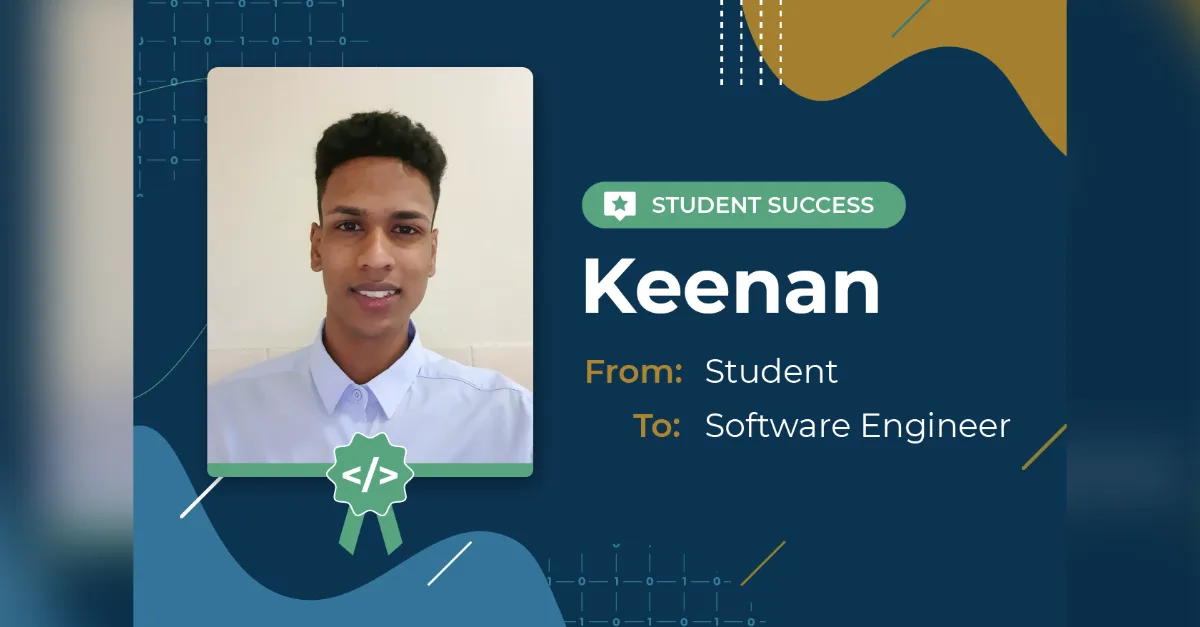
Student Success Story: Keenan Naicker from student to Software Engineer
Shortly after finishing his Matric, Keenan decided to pursue his passion for coding with a HyperionDev Software Engineer bootcamp. With hard work and determination, Keenan graduated top of his class – and soon landed a paid position as a software engineer intern at Microsoft’s AppFactory.
Keenan Naicker always had a passion for solving problems and coding. Shortly after finishing his Matric, Keenan decided to turn his passion into a career, with a HyperionDev Software Engineer bootcamp. Over the course of this full-time and online bootcamp, Keenan pushed himself: his hard work won him a Student of the Month award during his bootcamp, which he completed with an average mark of 100%, finishing top of his class. This work ethic has paid off immensely: Keenan quickly landed a software engineer position at AppFactory, an initiative run by Microsoft. Keenan hopes that this paid internship will be the first step of a long and successful career in software engineering.
Which Bootcamp did you complete?
With Hyperion Development I chose to do the Full-time online Software Engineering Bootcamp. I completed the bootcamp being top of my cohort, finishing with 100% and getting student of the month.
Which Company are you employed with?
I am currently doing an Internship with Microsoft via the AppFactory that is hosted by OneNebula. The AppFactory is an initiative from Microsoft, which employs inexperienced graduates and assists them in gaining crucial work experience and soft skills. This program also promotes the learning of new technologies in a real-life work environment working on real-life projects.
Tell us about your hiring journey. How did you hear about it, and what was the process like?
A very close friend of mine told me about the internship and said that I should apply as I would be a strong candidate with the skills I’ve gained studying at HyperionDev.
There were several steps to the hiring process. It went something like:
- Application.
- Application code challenge.
- Interview.
- Technical code challenge.
- Technical interview.
- Final interview.
This sounds very intimidating, but honestly it was an amazing experience. The interview process was fast and very informative. I felt welcome from the first interview, giving me the confidence to answer all questions with no doubt to my answers as well as ask all questions that I might need answers to.
How did the HyperionDev Careers team help you with your job search?
Although I didn’t do the Mock Interview training with HyperionDev, the last few Tasks of my bootcamp involved interview preparations which helped a ton in getting the role. I received tips on setting up my LinkedIn account and drafting my CV, as well as building a professional online portfolio that helped display my skills.
Tell us about the job you found.
Sure! It’s a contract-based internship. It gives individuals like me the chance to expand their skills and gain work experience, and it prepares us for our future as Software Engineers or Developers. As a young Bootcamp graduate with no prior work experience my main goal was to get a job in this field to gain that experience. Fortunately for me this Internship does come with a salary – and plenty of opportunity to learn vital engineering skills. Plus I get to work on real projects!
Which languages or tech stacks do you use?
Through my journey so far I have learned a handful of skills, including Python, Java, MySQL, OOP, TDD, and Version Control in Git. In my current professional work, I primarily use a couple of technologies. These are:
- Microsoft Azure Cloud Technologies
- C#
- SQL
- Power BI
We are also gaining experience using the Agile Methodology while doing our projects.
What is the coolest thing you learned in your new role?
One of the coolest things I have learnt so far is Microsoft Azure and how powerful their services and tools are. I know that what I’ve learnt so far is just the tip of the iceberg, and that once I start using it I will get to explore and learn even more. It’s very exciting.
What did you learn at HyperionDev that helped you in your current job?
HyperionDev taught me the fundamentals of programming, which makes it much easier to learn new or different languages. One of the first things I did when starting the Internship is learning C#. Learning a new programming language isn’t easy but the skills I gained at HyperionDev – especially Java – helped lowering the learning curve to C#.
Do you see yourself growing in this company?
My goal is to join the company once I have completed the internship.
As this program there is an initiative from Microsoft in partnership with OneNebula. I work very closely with the OneNebula team, and they are one of a kind. It’s the one-of-a-kind where you want to be a part of every small success the company goes through. So far, I haven’t worked a day in my life yet because everything I’ve done during this internship is something I want to do and enjoy doing.
HyperionDev was a big decision for me. I knew it was a step in the right direction although I wasn’t sure about the outcome. I am happy to say that it was the best decision I’ve made, and thanks to the powerful course content and wonderful mentors I can now take my next steps as a Software Engineer.
Do you want to learn the skills that are at the heart of all essential industries, and join an industry that is truly worldproof? Our bootcamps teach you vital skills in programming and technology which open doors to careers that can’t be put on lockdown. As you learn job-ready, practical skills in web development, software engineering, or data science, we provide you with your own personal mentor and frequent expert review of the code you write. It’s all a part of getting you ready to find your new career in tech in less than 6 months. Best of all, our bootcamps fit your schedule, so that you can learn part-time from your couch, or full-time on our modern campuses to suit your needs.
Start your journey to a high-paying tech career with our free trial by clicking here.
Student Success Stories
Student Snapshot 2020: What it’s like to study at HyperionDev
The HyperionDev Student Snapshot is a downloadable report that shows how you’ll fit right in at HyperionDev. This report looks at the key statistics and trends of our entire student base, showing that when you study at HyperionDev, you study with people just like you, with the same goals and vision.
It can be difficult to decide where you want to study. There are always questions and concerns about “is this the right course for me?”, “will I fit in?”, and – most importantly – “will this course fit into my life?”. We believe that anyone can fit in and study at HyperionDev – and a close look at our student body shows that our coding bootcamps are the right choice for everyone. Our coding bootcamps are designed to be as accommodating as possible, to matter a person’s age, educational background, or level of experience with computers or programming.
Whether you’re in Matric or in retirement, you will fit right in when you study at HyperionDev.
Key insights from the report:
We’ve had students of all ages and from all parts of the world.
- The young and old study at HyperionDev! Half of our students are older than 35 or younger than 24.
- 49.2% of all of our students are aged between 25 and 34.
- Our students come from over 40 countries.
You don’t need a degree or experience in coding to start learning.
- 27.8% of students started their bootcamp with just a matric.
- More than half of our students never went to university.
- 76.2% of all students have little to no coding experience.
- 90.2% of our on-site students have no experience in coding.
Our bootcamps fit a tech future into your busy schedule.
- ¾ of our students are employed and working in some way.
- 90% of our students are studying online with us.
- 81.6% of our students are studying part-time.
Click here to download the full report
You’ll feel at home when you study at HyperionDev, because we believe that anyone can learn to code, even if they’ve never touched a programming language in their lives. We also believe that entering a secure, fulfilling career shouldn’t take you four years and a mountain of student debt.
Our specialised 1-on-1 mentor-led coding bootcamps will help you to learn practical tech skills in web development, data science, or software engineering to become job-ready for your life-changing tech career in less than 6 months. Best of all, they can be taken online or part-time to suit your schedule, so that you can fit a tech future into your spare time.
Sign up for our free trial, or contact an Admissions consultant to discover your personalised plan to study at HyperionDev.
News & Announcements
October 1, 2020
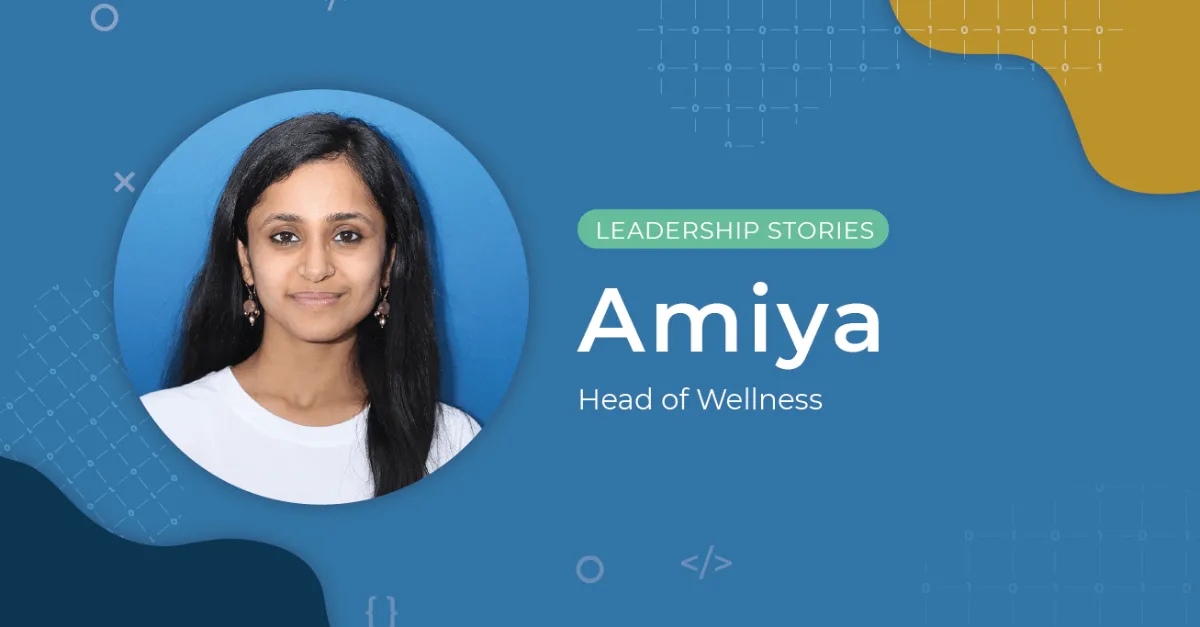
HyperionDev Leadership Stories: Amiya Sharma
Building one of Southern Africa’s largest EdTech providers needs more than just talent: it also requires a structure that recognises hard work and rewards it with key leadership positions. Today’s HyperionDev Leadership story features Amiya Sharma, our Head of Wellness & Finance.
Creating Southern Africa’s leading provider of tech education takes more than just having the most talented team out there. It also requires a mindset of growth, development, and leadership, so that the talent you have can continue growing to become widely-skilled and highly-experienced leaders. In this HyperionDev Leadership story, we look at Amiya Sharma, our Head of Wellness, whose years of experience and hard work have allowed her to rocket from one leadership role to next. Today, she oversees more than just the financial health of the company – she also also heads up the Talent and PeopleOps departments that make sure the company is able to attract, hire, engage and retain the best of talent.
Amiya has a Master’s in Economics from Delhi University and nearly a decade of experience in business process consultancy and project management. However, her interest in helping people – particularly the youth – through education pushed her to work in a range of positions in the social sector. Amiya joined us as a manager of sales and operations, before taking on the position of Head of Mentorship for HyperionDev bootcamps. She moved on to leading the delivery and management of our globally pioneering work in providing code-review-as-a-service, before taking up her current position as Head of Wellness.
How does your current role at HyperionDev fit with what you wanted to do before joining our team?
While I was consulting at PricewaterhouseCoopers (PwC), I made a conscious shift from management consulting to social impact consulting to align better with my broader sense of purpose. I moved into education, which has this real power to transform the lives of and opportunities for thousands of people and communities. I worked with bilateral and multilateral organisations to design and implement programs focused on skills-based education. Soon after this, I moved to Cape Town – and this was the starting point of my work with HyperionDev, as Riaz Moola and his HyperionDev team were then planning the launch of a similar program.
Why did you switch career streams to this new one?
Though I enjoyed my consulting days, as a consultant you’re usually ‘on the outside’. Even though you may be working on complex solutions or detailed plans for a client, your involvement stops at a certain stage or point in time, which can be immensely frustrating. Being ‘on the inside team’ of an ambitious, audacious, fast-growing business has been amazing: ever since I joined HyperionDev, I’ve headed up and moved through three different functions at the company, and currently I lead the Wellness division which consists of our finance, strategy, talent, and people operations functions.
What drew you to joining HyperionDev?
The purpose-driven mission, and the very ambitious and clearly talented team led by Riaz. I met with him a few times before I came onboard. He had a very compelling vision and I wanted to be a part of making it a reality.
What are your biggest achievements since you joined HyperionDev?
I’ve held different roles within the company since 2017, and whenever I headed up a new function, a big part of my job would be to bring more process and structure to it and set the team up for success. In the time that I’ve joined, our team has grown five-fold and the business has seen 12-15x growth, and to have been a core part of the team strategizing, planning and achieving this has been very exciting and personally fulfilling. We’ve navigated through many curveballs including COVID-19 quite well, and I believe that’s testament to our resilience, planning, and agility in decision-making, which makes me very proud!
How do you keep yourself up skilled and knowledgeable in your field of expertise?
I usually follow a couple of wide-umbrella podcasts, such as Conversations with Tyler, to get recommendations on more things to read, learn, or check out!
How would you describe the culture of HyperionDev?
I would describe HyperionDev and its culture with three words. The first is “innovative”: we believe in solving problems in new, better ways. The second is “progressive”, because we are always moving ahead, learning, and evolving to stay ahead of the curves of life and the tech industry. And finally, “challenging”, in a positive sense that we push ourselves and team members to do the best we can
In your own words, why should talented people come and work in your team?
There are so many reasons, but the main one I give is always from my own experiences: education and tech are rapidly growing sectors. There’s real opportunity in them for people who want to buckle down to do some good; and there’s some great rewards to be enjoyed from working hard.
Of our core values do most strongly identify with?
‘Progress Always’ is the one that resonates most with me. I value the idea of growth for individuals, communities, organisations. To be able to challenge yourself, objectively learn from it, reflect, grow, evolve… feels like the essence of ‘being’ for me.
Are you an A-player and a talented professional who cares about accessible tech education? Do you want to make a difference in the lives of people looking to uplift their lives through a tech education? If so, we’re looking for people like you to join the team leading Southern Africa’s largest provider of tech education. Our diverse, international team enjoys medical aid packages, remote working allowances, a generous leave policy, and real avenues for career growth and promotion.
Visit our career page to see all our available positions and apply to join our team today!

Software Engineering
7 Ways Learning Programming Can Transform Your Life
You need not become a full-on tech head to learn to program. Here are 7 ways that learning programming can change your life.
One thing is at the heart of our increasingly online and digital world: programming. Programming is becoming more and more vital in almost everything we do, as technology expands and enriches our lives, relationships, businesses, and entertainment. Today, programming is a skill that can open up career doors, give you new-found security and financial stability, and improve your life immeasurably.
Here are 7 ways programming can change your life.
1. Programming will get you a job
For years now, South Africa has been experiencing a major shortage of skilled computer science and computer engineering graduates in the workplace. What’s more, the economic devastation of COVID-19 means that traditional ideas of ‘job security’ are not what they used to be – in fact, the tech industry was one of the few that wasn’t devastated by the global shutdown.
Having skills in coding doesn’t just future-proof your career against unforeseen disasters like the global pandemic, it also opens all sorts of doors for internships and extremely high-paying job opportunities at the biggest names in technology, like Google and Amazon.
2. Programming can enhance your current career
Thanks to the ubiquity of digital technology, programming skills are incredibly useful even outside of pure coding or developer work. In the wake of COVID-19 and a global shutdown, coding skills have become nearly indispensable in almost all major business operations, from accounting and content production to project management and online marketing.
A varied skill set outside of your usual specialisations also gives you the edge in the competitive jobs market, and can make the difference in distinguishing you as an invaluable, high-skilled employee. Simply put, coding skills mean better job security.
3. Programming teaches essential problem-solving skills
We South Africans like to think of ourselves as fairly resourceful. We deal with load-shedding, potholes, slow internet, and service delivery protests, and a thousand other problems on a daily basis. As a result, we’ve become quite good at solving problems. What about logical problems, though? Educational psychology studies as far back as the 80s show that if you learn programming, you are likely to enhance problem solving skills.
Solving programming problems encourages you to think logically, and ‘decompose’ the problem into smaller chunks. Fixing your dodgy code is also a problem-solving skill-builder, as you need to comb through your work methodically in order to fix what’s broken, and improve what’s inefficient.
4. Programming can make you “tech-confident”
Certain technical topics can be confusing. In many cases, this is because a lot of people simply do not understand the ‘behind-the-scenes’ mechanisms of the tech they use on a daily basis.
Programming teaches you how these things work, and it demystifies the inner workings of the programs and websites you use. It’s also invaluable for figuring out the roots of problems, and seeing where you can potentially solve them. For example, if your company’s website loads and its text is all different sizes and fonts, you’ll understand that there’s something wrong with the HTML code or its related CSS stylesheets – and you’ll know where to find the issue and fix it.
5. Become a specialist who can adapt to any field
Programming is way more than just one single language or program. It covers a wide range of applications, including game engines, web databases, traditional desktop programs, mobile and web apps, and countless other examples.
This is one of the largest appeals of learning programming: that it teaches you a transferable skill set and ethos that you can use in almost any tech environment. Rather than lock you into one language and one platform, programming gives you the skills to figure out problems and solve them with innovative solutions – whether it’s with new coding languages, technology stacks, or clever engineering.
6. Change the world through your code
Software development is simply a special form of engineering; but instead of building bridges, you create software. These can be apps that support medical staff in hospitals, AI that detects diseases, educational apps that help millions of people to learn without massive tuition costs, or let people share their ideas and creativity with the world. Programmers made these things. They made apps we use every day: resources like YouTube, Wikipedia, email, Uber, Netflix, or Amazon that make life more convenient, simple, or entertaining.
There is a long list of tech moguls and programmers who have changed the face of the world through their inventions and programs. It includes people like Michael Dell (of Dell computers), Steve Jobs, and Bill Gates, and South Africans like Elon Musk (SpaceX, PayPal, and Tesla Motors) or Mark Shuttleworth (the South African astronaut, and creator of Ubuntu OS).
If you learn the skills that these pioneers had, the possibilities of what you could build or accomplish are limitless.
7. It’s easier to learn than ever before
It used to be that if you wanted to get a career in tech, you’d have to go to university to earn your Computer Science degree first. This involves taking unnecessary subjects as extra credits, years of lost earning potential, and some serious barriers of entry to those without the educational or coding experience needed to get started.
Thankfully, the world of education has been rapidly changing: there are many ways to learn how to code, and companies realising that practical developer skills are worth far more than a piece of paper. We’ve been at the forefront of these changes for nearly a decade now: at HyperionDev, we specialise in making programming education accessible and affordable, so that you can learn these critical skills at your own pace, under the guidance of experts, and without spending years of time or half a million rand in tuition.
Programming can do more than just give you an amazing salary and incredible career opportunities – it can change your life and the lives of the thousands of people who use the software you create. Our specialised 1-on-1 mentor-led coding bootcamps will help you to learn practical software development skills to become job-ready for your life-changing career in tech in less than 6 months. Best of all, they can be taken online or part-time to suit your schedule, so that you can fit a tech future into your spare time.
Sign up for our free trial, or contact an Admissions consultant to discover your personalised plan.
Editor’s note: This post was originally posted on 23 October 2017 and has been updated on 30 September 2020.

Data Science
The Many Uses of Data Science & Why It’s a Top Career Choice
Data science is one of the fastest-growing career fields. Thanks to the ubiquity of tech devices and internet communication technology, data science is increasingly necessary in almost every field. We break down the many uses of data science, and why you should consider it as a career.
Data science is changing the world. Once a relatively small academic field, this discipline has exploded across the globe thanks to the rapid digitalisation and technological growth of, well, everything. Today, the uses of data science span every industry imaginable: in medicine, epidemiology, business, research, development, logistics, and countless other fields. Let’s take a look at some of the best examples of how data science is changing our world forever, and why it’s such an amazing in-demand and high-paying career path to get into.
Sport
In the 1990’s the Oakland Athletics baseball team didn’t have the budget to sign leading players. At the time, players were picked on face-value assessments and the talent scouts’ individual ‘hunches’. With the introduction of sabremetrics, the team’s general manager Billy Beane and his assistant Paul DePodesta started picking unconventional or unpopular players based on their average performances. The team they picked went on to win 20 games in a row, breaking league records and cementing the credibility of data science in sports (and eventually spawning a movie about the events, called Moneyball).
Today, sports analysis is a billion-dollar industry, with partnerships between some of the biggest teams and players, and the largest tech corporations – such as Real Madrid and Microsoft. The uses of data science and analytical tools in sport analysis include understanding performance, improving training, and predicting competition outcomes. These applications are also widely used in the multi-billion-dollar sports betting industry, which uses data science to create fair odds for gambling.
Investment and better business
There’s a lot of money to be made in trading stock and shares. The thing is, if you’re too slow, you’ll miss out on great opportunities and immense profits.
When it comes to doing something over and over again, at an extremely high speed, human traders just can’t keep up with computers. The financial markets and investment have been revolutionised by algorithm-based trading, allowing speeds of trade that are simply impossible for humans. This is one of the key uses of data science: not just to make better investment picks, but also to automate those investment decisions to beat your competition (where even a microsecond of advantage can mean millions of dollars).
It’s not just investment that data science makes easier, faster, and better: it’s just about every other business too. Data-driven integrated solutions make business more efficient and less expensive – which directly translate to better profits. Stock management, product analysis (to figure out which products to promote and which to discontinue or improve), and supply logistics are just a few of the hundred uses of data science in business. It’s also vital for efficient, high-quality customer acquisition and marketing, so that you don’t blindly dump millions of dollars into ineffective marketing campaigns.
The improvements that data science can make to business can seem insignificant and counter-intuitive, but they result in large improvements over time. UPS saved 10% in average annual fuel costs by telling your delivery trucks to avoid left turns, and a shipping company saved millions in annual fuel costs by implementing a machine learning algorithm that adjusts engine power of ships according to weather, ocean currents, the pitch of the ship, and wave action to adjust it’s engine output.
Medicine
The medical industry is where data science is most vital. Hospitals and healthcare systems have millions of users with complex histories, backgrounds and needs – overseeing these records in a safe and efficient manner is key to improving the privacy and health of the patient.
However, data science is used in more than just simple administrative management. Detection, diagnosis, and treatment of hundreds of different diseases are important uses of data science, and they actively help to improve the health and lives of thousands of people.
Medical uses of data science:
- Imaging – detecting things that a doctor might miss in magnetic resonance imaging (MRI), X-ray, computed tomography, mammography, or other scans, especially when scans are poor-quality. Already, deep learning algorithms are beating expert radiologists at detecting signs of breast cancer in mammograms.
- Drug discovery – machine learning to predict useful compounds and to simulate their effects without needing physical testing.
- Monitoring patient health – heart rate, blood pressure, temperature, insulin levels – these are all things that can tell a doctor a lot about a patient’s health and progress. With wearable detection devices and data science, the doctor can tell how the patient is doing in real time, or even detect problems before they become serious.
- Detection and diagnosis – with data science, doctors can predict and start treating illnesses before they become serious. For example, in India the L V Prasad Eye Institute uses Microsoft’s machine learning technology to detect and prevent reduced vision and blindness. Similar techniques are used in the United States to identify the early signs of diabetic retinopathy and treat them so as to prevent blindness.
- Epidemiology and large-scale health management – By now we’ve all seen one of the many hundreds of online tools that track COVID-19, breaking down total numbers of cases, infections, recoveries and deaths. Tracking and controlling the spread of deadly illness over large areas (even globally) is one of the most important uses of data science in modern times.
Limitless research applications
Data science is so open-ended and limitless that it can be used for a seemingly infinite number of applications in computer science, research, law, entertainment – and just about whatever else you can think of.
Here are a few of our favourites:
- An AI that automatically challenged and overturned 160,000 parking tickets in London and New York.
- An AI that creates new music, with instruments in a range of musical styles, including rudimentary singing.
- AI that can look at visual images and actually use it: sorting graphs, completing sequences and maths problems, and even recreating PacMan as a playable game using just a few images.
- An AI that turns your rough sketches of landscapes into realistic scenes.
- An AI that can detect and reconstruct sound waves from video, like something out of a spy movie.
Are you interested in learning how to use data science, algorithms, and machine learning to unlock huge profits, improve your business, or fast-track groundbreaking research? Our Data Scientist bootcamp teaches you everything you need to know to get started on seeing, managing, and using data for a wide range of applications. Start your career in data science by signing up for our free trial here.

Software Engineering
Coders who changed the world
Throughout the history of computer science, there have been people who paved the way with significant accomplishments. These men and women are coders who changed the world with their hard work, ingenuity, and contributions to the world of computing.
Throughout the history of software engineering and computer science, there have been people whose ingenuity, hard work, and great ideas and vision created the foundation that our modern, all-digital world stands on. These men and women are the coders who changed the world forever.
Bill Gates
The man who made the computer personal
Bill Gates created his first piece of software at age 13. Later in life, Gates learned a popular programming language called BASIC, which was used for large terminals and machines. However, he saw the potential for smaller computers that an average person could use: so he adapted this language for use in ‘microcomputers’. The system he created was the precursor to his later software that he created, MS-DOS, which was licenced to IBM for use in their machines. This partnership with the industry leader in computer hardware cemented the identity of a “personal computer” as a IBM machine running a Microsoft operating system. Windows 95 in particular is celebrated as a revolutionary step forward in computers, allowing plug-and-play functionality and multitasking on one device – features that we take for granted today. Thanks to his expertise in software and his business acumen, Gates is one of the world’s richest men; and today, he is also one of its biggest philanthropists, providing hundreds of millions of dollars in aid and humanitarian assistance through his foundation, the Bill and Melinda Gates Foundation.
Tim Berners-Lee
The grandfather of the World Wide Web.
Tim Berners-Lee worked as a computer software engineer in the UK after graduating from the University of Oxford. During his early career, Berners-Lee worked at the European Organisation for Nuclear Research (CERN), where he created an information storage and retrieval system for his own use. This basic piece of software – which he called “Enquire” – was an early prototype of a technique known today as hypertext. Berners-Lee eventually developed this prototype for CERN into a ‘global hypertext document’, which used the internet to allow researchers and users to share and retrieve whatever information they wanted with just a click, and without having to distribute files or email download links. This was revolutionary at the time, and it was Berners-Lee who wrote the code for the first Web server and the first Web client, laying down the very foundations for the world wide web as we know it today. What started as just a telephone directory at CERN is now the complex global computer network that’s letting you read these words – and Berners-Lee released this code for free use the world, allowing anyone to create websites or web applications without needing to pay him a cent.
Kimberly Bryant
A new age for women in tech
A graduate of Vanderbilt University, Kimberly Bryant is one of the leading figures in diversifying the field of computer programming. An expert in electronics and biotechnology, Bryant worked for over 25 years in the pharmaceutical and biotech industries, for some of the biggest companies in the world, including Genentech, Merck, and Pfizer. However, Bryant’s most inspirational accomplishment is her dedication to upliftment and education: in 2011, she created Black Girls Code, a non-profit organization dedicated to changing the face of technology by introducing girls of color (ages 7-17) to the fields of technology and computer science. Today, Black Girls Code teaches programming and entrepreneurial skills to thousands of girls across the US and in South Africa, and has grown to 19 chapters operating with international recognition.
Steve Wozniak
The man who put the ‘personal’ in PC
Steve Wozniak is a computer scientist and programmer who worked with his partner Steve Jobs to create the Apple I computer. At the time, the computer market was dominated by corporate giants selling clunky machines with interfaces that required the user to be a technical expert just to use. Apple was a David to this Goliath: starting in a garage with a sold car and calculator as start-up capital, their design-focus on the user experience ushered in a new era of computers. In Apple’s eye, PCs didn’t need to be confusing hulks with bland, confusing interfaces, but devices that the user could intuitively use for their own purposes, with little effort. The devices that he built (combined with Job’s marketing expertise and love of aesthetics) were a hit, helping the company to break market records with its meteoric rise to computer dominance. Today, Apple is so big that most people don’t think of the fruit first.
Margaret Hamilton
Making software safe and reliable – even on the moon
Margaret Hamilton’s work in error prevention and fault tolerance was a central part in taking software that could land you on the moon and turning it into software that could land you on the moon with high safety margins time and time again.
Coming from a background in abstract mathematics, Hamilton worked in meteorology. With her expertise in maths and programming, Hamilton created software that could predict weather conditions. Later, Hamilton worked in military research labs, further developing her weather prediction systems. This experience came in use when she moved to NASA and started working on the computer systems used in the space program. The asynchronous flight software she created with her team was crucial to catching and preventing an error during the Apollo 11 moon landing which could have caused a disaster. In the beginning of her career, “software engineering” wasn’t its own discipline, and instead something you picked up on the job as you worked; but through Hamilton’s legacy and accomplishments, it became a highly respected field of expertise on its own standing. Today, Hamilton is considered one of the great pioneers of software engineering.
Do you want to change the world one day with your code? HyperionDev specialises in accessible coding education that teaches job-ready skills to people who want to get into the programming space, no matter their age or educational background. Start learning web development, software engineering, or data science with your personal mentor, and graduate to a tech career in less than 6 months.

News & Announcements
September 17, 2020
Our biggest lessons from COVID-19 – Part 3: Adapt or go bust
The global pandemic and national lockdown have changed the way we learn, work, and live. In this final entry of our 3-part blog series, we reveal the last of our biggest lessons from COVID-19: that in the rapidly-changing business sphere, you need to adapt quickly to new business obstacles.
COVID-19 has been devastating, but it has also been a learning experience for our education system, businesses, and society. Below, our Head of Education, Nico Kruger, outlines the biggest lessons we’ve learned about the explosion of digital transformation, the importance of education models that aren’t locked in the past, and smarter, more agile strategies to keep business competitive.
In this final part of our series examining our biggest lessons from COVID-19, we reveal the third key lesson we’ve learned in the past 6 months: that business isn’t what it used to be. Times have changed, and the markets have been obliterated by global lockdowns; there simply isn’t the luxury to put off or downplay the importance of changing your business to be more agile, proactive, and in line with the modern, all-digital post-COVID world of work and play.
The devastating effect of the lockdown on business has been very clear
Cancellations, cutbacks, work hour reductions, partial pay, furloughs, and retrenchments are sweeping the economic landscape. With all these challenges threatening the livelihoods of thousands of career professionals, and so many companies embracing a ‘new normal’ of remote calls, zoom meetings, and digital services, many are considering switching careers to tech.
According to Statistics SA, the official unemployment rate increased from its already 11-year high to 30.1% in the first quarter of 2020. Rising unemployment has been a grave issue for over a decade, but with the devastating effect of COVID-19 and the restrictions introduced to curb its spread, it will only get worse. Between 1.5 million and 3 million jobs losses are thought to have been lost during our extended lockdown, a horrendous outcome that could increase our official unemployment rate to as high as 50%. While these numbers still aren’t 100% clear, the economic devastation is: the economy shrank 16.4% between Q1 and Q2 of 2020, a terrible blow that could end up cutting our economy in half if this pattern continues for the rest of the year.
In this meltdown, people are seeing their industries coming to a standstill, and making the big decision to switch to a whole new career path.
Since the lockdown began, we’ve been helping an increasing number of students navigate these changes. The industries they worked in were giants, which have for years been dependable jobs providers that were seemingly far too big and far too crucial to global trade and entertainment to fail. Take Bettina, for example, who worked in the film industry, or Natasha, who worked in the seemingly unstoppable Oil and Gas industry. These are just two people who understand that security and career growth have shifted from the old dominant industries, to the quickly expanding tech sector.
Tech has been a central part of stabilising business and society in the wake of COVID-19’s global shockwave. It is being increasingly recognised and embraced by job seekers as a way to cement vital and in-demand tech skills, as thousands of companies adopt rapid digital transformation to keep their services operating.
Business: innovate or die
As lockdown forced businesses to cease physical, brick-and-mortar activity, it was clear that businesses needed to adapt or die. Digital storefronts and online services, functional and reliable websites, remote work, online advertising are now mandatory tools for survival. In this new business environment, trained tech professionals, ICT resources, and digital skills development in the workforce are non-negotiables. Businesses should focus on removing barriers between their services and the customers’ wallets; and this means one thing: tech education.
“This is a time when it becomes clear to see which companies are truly agile and set up to be remote-first in this new future of work.”
For many businesses that were more traditional or had processes that weren’t set up to be remote, it has been tough. What we hear from friends, family and employees who work at certain businesses is that remote work has brought its own challenges for them such as the infrastructure needed for employees to go remote, or issues in translating old-school work processes to virtual workflows, or some traditional managers’ discomfort with remote work and hence their need to micromanage.
This is a time when it becomes clear to see which companies are truly agile and set up to be remote-first in this new future of work. I’m happy to share that, for our company, we actually saw an increase in the levels of happiness, satisfaction, and work-life balance reported by employees as part of our bi-weekly pulse surveys during the past five months, which have generally been stressful all around the world. I think that’s a reflection of how quickly we were able to adapt as a business and support our employees in working remotely through a variety of measures, from assistance with mobile data to virtual fitness sessions and support groups for people to share what was on their mind.
For both employers and job-seekers, the choice is simple: learn these important lessons from COVID-19 to secure your future, or go bust.
For us as an ed-tech provider, the new normal of digital services, remote work, and huge demand for software and technology systems have made coding skills more crucial than ever. Our specialised coding bootcamps teach people the skills they need to have to get working in the tech industry in less than 6 months. They get 1-on-1 mentorship and expert code review, with all the career support they need to get started in their tech career. Plus, we offer a free trial that offers all the beginner essentials to get future coders started.
And we’re looking for talented people who care about accessible tech education, and want to help people create better lives for themselves through rewarding tech careers. If you think you’d be a great fit in our home-grown start-up that’s making a global impact, please visit our careers page to see what opportunities await you at HyperionDev.

News & Announcements
September 16, 2020
Biggest COVID-19 Lessons – Part 2: Risk Awareness Matters
The global pandemic and national lockdown have changed the way we learn, work, and live. In part 2 of this 3-part blog series, we reveal another of our biggest lessons from COVID-19: that with changing times, you need to be hyper-aware of the risks in your current and future career plans.
COVID-19 has been devastating, but it has also been a learning experience for our education system, businesses, and society. Below, our Head of Education, Nico Kruger, outlines the biggest lessons we’ve learned about the explosion of digital transformation, the importance of education models that aren’t locked in the past, and smarter, more agile strategies to keep business competitive.
In this second entry of this three-part series of lessons from COVID-19, we reveal the next big lesson we’ve learned in the past 6 months: that with changing times come brand new risks. You need to be aware of these potential career pitfalls and manage them strategically if you want to continue on your successful career path.
The risks are unprecedented and multi-faceted, so why are we doing everything the same way?
“Prospective uni students are asking themselves how much time and money a four-year Zoom call is really worth.”
As southern Africa’s largest provider of accessible tech education, we’ve been at the forefront of the massive changes that the education system has faced. Before, universities and formal tertiary education institutions were seen as tickets to success, and many openly pushed back against the idea of online education and digitisation as irrelevant or wasteful. Now, with the new reality of online curricula, video lectures, and limited in-person lectures, universities are playing catch-up just to deliver a basic education service; and prospective uni students are asking themselves how much time and money a four-year Zoom call is really worth.
We’ve seen a significant increase in people approaching us because they want to get employable skills. The lesson is clear: people are shifting their expectations of educational offerings to having the option of doing courses online. And it’s not just us: in a recent survey, 2U found that 73% of respondents said the COVID-19 pandemic has made them more likely to consider online programs, and 20% of respondents said that, absent COVID-19, they would not have considered an online program.
Many experts think that the lessons from COVID-19 will be a huge force for change in universities – but we think students can’t afford to wait around for that to happen. We need to take a critical look at how we educate ourselves and our children, and consider that a new normal means embracing better-placed, more efficient alternatives to a years-long educational lock-in. Educational institutions need to be more agile and able to adapt when physical attendance is not an option.
In order to truly prepare for this brave new world we live in, we – as businesses, employees or job seekers – need to take a few lessons from COVID-19 to heart.
People are more aware of risk than ever before
With many once-giant industries being crippled by lockdown, people are considering their career paths and futures more carefully. For example, travel, tourism and hospitality were cornerstones of our economy; today, they’re shadows hanging on by the fingertips, waiting for international travel to return.The service industry and retail work have ground to a halt, with brick-and-mortar jobs just waiting for things to be normal enough to shoppers to come back.
“There’s one ever-present question: “What will happen to me and my career if another pandemic or disaster were to come along?”
People are learning some important lessons from COVID-19 in their career development: they’re figuring out which careers will offer real job security and growth. In the back of their minds, there’s one ever-present question: “What will happen to me and my career if another pandemic or disaster were to come along?”
I think it’s vital that people entering the job market ask themselves this. I am not saying that one should not go into industries that were severely affected by COVID-19, but one should know the risks and be able to adapt should we face another situation like this in future.
Working from home will simply be called ‘working’
“Securing remote opportunities is a good way to hedge the risks of the uncertain job market and gain relevant experience in a world that’s valuing tech skills and tech experience more and more”
Against this backdrop, and also keeping in mind the safety risk of going back to offices just yet, the appeal of remote work and remote-only opportunities has skyrocketed. Within our Education department, we have seen a fivefold increase in the number of people applying for our Code Reviewer roles, which are fully remote. Under the brand CoGrammar, we work with several US- and UK-based edtech companies where we technically assess and provide code reviews and helpful feedback to their students. For these positions, we look to sign contracts with technically skilled people who can review a variety of code ranging from Python to JavaScript to more advanced data science concepts, and this work that can be done on a freelance, part-time basis at different times of the day, including late at night when some of our code reviewers have technical calls with US-based students.
In that sense, securing remote opportunities is quite a good way to not only hedge the risks of the uncertain job market right now, but also gain very relevant experience in a world that’s valuing tech skills and tech experience more and more.
For both employers and job-seekers, the choice is simple: learn these important lessons from COVID-19 to secure your future, or go bust. In the next part of this series, we’ll examine the importance of businesses learning to adapt quickly to new challenges, or face permanent financial damage and even closure.
For us as an ed-tech provider, the new normal of digital services, remote work, and huge demand for software and technology systems have made coding skills more crucial than ever. Our specialised coding bootcamps teach people the skills they need to have to get working in the tech industry in less than 6 months. They get 1-on-1 mentorship and expert code review, with all the career support they need to get started in their tech career. Plus, we offer a free trial that offers all the beginner essentials to get future coders started.
And we’re looking for talented people who care about accessible tech education, and want to help people create better lives for themselves through rewarding tech careers. If you think you’d be a great fit in our home-grown start-up that’s making a global impact, please visit our careers page to see what opportunities await you at HyperionDev.
Continue reading the third part of this three-part series here.

News & Announcements
September 15, 2020
Biggest COVID-19 Lessons – Part 1: Go Online or Fall Behind
The global pandemic and national lockdown have changed the way we learn, work, and live. In part 1 of this 3-part blog series, we reveal the first of our biggest lessons from COVID-19: that a digital presence is non-negotiable.
COVID-19 has been devastating, but it has also been a learning experience for our education system, businesses, and society. Our Head of Education, Nico Kruger, outlines the biggest lessons we’ve learned about the explosion of digital transformation, the importance of education models that aren’t locked in the past, and smarter, more agile strategies to keep business competitive.
In this first part of this three-part series of lessons from COVID-19, we cover the first big lesson we’ve learned in the past 6 months: that whether you’re a business or a job seeker, you need to have a strong digital presence.
Get online. Now.
With lockdown and the cessation of non-essential business, industries of all kinds leapt at any available way to stay open. Remote work, video calls, digital services – all of these things which had been put on hold or called ‘ineffective’ for years before were suddenly the new heart of business. This digital transformation many had called for for decades went from nice-to-have to mandatory almost overnight.
Internet use surged with massive increases in traffic. At one point, the world’s largest streaming platforms deliberately throttled the quality of their video services to help internet infrastructure cope with the dramatic increase in use. Zoom became a household name almost overnight, in a gold rush that was so fast-paced that the share price of a lesser-known company called Zoom technologies (the wrong Zoom) rocketed up by over 1800%.
With the rapid online migration of business we are experiencing, software and web services are more crucial than ever before to the world economy. As an inevitable consequence, coding itself has become a highly sought-after skill, with demand for programmers skyrocketing. For us, as not just an online education provider but a coding education provider, this has resulted in greater interest from people from all walks of life who are now looking at learning software development skills. We have seen students, such as Bettina and Natasha and from various other sectors, pivot and look at the possibility of rather going into a tech direction in order to ensure that they change with the times.
Having an online presence is vital for job seekers too
“If you want to stand out from the crowded post-COVID-19 marketplace, you need to have a professional and job-relevant digital presence”
A strong digital presence is non-negotiable for job seekers too. Most employers, especially those in tech, will rely on your digital resume and online presence when evaluating you for a role. At HyperionDev, one of the ways we make our graduates career-ready – which I will emphasise for all job seekers – is to help them build a professional brand for themselves online. If you want to stand out from the crowded post-COVID-19 marketplace, you need to have a professional and job-relevant digital presence in the form of your LinkedIn profile or online resume and portfolio of work. If you work in tech, you especially need a Github portfolio to prove you have a track record of relevant skills.
“Recruiters hiring for companies look at a resume for an average of 7.4 seconds!”
As an article I was reading puts it, “as many as 77% of people you talk to are going to Google you to find out more information, and you need to make sure your personal brand reflects who you say you are, not who others say you are.” On your LinkedIn profile, add a professional profile pic, and add a ‘Headline’ (e.g. Software Engineer or ‘Aspiring Web Developer’) which appears next to your name in search results and provides the most relevant info about your experience and background at a single, quick glance. Add your skills to your LinkedIn profile, and ask your previous managers and colleagues – or even teachers or academic project partners if you don’t have much work experience – to provide endorsements and recommendations that recruiters can consider as informal references. Establish your technical and professional profile, so you control what appears in the search results for your name.
Make sure your CV matches your online persona
It is equally important to invest time in creating a resume that is easy to read yet conveys the most crucial information about your experience and qualifications. Recruiters hiring for companies look at a resume for an average of 7.4 seconds! It’s necessary that your resume stands out from others in those 7 seconds. Clearly highlight your education and list your professional experience in a concise manner indicating dates of employment, quantifying achievements where possible, and starting with the most recent ones first. Look out for specific skills and keywords in the job posting and customize your resume to highlight your skills which match them.
If you’re a job seeker, you must build and maintain your professional network. Find and reconnect with colleagues and classmates, find other professionals in the same industry using LinkedIn or Facebook groups, and share your professional thoughts and insights through Medium, LinkedIn or your own website/blog.
For both employers and job-seekers, the choice is simple: learn these important lessons from COVID-19 to secure your future, or go bust. In the next part of this series, we’ll examine the central place that risk awareness and mitigation is playing, for both employers and job seekers alike.
The new normal of digital services, remote work, and huge demand for software and technology systems have made coding skills more crucial than ever. Our specialised coding bootcamps teach people the skills they need to have to get working in the tech industry in less than 6 months. They get 1-on-1 mentorship and expert code review, with all the career support they need to get started in their tech career. Plus, we offer a free trial that offers all the beginner essentials to get future coders started.
At HyperionDev, we’re looking for talented people who care about accessible tech education, and want to help people create better lives for themselves through rewarding tech careers. If you think you’d be a great fit in our home-grown start-up that’s making a global impact, please visit our careers page to see what opportunities await you at HyperionDev.
Continue reading the second part of this three-part series here.
News & Announcements
September 14, 2020
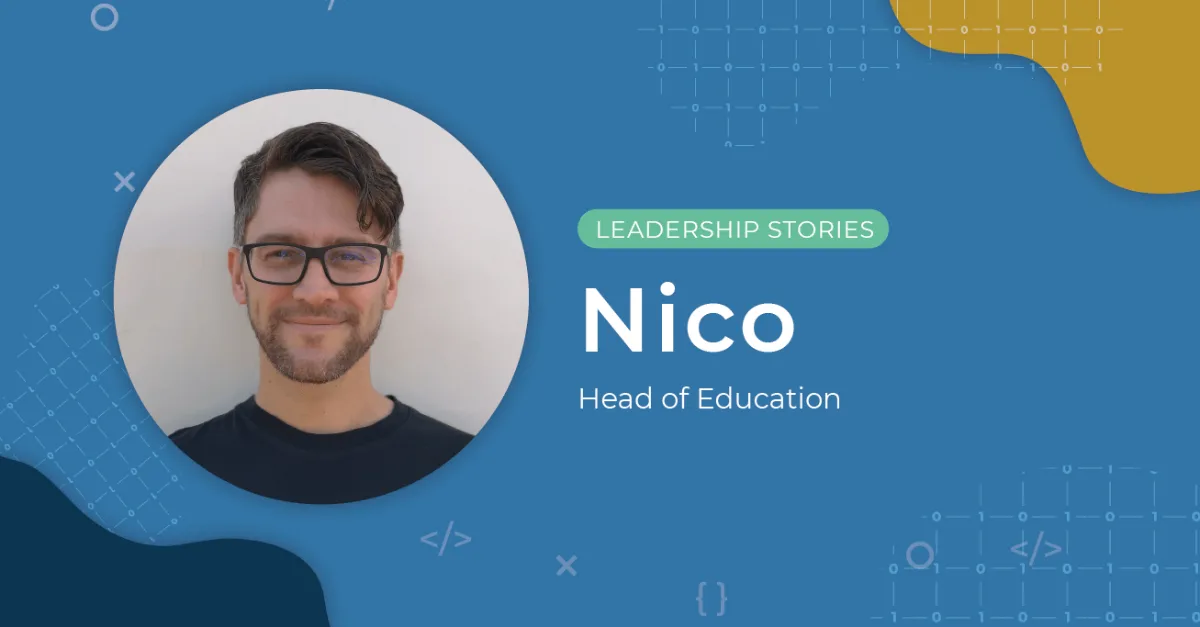
HyperionDev Leadership Stories: Nico Kruger
Building one of Southern Africa’s biggest EdTech providers needs more than just talent: it also requires nurturing that talent to excel into leadership positions. Today’s HyperionDev Leadership story features Nico Kruger, our Head of Education.
Building one of Southern Africa’s biggest EdTech providers is only possible with one thing: an unrivalled, world-class tech education. This education would be impossible without a course structure that teaches critical programming skills in a well-paced structure that makes sense to students and prepares them for a tech job in a time- and cost-effective way. That is where Head of Education Nicolaas Kruger comes in: his ability to keep our bootcamps effective, competitive, and delivering great value to students is why he has one of the most crucial roles in HyperionDev leadership.
Nico comes from an academic background in ICT and Computer Science, but has over a decade of experience in education, on all levels, from giving lectures himself, to managing programs, to designing whole curricula. As the Head of Education, Nico oversees the bootcamps we offer at HyperionDev, making sure the content taught is up to date, that mentorships are working, and that the course structure is working. It also involves being innovative and able to overcome challenges, like making sure a global pandemic does not disrupt our bootcamps for even a second.
What attracted you to HyperionDev?
A lot of my past experience has been with companies who are in their scale-up phase. HyperionDev is now at that point where the magic is going to happen and I want to be a part of this. The opportunity to head up this established tech education leader’s Education division and be a part of HyperionDev leadership was not something I was going to pass up. For me, it was a fantastic opportunity to grow my career, and put my years of education management experience to the test.
Tell us about your career development. What did the journey to HyperionDev look like?
I’ve worked in EdTech as a lecturer, management assistant, academic manager and course coordinator for the past 10 years now. It’s been a steady progression: each year I would take on a little more responsibility, and take on new challenges that pushed the limits of the position at the time. My current position in the HyperionDev leadership is really the result of a decade of focus on building my career in this direction, and being Head of Education is the pinnacle of my career (so far).
What are your biggest achievements since you joined HyperionDev?
The COVID-19 lockdown pretty much put a stop to South Africa’s economy, society and education. This was a tremendously challenging time, but it also saw two of my biggest accomplishments.
First, my team and I reacted quickly to the lockdown news, so that all students who were taking on-site bootcamps could learn online with as little disruption as possible. We pulled this off in less than 2 weeks. Being able to keep our bootcamps open, when everything else was closed, was a fantastic moment for me.
We were also able to design, build and roll out our first credit-bearing bootcamp during the national lockdown. Launching a brand-new 6-month bootcamp is hard enough, but launching an advanced program that teaches software development alongside web development – and which includes a guaranteed internship – was perhaps the highlight of my year.
Who do you consider to be important sources of inspiration?
For me, the people I look up to are those who are embracing new and disruptive ways of teaching students critical skills, and who are doing it with phenomenal results. I look up to people like Reaan Immelman (the Head of Education Delivery at ABSA), Sam and Rob Paddock (the founders at GetSmarter), and Amy Johnson, the Chief Academic Officer at Valenture Institute – I count myself very fortunate to have been able to work with these individuals. Lockdown showed us how crucial alternative models of education are for seamless, uninterrupted learning – and I’m constantly inspired by these industry figures who are at the forefront of making our disruptive models a part of the new normal.
How would you describe the culture of HyperionDev?
I love working with the various teams and departments. They’re a vibrant and forward-thinking group of people that are going to take the company and the industry to the next level.
What would you say is the most important value someone would need to work at HyperionDev?
I would say that Adaptability is key – We work in a fast paced ever changing environment that will challenge anyone that comes into the business. If you can keep up, you will flourish. That said, you are supported by an amazing team that will assist you in getting over the line.
In your own words, why should talented people come and work in your team?
As I mentioned before, HyperionDev is at that magical point where we are about to start rapid scaling. The challenges we will face will make careers and change both the tech industry and the way people think about education – it’s a phenomenal opportunity. Anyone who wants an extraordinary career can’t say no to that.
What do you do to de-stress after work?
Over the weekends, I like spending time with my family and from day-today, I enjoy reading and cooking.
Are you an A-player, or a talented professional who cares about accessible tech education? If so, we’re looking for people like you to join the team leading Southern Africa’s largest provider of tech education, and become a part of HyperionDev leadership. Our diverse, international team enjoys medical aid packages, remote working allowances, a generous leave policy, and real avenues for career growth and promotion.
Visit our career page to see all our available positions and apply to join our team today!
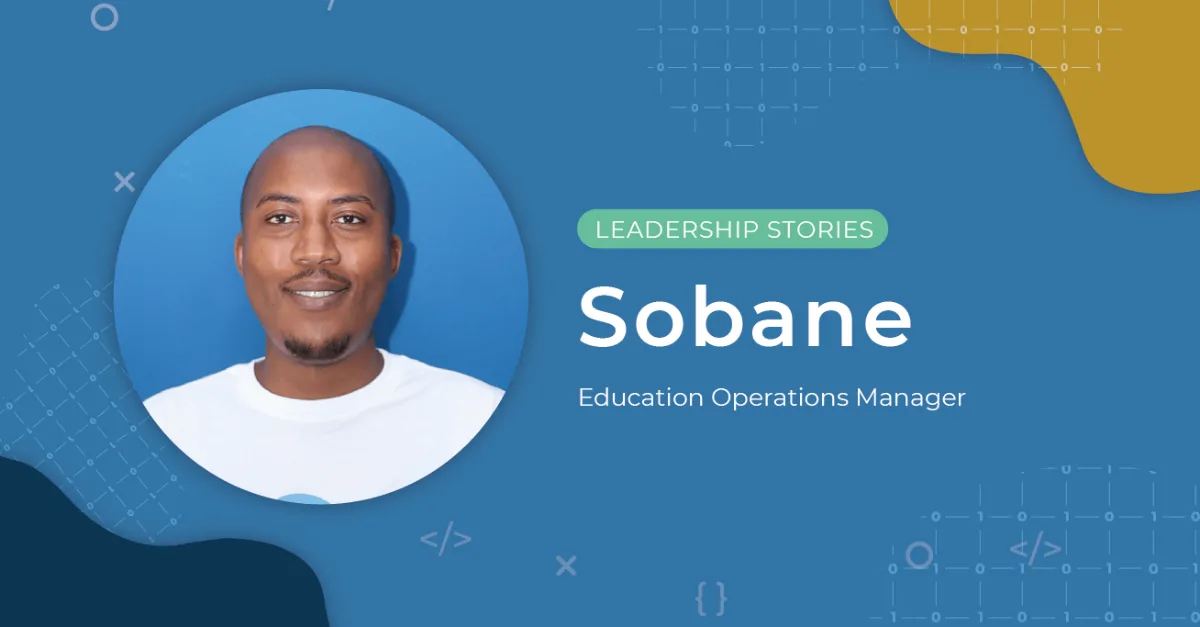
News & Announcements
September 7, 2020
HyperionDev Employee Stories: Sobane Motlomelo
Building one of Southern Africa’s biggest EdTech providers requires nurturing that talent to excel into leadership positions. Today’s HyperionDev Employee story features Sobane Motlomelo, who started as a coding mentor and grew to become our Education Operations Manager.
Even the best education is nothing without an orderly, well-structured learning environment and system – and keeping our bootcamps at their world-class level requires a team of expert educators and operations specialists. In this HyperionDev Employee story, we look at Sobane Motlomelo, our Education Operations Manager, who has been with HyperionDev from its very start. From personal mentoring, to sales, to marketing, Sobane has been a part of many facets of HyperionDev’s inner workings – and his years of experience and passion are a vital part of keeping our bootcamps operating at peak success.
Sobane joined HyperionDev when it was started in 2012. As a final-year student studying Computer Science & Mathematics at the University of Cape Town, Sobane started as a mentor, helping hundreds of students with their roadblocks in programming. He excelled at it, and soon grew to lead a vast international network of volunteer coding tutors and mentors. Over the next few years as a HyperionDev employee, he would take charge of many different projects and departments, from marketing and community management to sales, and today serves as our shining example of the possibilities that lie where hard work and career development opportunities meet.
Tell us about your beginnings at HyperionDev
I consider myself very lucky: I’ve been a part of HyperionDev from its very beginning in 2012. I started out mentoring students (because of my background in Computer Sciences) but since then I have had a chance to experiment and grow across a range of teams. I’ve headed up Marketing, managed different local and international HyperionDev communities, overseen Developer Relations, led the Sales team, and worked at the helm of Customer Support. Now, I’m back in Education.
Each of these has been a wonderful experience with lots of lessons and challenges – but more importantly they were a lot of fun, and they contributed greatly toward my professional development. HyperionDev has helped me challenge and push myself beyond my comfort zone, and I’ve been able to develop a really wide, rich skill set – especially under the continued guidance and coaching from the CEO, Riaz Moola.
What does your job involve?
As Education Operations Manager, I make sure that the bootcamps are working efficiently and that students are learning. My role oversees a lot of interrelated elements: properly onboarding all bootcamp students, making sure our bootcamps and content are up to date with industry practices, monitoring students’ progress, and ensuring that each of our students receives excellent support and experience throughout their journey with us.
What motivates you to come in (or log on remotely) in the mornings?
I’ve always loved education and helping people. Being able to directly contribute to and impact someone’s life in such a meaningful way is greatly fulfilling. We cater to a wide range of demographics, and there’s nothing as heartwarming as witnessing students successfully graduate from our bootcamp and ultimately reaching their career goals. Every time I see a student graduate, I’m reminded why I love what I do.
What do you enjoy most about working as a HyperionDev Employee?
The diversity of the team makes work interesting and engaging; and working alongside some of the smartest people I’ve ever met has been nothing short of inspiring. The cross-team collaboration is amazing and everyone at HyperionDev is goal-driven.
What are your biggest achievements since you joined HyperionDev?
I’ve been here since the beginning, so there are definitely too many to list: but if I had to pick it would be our run of successes in 2016, when HyperionDev won first prize on the Africa Innovation Challenge run by Facebook’s Internet.org, and we got invited to attend Facebook’s Annual F8 Conference in Silicon Valley. I got to meet and network with a lot of incredibly hard-working, talented people – one of them being Mark Zuckerberg. There was also the time I got to travel to EdTechXAsia in Singapore alongside 10 other tech start-ups from South Africa. These are just a few of the incredible opportunities I’ve been afforded at HyperionDev, and they’ve been such an important part of my career development.
How do you ensure that you keep yourself upskilled and knowledgeable in your field of expertise?
I believe learning never stops, especially in the tech space. Because of this, I’m a very busy guy: I’ve always got my nose in the latest industry journals or publications, and I try to squeeze as many conferences, workshops, and EdTech events as I can into my calendar.
What would you say is the most important value someone would need to work as a HyperionDev Employee?
I’d have to say the HyperionDev core value of ‘Progress Always’. As a leader, I’m all about building up from above. I believe in continuous learning and improvement: always exploring new ideas and opportunities while excelling at your craft.
At HyperionDev, we’re always looking for talented professionals who care about making an impact through accessible tech education. If you have a passion for education, and want a fulfilling career that makes a daily difference in people’s lives, then we think you should join us. Our diverse, international team enjoys medical aid packages, remote working allowances, a generous leave policy, and – as Sobane’s eight-year journey proves – real avenues for career growth, experimentation, and promotion.
Do you think you could be our next star HyperionDev employee? Visit our career page to see all our available positions and apply to join our team today!

Software Engineering
7 Reasons Software Development Is a Highly Appealing Career
It's no secret that working as a developer offers a variety of perks. Here are 7 reasons why you should become a software developer.
Becoming a software developer has always been a good idea, with more and more businesses and services moving online and with our devices becoming an increasingly important part of our lives. Now, with the insecurities of work and business being made all too clear by the COVID-19 pandemic, it’s a more enticing career path than ever before.
Becoming a software developer has many perks, pays incredibly well, and opens up a whole new world of career opportunities in some of the fastest-growing industries out there.
Here are seven great reasons why you should strongly consider becoming a software developer.
1. Software developer salaries are among the highest in the world
The incredibly high salaries of workers in the tech industry are by far the biggest attractions to people who want to get into software development. On average, a software developer makes R304,890 per year. Simply put, software developers get paid very handsomely for what they do: junior- and entry-level pay is on average higher than most other careers, and senior-level pay routinely dominates global salary rankings for highest-paying careers.
2. Software development has a relatively low barrier of entry
Programming is far more accessible to the average person than most other conventional careers. Law, medicine, accounting, engineering: these and the other usual go-to ‘big’ career choices require expensive degrees, years of study, and intensive exams or industry body registrations to accredit you as certified to actually work in that profession.
Anyone can learn to code, regardless of their age, previous coding experience, and career/educational background. Want to switch careers from something totally unrelated to programming? It’s been done many times before. With programming, you have a range of far more accessible education paths open to you, for example specialised mentor-led bootcamps and online courses. Plus, and the ability to write good code and being able to prove your experience in creating highly-functioning programs are far more valued by prospective employers than degrees.
3. Software developer skills are future-proof
COVID-19 and shutdown showed the importance of tech skills. As brick-and-mortar shops and traditional industries ground to a halt or were put on lockdown, the tech space thrived. Internet use and the popular of online and digital services skyrocketed. These new chatbots, websites, online stores, and new customer platforms need whole teams of trained professionals to keep them running smoothly. In short, the world relies on software developers more than ever, meaning their job security is about as good as it gets.
And it’s not just coronavirus: AI is a real threat to many industries’ job security.
One major element of being a developer in the next 10 or 20 years is that it is a fairly future-proof career in a world that is becoming increasingly automated. As computers and software rapidly advance, they can, and will, replace many current jobs in society – research estimates that 47% of total careers in the USA, which require human labour, are at high risk of being automated in the future. However, these machines and algorithms will always need to be developed and maintained, which will only add to the growing demand for developers.
4. Software developer skills are highly transferable
If you know how to solve problems logically and can quickly grasp the syntax and structure of a coding language, you can easily switch languages and tech stacks to meet the rapidly-changing tech industry. It’s not like law, where moving to a new law system would require extensive retraining and re-registration.
Plus, an understanding of software, and the high level of tech literacy that requires, is a beneficial tool for almost any career you find yourself in – especially with the increasing reliance that our society has on digital technologies and platforms.
5. Software development is a fast-growing industry
Even before COVID-19 forced hundreds of businesses to turn to online and digital services to keep their operation going, the tech industry was a growing force. To this day, the global demand for professional programmers far outstrips the supply, and with more and more businesses going online, that demand is only set to increase.
6. Software development allows remote work and better flexibility
Software developers are a part of an industry that has long been ahead of the curve in terms of modern work requirements and flexibility in the workplace. Most developer jobs include more generous allowances for working remote or at home. Plus, the global demand for talented software developers means that often their dev teams are spread across the world: meaning commuting to the office is simply impossible.
What this means for you is less time commuting, less office politics and micromanagement, and more freedom in approaching your work. This directly results in more time available to do the things you want to do – such as learning new programming skills, picking up a side hustle, exploring a new hobby, or spending time with your family – instead of being stuck in traffic or locked in the office until close of business.
7. Software development has better opportunity for international work
Having strong programming skills is a huge benefit in the world of work, as countries across the world are fighting to attract tech talent. In the past decade, programming and tech skills have rocketed to the top of international critical skills lists, to a point where knowing how to program well is in effect your passport to working – and living – wherever you want.
Are you thinking about becoming a software developer so that you can benefit from amazing salaries, fulfilling work, incredible career opportunities at home and overseas, and some of the best job security around? Our specialised 1-on-1 mentor-led coding bootcamps will help you to learn practical software development skills to become job-ready for your new career in tech in less than 6 months. Best of all, they can be taken online or part-time to suit your schedule, so that you can fit a tech future into your spare time.
Enrol for a Software Engineer Bootcamp today: https://www.hyperiondev.com/
Editor’s note: This post was originally published on 26 October 2017 and has been updated on 03 September 2020.

Tutorials
Make your own Python business sales program with just the HyperionDev Free Trial basics
Learn how to build a program that cleans up messy text file sales data, and returns clean information about profits and business activity.
In this series, we learn how to make simple Python programs for real-world problems using just the material taught in HyperionDev’s free trial. Today, we break down how to code a basic program that goes through a confusing, pages-long text document of sales information to give a business owner his total sales, total number of items sold, and tips payable to his workers.
The real-world problem: a broken sales machine
Let’s imagine the scene: your friend John runs a hot food stall at club rugby games on the weekend. His stand is doing very well, and food is flying off the shelf… when his point of sales machine suddenly breaks. Not wanting to stop trade to wait to fix the machine, he tells his staff to just write down their names, the items they sold, and whatever tips they made on a notepad on his tablet.
Of course, after a day of hectic sales, he checks the list and sees that it’s a dense mess, with 500+ sales made, and thousands of items in the note. He doesn’t have the time to sit there and do it all by hand, so he calls you, asking if you can somehow pull useful information from the confusing text mess. John wants to know the key info about how much his stall sold of each item, how much money he made, and how much he has to pay out to each person who manned the tills that day.
John is in luck, because this is exactly the kind of work that Python makes quick and painless.
Setting up what you need for the program
To start, let’s give John’s sales information to the program . We can do this by creating a string that is equal to the text of John’s iPad sales note (for brevity, the example we’re using is only 50 sales items long, but this code will work on a similar file that’s thousands of items long):
Next, we need to know what John was selling and how much each item was selling for, if we want to figure out how much money he made. For this, we’ll put the prices of the food and drink on sale into dictionary objects. Dictionaries – denoted by curly brackets “{}” – pair up two variables in a particular manner. This allows us to pair up items and their prices as key:value pairs. We can always update this dictionary if John’s prices ever change, or if he wants to add more items to his stall in future sales days!
Get some clean data for the program
Now that we know what John’s stall sells, let’s clean up his sales info. While spaces are good for readability, we only care about the variables themselves and their values. Removing spaces will make the list easier to search and manipulate with our program.
One way to accomplish this is writing a loop that goes through the string one character at a time and replaces or removes characters that match one we provide, but that would take more space and lines of code. We always want to look for the most efficient way to write our code, so instead we’ll be using the integrated function that Python has for this, .replace(). We can tell it what to look for, and what to put in its place, all in a single line – plus, we can also use it to remove any accidental characters we don’t want in the sales receipt, or deal with the possibility that each salesperson would write a different character (other than a semicolon, say a ‘#’) after they write down a sale.
Now we want to take that large, unwieldy wall of text from earlier, and make it a far more manageable list of sales. Remember that a list is just a group of variables combined in a single collection through the use of square brackets.
The sales team at the stall separated their individual sales info by using a semicolon. We can use this info in Python’s integrated .split() function, which takes a string and turns it into a list of items, splitting up the list elements according to a certain rule you provide.
This will give us a list of all individual sales transactions – but if you print this list, you’ll notice that each ‘sale’ is a string, and not a list object! That’s a problem, because we want to have each thing the sales person writes down be an item in a list we can easily examine and use. So, let’s combine another .split() function with a loop that goes through that list of strings, and turns each string into a list, splitting items wherever there is a comma (the punctuation the sales team used to separate each item they sold in a single sale.)
As a reminder, a for statement is a simple loop that allows you to do something with each element in a given collection of data.
If you print this new list, you’ll notice that it’s a list that contains lists. You’ve just created a nested list – these are powerful programming objects that you’ll use in a lot of future programs.
Get each salesperson’s list of sales
Now that we have a list of individual sales lists, we can make those calculations John asked us for. Let us first create empty lists for each employee.
We will fill these with information from the main list.
Did you notice that the first item on every sale is the sales person’s name? We can use this to find which sales belong to who, and put those into their own personal sales lists using Python’s .append() method. Appending means adding a new item to the end of a list. As with the other integrated methods, it saves you time.
Remember that the Python language is zero-indexed, meaning we start counting list items from zero, and not from one (like a normal person would). So if we check to see which name is in the first element of the list – AKA index address 0 – we can find who made the sale.
We will create a function to do this. However, to avoid having to create a separate function to find each team member’s sales, we will create a single function that receives a parameter to do its work. A parameter is a special kind of variable that serves as a kind of input for the piece of code you’re executing. Imagine you’ve got a program that paints, and you give it a jar of red paint: it will paint, using the parameter of red paint.
Using a for statement, we will check each item in the list, using an if statement to check the name in the first list item (index 0). This if statement does something depending on a certain condition being true: here, if the first list element of each sale matches a person’s name, we add that list to their personal sales list.
Calculate the total items sold and total sales revenue
Now we need a function to count the total number of individual items sold, tally them up, and calculate total revenues from all sales. This function will use John’s dictionary of items for sale and their prices.
We do the same thing as we did above: create a function that uses John’s dictionary object of items and prices as a parameter. Using another for statement, this function will run through the dictionary object, checking each key against our list of items sold. It then finds the price of that item using the integrated Python dictionary method .get(), which returns the value (the selling price of an item) of each key (the item for sale). For each key in John’s sales dictionary object, it gets the price of that item with .get(), counts the number of times that item appears in our sales info using the integrated .count() function, and then tallies it all up, printing the result to the user. We also keep a track of how many items we sold in total with an integer variable called TotalSales.
Remember: when you try to print something that isn’t a string, Python will display an error. To prevent this error, you have to convert that variable into a string first, by using the integrated str() function.
Now that we have the main functions we need, let’s use them (also known as “calling the functions”), providing them the sales list and dictionary of sales items as their parameters. They’ll take those lists, and do what we told them to do with the information those lists contain.
Help John see who is working hard, and how much tips to pay out
John also wants to know how hard each employee was working so let’s tell him how many sales each person made. We can do this by checking how long each sales list is, using Python’s len() function.
Finally, John wants to make sure he’s paying each person the tips they earned. We know from looking at the sales lists that the last thing each sales person wrote down was how much of a tip they made. In Python the first item in a list – as we said – is at address 0; because of something called negative indexing, the last item in that list will be at address -1. By using a negative index we can fetch the last element in a list even if we don’t know how long that list is, and tally up these values using a for statement.
Let’s create a function that takes a salesperson’s sales list as a parameter, and check the last item of each sale, each time adding the number we find to a running tips total.
Now we can call the function we just made, using each person’s sales list as a parameter. Print the result, and you’ll find out how much they made in tips.
There you have it: using just the lessons learned in HyperionDev’s free trial, we’ve taken John’s messy note/text file and turned it into usable data that he can use to manage his business.
Of course, our free trial only teaches so much: to learn more advanced concepts and abilities – like being able to turn this simple code into an actual app John can use to manage his stall – you can sign up for the full bootcamp. Our bootcamps in web development, software engineering, and data science teach you practical skills for real-world applications like this. Best of all, you get your own personal mentor and frequent expert review of the code you write, all so you can graduate as a job-ready developer in less than 6 months.
Find out more about our bootcamps here, and sign up for your free trial today.
News & Announcements
August 27, 2020
HyperionDev Leadership Stories: Shimaylan Singh
Building one of Southern Africa’s biggest EdTech providers needs more than just talent: it also requires nurturing that talent to excel into leadership positions. Today’s HyperionDev Leadership story features Shimaylan Singh, our Head of Admissions, Collections and Student Success.
Creating Southern Africa’s leading provider of tech education takes more than just having the most talented team out there. It also requires a mindset of growth, development, and leadership, so that the talent you have can continue excelling and striving for the next big thing. In this HyperionDev Leadership story, we look at Shimaylan Singh, our Head of Admissions, Collections and Student Success who joined HyperionDev in 2018 as a Management consultant, and rapidly grew to becoming an integral part of HyperionDev’s core leadership.
Shortly after completing his Bachelor of Commerce degree at the University of KwaZulu-Natal, Shimaylan moved into the sales industry and worked hard to grow into management roles. In the space of a few years, Shimaylan joined some of the most recognised tech companies around, like Yoco and GroupOn. Eventually, he was attracted by HyperionDev’s mission of enabling education that is an accessible alternative to traditional university degrees. Since coming on board in 2018 as a management consultant, Shimaylan has rocketed from achievement to achievement, helping us provide accessible tech skills education to thousands of students, and earning a place in the core HyperionDev leadership team.
What drew you to joining HyperionDev?
The mission and vision of the company addresses a very real and on-the-ground gap that speaks to a dreamer like me.
What are your biggest achievements since you joined HyperionDev?
I’ve been lucky enough to be involved in so much over the last 3 years, but I’d say my highlights would be successfully heading up various teams within HyperionDev. Leading my colleagues and department through some really significant moments like refreshing our brand image while launching our first onsite campuses in Johannesburg and Cape Town, growing and needing to move into new office spaces, defining and creating our Careers function, and launching HyperionDev’s latest Certified Full Stack Web & Software Engineer Bootcamp.
I’ve also been able to lead and even create the new Collections team in our strategic response to the negative impacts of COVID-19 and the national shutdown. I count the fact that hundreds of students can still learn how to code – even under the toughest lockdown in the world – as a huge success.
What would you say are your leadership qualities, and how do you keep yourself and your team motivated?
I think I am a natural leader and have decent business acumen. Caring deeply about the main purpose of the company is essential to great leadership. I come from a family of educators, so being in the education space is something that energizes me. Contributing the way that we do [to creating accessible tech education], and having good relationships with the people in my team keep me inspired and motivated.
Who do you consider to be important sources of inspiration?
I’m personally inspired by a wide range of people and professionals from all walks of life. The people I look up to are figures like Ronald Erasmus, Alan Watts, Andrew Yang, and Maya Angelou. I’m also constantly inspired by the people I work with, the other HyperionDev leadership, and the huge accomplishments they’ve brought to our team – like our Head of Wellness and Finance, Amiya Sharma. Seeing others excel really drives you to strive for better.
How would you describe the culture at HyperionDev?
I’d say it’s best described by our company value of Progress Always. We get things done, and work in a high performance environment of A-players. HyperionDev has a way of showing you your weaknesses, which motivates you to look at them and work on addressing them. It’s a culture of growth.
What would you say is the most important value someone would need to work at HyperionDev?
Definitely the core value of Problem Solving. It’s a growth-focused value that’s central to both your growth as an individual and the growth of the company. It drives self-fulfillment, serves the business mission, and creates more value than just the sum of the problems solved.
Are you an A-player, or a talented professional who cares about accessible tech education? If so, we’re looking for people like you to join the team leading Southern Africa’s largest provider of tech education. Our diverse, international team enjoys medical aid packages, remote working allowances, a generous leave policy, and real avenues for career growth and promotion.
Visit our career page to see all our available positions and apply to join our team today!

Student Success Stories
How Bettina Switched to Tech & How We Supported Her Journey
With the growing financial devastation of lockdown, more and more people are thinking about how to switch careers to the high-paying tech industry. One of these people is HyperionDev student Bettina Caldeira, who proves that starting your coding journey doesn’t have to be worrisome or difficult.
COVID-19 has had a devastating effect on our economy. Retrenchments, pay cuts, and reductions in work hours are a ‘new normal’ thanks to our lockdown, curfews, and growing list of nationwide restrictions on business activity. Just looking at the statistics of the economic decline in our country, it’s not hard to see why so many people want to switch careers to tech, where job security, good pay, remote work, and career growth are significantly more guaranteed than even ‘essential’ services.
According to Statistics SA, the official unemployment rate increased from its already 11-year high to 30.1% in the first quarter of 2020. Rising unemployment has been a grave issue for over a decade, but with the devastating effect of COVID-19 and the restrictions introduced to curb its spread, it will only get worse. Between 1.5 million and 3 million jobs losses are thought to have been lost during our extended lockdown, a horrendous outcome that could increase our official unemployment rate to as high as 50%.
Making the nerve-wracking decision to switch careers to tech
One of the many millions of people affected by the lockdown’s economic fallout was HyperionDev Software Engineer Bootcamp student Bettina Caldeira, who signed up for our online, part-time bootcamp after her industry came to a sudden stop. It wasn’t easy to decide to switch careers to tech, but Bettina knew that it would be a worthwhile change that could build her future.
“I worked in the Film Industry for many years, but unfortunately due to Covid-19 the SA Film Industry has slowed down by 90%. I love the work environment in film, but I’ve always been fascinated by the tech world. Due to my job in film coming to a complete standstill, it gave me time to finally look at coding courses and to see what I could potentially do in this field that I’ve loved from afar for so many years. In a way, the bad news was also a blessing in disguise.”
“Bootcamps are great, and fit my schedule perfectly!”
If you want to switch careers to tech, you’ll need the right set of skills for the job – and with so many different options to learn how to code, Bettina was at first hesitant about coding bootcamps. Soon after signing up, she realised that her fears were unfounded, as she quickly settled into a personally-involved rich community of students with similar interests, work ethics, and career dreams – not to mention a learning structure that puts personal mentorship at the heart of its education.
“I thought bootcamps were a good idea, but probably very impersonal. I was wrong about the latter – they’re not impersonal at all! There’s a great sense of community with fellow coders on many different platforms. From Whatsapp groups, to Github, to Discord… and you get a mentor you can chat to five days a week. So far, it’s great – and it fits in perfectly with my daily schedule!”
1-on-1 mentorship to ensure your personal growth in coding
Learning how to code isn’t easy for a complete newcomer who is more used to cameras than compilers, but with our focus on 1-on-1 mentorship and personalised growth, Bettina has been able to make quick and consistent improvements on her coding journey.
“It is challenging but not impossible. I’m a total beginner, and I find the online course helps to direct me in the right direction. With perseverance and an ability to research well, I’ve been able to learn the correct code – all from various developers who share knowledge and support online. It’s great! Plus, Dayle (my 1-on-1 mentor) is very supportive and gives good constructive criticism. I have had trouble with two different tasks so far, but with Dayle’s feedback I’ve been able to address the task with renewed energy.”
With her mentor’s constant guidance, Bettina is well on her way to realising her big plans for her future in tech: to get a coding job and start learning as many new coding languages as she can.
“In the immediate future, I want to get a software engineer position with the assistance of HyperionDev, God willing. And in the next two years, I will have learnt many more coding languages which can only be a good thing, as the demand for more versatile knowledgeable coders is growing yet again.”
The lockdown has wreaked havoc on the economic landscape: salary cuts, work hours reductions, and retrenchments are increasingly common. However, the tech industry is still growing, with thousands of businesses across the globe turning to remote work, digital services, and online alternatives just to keep business going and get their work done. With this ‘new normal’ where everything is digital, you need more and more tech professionals to keep it all running smoothly.
Our bootcamps get you job-ready skills to become a professional software engineer, web developer, or data scientist in less than 6 months. Best of all, you’ll have access to your own personal mentor who will get you programming to an industry-aligned standard, with frequent practical capstone projects so that you can practise real-life developer skills in applications that professionals work on every day.
Are you thinking about starting your journey to learning how to code so you can join this fast-growing, high-paying industry? Sign up today for your free trial.

Career Advice
Lessons from COVID-19: we shouldn’t wait for universities to reinvent themselves
In a recent Quillette article about alternatives to university, Eric R. Terzuolo argues that COVID-19 could be a drastic force for universities to change their teaching model. We think it’s time the world realised there are faster and more affordable means to getting a world-class set of skills for a promising future.
The arrival of a ‘New Normal’ is being touted in all industries and sectors of society. The way we work, how we socialise, and how our societies function at a basic level have been changed by the far-reaching effects of COVID-19 – and universities across the globe have been struck by this same wave of disruption.
As professorial lecturer and university education specialist, Eric R. Terzuolo, outlined in a recent Quillette article, COVID-19 will be a force of considerable change for tertiary education institutions around the world. However, as we will argue, these changes are something that students can’t afford to wait for. Instead, our society should embrace alternatives to university as equally valuable systems of education.
Universities and where they fit in the “new normal”
In his article, Terzuolo makes several key observations about the challenges that universities face under the ‘new normal’.
“The COVID-19 pandemic’s full impact on higher education isn’t easy to predict. But it’s certain to extend past short-term decisions about whether to hold in-person classes during the coming academic year. Many universities may well be forced to lower tuition rates, as students balk at paying full freight for classes conducted by Zoom.”
The author argues that universities must either rethink how they deliver value to students, or completely slash the tuition they charge for a degree program. As he puts it quite bluntly:
“University officials who imagine that they will be able to charge last year’s rates for an even partly virtual experience are existing in a state of “consensual hallucination.””
Universities will be hit hard by the ‘new normal’
The challenges that COVID-19 introduces into our traditional education model will be especially difficult for smaller, lower-ranking colleges and universities. As Terzuolo says:
“Big players, such as Harvard, MIT, and Stanford, will partner with the largest tech companies to create hybrid online-offline degrees, expanding enrollments drastically, taking in fully qualified students they currently do not have room for on their bricks-and-mortar campuses. According to this view, the top 50 universities globally are likely to be fine. But numbers 50 down to 1,000 will not… We should be open to the idea that the current system isn’t the only one that can produce value for students.”
Simply put, universities are growing too big, becoming too expensive, and creeping further out of reach of the people who so badly want a tertiary education:
“Rising tuition combined with flat middle-class incomes in the United States have conspired to create a situation that was unsustainable even before COVID-19 caused educators to begin having this difficult conversation.”
This is especially true in South Africa, where economically disadvantaged students yearn for powerful alternatives to university education.
The state of South African tertiary education
If middle-ranked universities in the US are sure to be hit hard by lockdowns and economic decline, where does that leave South African universities, which exist in a space where income disparity, poverty, economic decline, and joblessness are even worse.
Looking at our economic landscape, it’s clear that universities are in for an extremely rough ride. Even before Coronavirus was a concern, South African youth were simply unable to afford a decent education. According to Statistics SA, more than half (or 51%) of youth aged 18–24 claimed that they did not have the financial means to pay for their tuition.
The financial impossibility of tertiary education is compounded by the fact that many people – young and old – just can’t find work. Approximately 8.2 million (40.1%) of South Africa’s 20.4 million young people aged 15 to 34 are not in employment, education or training of any sort, according to the latest figures released by Statistics SA in the Quarterly Labour Force Survey (QLFS), and the official unemployment rate increased (from its 11-year peak) by 1.0 percentage point to 30.1% in the first quarter of 2020 compared to the fourth quarter of 2019.
All of this financial precarity was a serious problem even before COVID-19 started wreaking havoc on our society. However, with between 1.5 million and 3 million jobs losses predicted during the extended lockdown, analysts fear that a COVID-19 and lockdown ‘jobs bloodbath’ could obliterate the jobs market, and increase unemployment to as high as 50%. The economic background makes it clear that South Africans need affordable alternatives to university education.
The university model is overwhelming and inflexible
Even for those who can afford to get into university, one must seriously consider what value these universities are delivering under a national lockdown. Some degree programs simply can’t be completed outside a university setting (how many physics or chemistry experiments can you do at home?), but even the ‘softer’ subjects – for example, in the Humanities and Economics departments – beg the question of what value one can really derive from a four-year zoom meeting that costs up to half a million rand.
Universities are already finding themselves battling to adapt to this ‘new normal’: already reports on the big names in South African tertiary education reveal the difficulties of organising, enabling, and delivering an online-only education. Where international bodies have to worry about their platforms being available online 24/7, and having decent teleconference lectures, South African universities have to cope with the additional pressure of having to provide data bundles, laptops, and other support services to students. Universities find themselves caught between a rock and a hard place: diminish their value offering to be affordable; or maintain their current model and services and remain out of reach of thousands of economically disadvantaged South Africans.
Ed-tech has said it for years: it’s time to recognise alternatives to university education
To keep delivering a valuable, useful education to people in the post-coronavirus world, students, government and all stakeholders need to think beyond the limited model of formal tertiary education, and embrace accessible and affordable alternatives to university.
Right now, there are powerful education models that are designed around the fact that few can afford the time and money sink of university. Online courses, MOOCs, and coding bootcamps like our own are ideally positioned to meet the new demands of a world in lockdown, while maximising the value that students can derive at a minimised cost.
On their own, coding bootcamps boast several great benefits that keep them agile and able to deliver value to students:
Lean, outcome-focused education
Over the years, universities have slowly expanded to offer a whole range of ‘extra’ attractions outside of their core mandate of education. Yet while sport societies, extra-mural clubs, and assistance programs are nice to have, the pressures of lockdown and economic decline necessitate cutting back on luxuries to focus on the core deliverables: namely, a great education that prepares students for the jobs market. In a post-corona world, students need education models that are leaner and outcomes-focused, and more able to adapt to changing circumstances without sacrificing on its core value offerings.
Minimised investment for maximised returns
Universities are widely and falsely perceived to be an automatic ticket to success. However, the more than 31% of all South African graduates who are currently unemployed know that a degree doesn’t guarantee much; and with the value of a bachelor’s degree in decline (how many jobs require a Master’s degree as a basic minimum in their advert?), students must seriously look for alternatives to university education that don’t force them to sacrifice 5 to 6 years of lost income and job experience just to be entry-level employable. With a coding bootcamp, students can graduate and enter the job market in an eighth of the time; what’s more, they’ll have better access to gaining practical experience through internships and projects that involve industry-relevant work.
Practical, job-ready skills focus
University education is theory-heavy and intensive by design. While this leads to a deep understanding of the core principles of a professional discipline, it also means that graduates have little space and time to develop on-the-job experience and skills. Smaller, skills-focused courses are far better positioned to build key job skills much more quickly – and without having to take extra subjects just to get enough credits to graduate.
A specialised, smart education model, and not a one-size-fits-all approach
Becoming a doctor or a lawyer requires years of experience and deep learning – but can the same be said for every other job? Clearly not; yet the course requirements and structure of a degree in English literature are no less demanding than those for chemistry or quantum physics. Instead of fitting subjects into a pre-defined structure, the education structure itself should be refined and honed to exactly fit the subject in question and its skill outcomes.
Edward Terzuolo says that COVID-19 will force universities to reinvent themselves. However, given the serious challenges that face students – in South Africa and across the world – we should not wait around for this to change to magically, hopefully happen.
Instead, society should embrace the simple fact that there are newer, better, more efficient models of education out there. These alternatives are better positioned to deliver critical skills to students, all at a fraction of the cost and time of our colleges.
Students can’t wait around for universities to adapt. They simply can’t afford to.
Do you want to join the tech industry, as a software engineer, web developer, or data scientist, but can’t afford expensive tuition or commit the years of study that traditional education institutions demand?
Our bootcamps focus on what you need to make this career path a reality: job-ready skills, taught by professionals, so that you can get working and earning in months, and not years. Best of all, you’ll get full 1-on-1 mentorship and expert code review at every step of your coding journey, so that you consistently improve towards an industry standard of programming.
Sign up now for a free trial at www.hyperiondev.com

Student Success Stories
How Natasha decided to switch careers during a pandemic
Every day, hundreds of our students prove that you, too, can switch careers to tech. Students like Natasha Lopez show that, no matter how daunting this change can seem, hard work and the right support will get you on your path to a job in the tech industry.
These are difficult times for any career. Cancellations, cutbacks, work hour reductions, partial pay, furloughs, and retrenchments are sweeping the economic landscape. With all these challenges threatening the livelihoods of thousands of career professionals, and so many companies embracing a ‘new normal’ of remote calls, zoom meetings, and digital services, many are considering switching careers to tech. However, deciding to switch careers to tech can be confusing and scary – but you’re not alone. Hundreds of people are successfully making the switch with the help of our specialised mentored coding bootcamps.
One of these people is HyperionDev Software Engineer bootcamp student Natasha Lopez, who signed up to learn programming with us full-time online during the Covid-19 lockdown.
Economic slow-down, and the news no-one wants to hear
When the coronavirus outbreak began, and lockdown was announced, her job in the oil and gas industry was one of the many thousands affected. Her industry was hit hard: the global shutdown and a significant decrease in global economic activity lead to a drop in demand for gas and fuel. With businesses all over shutting down, her industry was forced to cut back.
“Before lockdown, I was a process engineer on contract carrying out design engineering. I worked from home during part of the lockdown, but my contract was terminated earlier than expected because the project scope was reduced.”
Normally, a person facing retrenchment would just job-hop to a similar company that operates in the same industry. However, these are not normal times, and so the normal job search was impossible: companies just aren’t hiring as much, and the job market is flooded with thousands of talented professionals vying for the same positions.
Natasha knew she had to think about her future. Instead of seeing the changes in her life as an obstacle, she tried to see the opportunity they presented.
“The lockdown and restrictions helped me make up my mind to pursue this new skill set because so many companies shifted to working from home. This new way of working that every company is adopting needs a whole bunch of digital technology to stay working properly. That’s where I saw my opportunity. Plus, my brother is a software developer (now Technical Officer) at his company and said that people are in demand in the tech industry and that a lot of the people that they are hiring are straight out of bootcamps.”
With time on her hands due to her unemployed status, Natasha decided to devote the time she had to learning an entirely new, in-demand skill set. She signed up for our full-time bootcamp in software engineering.
“During the lockdown, I saw that I had the time to dedicate to an online bootcamp course because there was very little else to do. Because I worked from home for a couple of months it showed me that I can focus on working for a full day on my own, so I knew I could do the same for an online course.”
Taking the leap and switching careers
Switching careers wasn’t an easy decision for Natasha to make: switching your career and everything you know to enter a totally new field is a big decision, and it was one that had her worried and uncertain about her future.
“I thought that learning to code would be very intense and difficult since I don’t have a background in tech. At this stage of the course, the novelty of it poses the greatest challenge, because it’s so many new concepts; getting through it depends on one’s determination to learn something new and engage with what is being taught.”
Natasha’s Software Engineer bootcamp is teaching her structure, and to take a methodological approach to solving problems. Best of all, when she was stuck, she could always turn to her personal mentor for guidance and advice on writing better code.
“When solving a coding problem, I try to write some semblance of pseudo code, then a skeleton code, and then the code itself. I then get to the bit that I enjoy the most: testing the code and troubleshooting if it doesn’t work as planned. It’s amazing to have a mentor. It feels like I have an ear when I’m stuck on a task. My mentor gives me words of encouragement and explains the problem in a way that I can solve it myself. I think this is useful since I still get the satisfaction of feeling that I did it myself.”
Natasha has big plans to use her new-found skills in software development to improve and expand her existing field of expertise.
“After I graduate and receive my certificate, I would like to get a job as a software engineer or integrate my knowledge in my current career as a process engineer. That’s the beauty of a tech skill set: it fits into everything you already know. For example, software development can be used by process engineers in the niche field of process simulation programming.”
Are you facing your own difficult decisions in your current career? Has the lockdown made you think you need to switch careers to tech?
Our bootcamps will get you job-ready for your developer role in less than 6 months. Our part-time and full-time bootcamps teach real developer skills you’ll need on Day One at your new job, with specialized 1-on-1 mentor support to get excelling in software engineering, web development, or data science.
Join Natasha, and hundreds of other HyperionDev students, who are making their successful switch to tech by signing up for our free trial.

Tutorials
[Tutorial] Build a Python Decoder with HyperionDev’s Free Trial
You don’t need to be an expert programmer to start making your own fun, silly, or quirky programs. Our Free Trial gives you what you need to get started on the journey to become a professional programmer – and with just the essentials it teaches, you can make your own secret message decoder in Python.
In this blog – a follow-on from our last Free Trial Beginner Coding Tutorial – we look at the kinds of programs that a newcomer to coding can make using just our free trial and the programming essentials. This time, we’re making a fun secret encoder/decoder program in Python, to write and decipher secret messages using just the basics that are taught in our HyperionDev free trial.
Let’s begin!
Step 1: Set up what you’ll need
First off, you and your secret accomplice need to decide on a secret codebook, which you’ll use to encrypt or decipher the meanings of your messages. We can do this by creating two lists: one with the normal alphabet, and another with random letters in a jumbled-up order. Remember that a list is just a group of variables combined in a single collection through the use of square brackets. We’ll use these two lists to create a secret codebook.
Let’s declare these lists in our program.
Now, lists are useful, but it can be clunky to iterate through a list to find one character, grab its index, and then fetch an address from a second list. It would be so much easier if each letter of the alphabet had a corresponding partner value… Luckily, Python does this, with a really useful thing called dictionaries! Dictionaries – denoted by curly brackets “{}” – pair up two variables in a particular manner. It’s simpler to just go through a dictionary, find the letter we’re looking for (which will be the ‘key’ in the dictionary) and return its associated value.
Let’s combine our alphabet list with our secret list into one single dictionary. We can do this by using a ‘for’ statement that creates key-value pairs by cycling through a zip object that combines both lists into one object. A ‘for’ statement is a simple loop that allows you to run a certain function or do something with each element in a given collection of data.
Of course, we’ll need to create two dictionaries, one to encrypt normal letters, and another to decrypt the secret letters.
Step 2: Write your code for encrypting or decoding
Now that we have our secret codebook, let’s create the functions that will encrypt or decode your message.
We have a few options here. We could make a loop that runs twice to check each letter in each key-value assignment, however, running two separate loops can be confusing to keep track of, so it’s much easier to just run one single ‘for’ statement to iterate through the message the user types in and return the value from the appropriate corresponding key (here, a letter of the alphabet).
We will create two functions that we’ll use to encrypt or decode our secret message.
Both of these functions will receive a string as a parameter, here named “message”. We’ll get this “message” from the user later.
Step 3: Make sure you’re handling exceptions and errors
Now, before we type in any code, we have to imagine what kinds of messages the user might try to send – does our code account for all scenarios? What happens if they type a number, or a special character? We need to make sure that our code won’t miss these outliers, or break if the user includes them in their message. Also, the keys in a dictionary are case-sensitive, so let’s ensure that our code converts the inputted messaging into uppercase to match the list items we made at the very beginning. To do this, we’ll use an ‘if’ statement to check if the message is in the uppercase, with Python’s .isupper() method. If this returns as false, we make the inputted message uppercase.
To prevent the code breaking when someone adds punctuation, special characters, or numbers, we’ll put the encryption and decoding function in a try-except block that will create a string out of whatever is throwing up an error, and insert it into the string that it sends back to us.
We use a simple ‘for’ statement in this bit of code, set to the length of the message the user typed in with Python’s handy range-length method, range(len()). That way, we don’t need to predict or restrict message lengths.
Let’s copy the code we wrote for the encryption function, and change it around so we can decode messages using our Decoder codebook.
There are ‘simpler’ ways to do this, for example you could use a loop inside of a loop to check each letter in the separate lists to return a result. However, that would be far less efficient. Always look at your code and think about how you could rewrite it to be shorter, simpler, and more efficient (that’s called refactoring).
Step 4: Create the main program code that uses what you’ve written
Now that we have the main body of our code, let’s write the main program that will use our decoding and encryption functions.
It would be irritating to have to restart the program every time you encrypt or decode one message, so let’s make the main body of our program work in a while loop that runs as long as we are sending messages. We can do this by using a boolean, which is a data type in Python which can be either ‘True’ or ‘False’. The program runs for as long our boolean value is set to ‘True’; as soon as ‘sending messages’ is changed to be = ‘False’, the program ends.
Now that the program is running, let’s get the message we want to encrypt or decode from the user.
Let’s ask the user if they want to encrypt or decode this message. We’ll store their answer as a string, and then use an ‘if’ statement to determine which of our functions – decode or encrypt – to call.
Now let’s make that ‘if’ statement. I’ve written in a version that checks both the uppercase and lowercase versions of their answer – you wouldn’t want to have a program fail just because you didn’t press caps lock!
This first piece of code will encrypt the user’s inputted message:
And the second ‘elif’ statement will decode it:
We also have to make sure we’re taking into account a possible situation where the user types in something we didn’t expect. This last ‘else’ statement will print a message asking them to type in the correct command, and just re-run the code.
Finally, we can ask the user if they’d like to exit the secret coding app after every message. If they don’t want to keep sending messages, our boolean ‘sending secret messages’ is set to false, breaking the while loop and ending our program.
—
That’s it! You now have a program that converts messages using Python’s dictionaries. Give it a run, and test it out on this message written below:
QSWIOHAVMIX HK KATJQIOV DFOHBD’K PDOLIKJ JIBQ IMTBDJHAV WOAXHMIO. HJ UDK FATVMIM HV 2012, DK D KEDPP LODKKOAAJK EAXIEIVJ AF BAEWTJIO KBHIVBI KJTMIVJK UAORHVL JAUDOMK D KHVLPI LADP: JA NTHPM DVM MIPHXIO NIJJIO JIBQVHBDP IMTBDJHAV FAO DVSAVI UQA UDVJIM JA PIDOV MHLHJDP PHJIODBS DVM WOALODEEHVL KRHPPK.
Try writing out your own codebook, or encrypting your own message! Are there any other applications you think this program could be used for?
And remember that this is just beginner code written using what is taught in our free trials. You’ll learn much more complex and elegant solutions on the actual bootcamp – but it goes to show that with a bit of experimentation and the beginner essentials, you can make fun, useful, or just plain silly programs to keep you entertained.
Our bootcamps take you from these beginner basics, and help you grow to be able to produce professional-grade code in just 3 to 6 months. We do this through specialised bootcamps that teach you real, practical skills in web development, software engineering, or data science. While you study online, or at our campuses in Joburg and Cape Town, you’ll receive 1-on-1 mentor support from a coding expert to ensure that the code you’re writing is of the standard tech recruiters are looking for.
Sign up today for your free trial.
Full copy of code:
Still have questions?
Contact our Admissions Team, and a real person will get back to you.