
Our latest insights
Read the latest insights


News & Announcements
April 1, 2021
Get to Know Your HyperionDev Mentorship Team
Personal mentorship is what makes our coding bootcamps so successful. Our mentors are there every step of the way to make sure you’re learning to code the way professionals do. We asked our HyperionDev mentorship team a few questions so that you could get to know them a little better.
HyperionDev has been a leader in the tech education space for a number of years, providing over 100,000 registered students with practical, high-quality coding skills. If there’s anything that this time and experience has shown us, it’s this: learning is not a ‘one size fits all’ experience – and learning to code is no exception.
This is why our coding bootcamps focus as much on people as we do on tech. Our novel mentorship system assigns each new student to an experienced coding mentor, so that they get hands-on guidance that’s beginner friendly, at every step of their coding bootcamp.
The HyperionDev mentorship structure ensures that our students progress rapidly and stay on track to graduate, and that every student gets a one-of-a-kind learning experience that fits their specific needs, aptitudes, and schedule.
Our mentors are the heart and soul of what we do at HyperionDev: they take our bootcamps to the next level. We asked a few of our mentors about themselves and their coding journeys with HyperionDev, so here’s your chance to get to know them a bit better.
Here’s what they had to say:

1. I’ve been a HyperionDev mentor for:
1 Year
2. My #1 piece of advice for people learning to code:
Learn to use Google effectively. Google is not considered as cheating!
3. Why I decided to become a HyperionDev mentor:
I became a mentor because I enjoy teaching and educating people. I also love seeing how a student progresses and develops into a strong developer!
4. One of my favourite moments as a mentor was:
My favorite mentor/student moment is the excitement when a difficult problem or task is solved.
5. The best part about being a HyperionDev mentor:
Seeing how students grow and develop throughout the duration of the bootcamps.
6. The thing that excites me most about coding:
The satisfying feeling of finally managing to get your code working after months of working on a project.
7. My favourite resources for coding:
Geeksforgeeks.com and w3schools.com are both great resources.

1. I’ve been a HyperionDev mentor for:
A month. I’m one of the latest team members to join!
2. My #1 piece of advice for people learning to code is:
Learning will positively transform your life, and help you to bloom into a distinguished valuable being.
3. Why I decided to become a HyperionDev mentor:
I wanted to be an HyperionDev mentor because to me it was a great opportunity to have a career where I can do what I love most, software development and share my passion for tech with others.
4. One of my favourite moments as a mentor was:
My favourite moments are when a student finally get those “light-bulb” moments after I guide them and they are able to complete a task that they have been struggling with.
5. The best part about being a HyperionDev mentor:
What I enjoy most is assisting and guiding students to be the best developer they can be.
6. The thing that excites me most about coding:
I love the process of making something from nothing. Coding allows me to put my thoughts and solutions to problems into software that anyone can use.
7. My favourite resources for coding:
Mostly I use blogs on Medium, and learn new things on Youtube.

1. I’ve been a HyperionDev mentor for:
1 year and a month
2. My #1 piece of advice for people learning to code is:
Coding requires all of your attention, all of the time. Keep working at it!
3. Why I decided to become a HyperionDev mentor:
Becoming a HyperionDev Mentor came naturally for me as I enjoy interacting with people and exchanging knowledge on a daily basis. It also came as an opportunity for me to pick up new skills.
4. One of my favourite moments as a mentor was:
Having light-hearted conversations and getting to know the student as a person is by far one of my favourite student/mentor moments. This is because it makes the teaching and learning experience much easier, as I can then break down seemingly hard concepts, in a language that the student understands.
5. The best part about being a HyperionDev mentor:
Being able to interact with people from different educational and professional backgrounds.
6. The thing that excites me most about coding:
Seeing an idea come to life, after so much hard work.
7. My favourite resources for coding:
Hackerrank.com, mainly because anyone can go there and practice coding with relevant, realistic scenarios.

1. I’ve been a HyperionDev mentor for:
1 year and 3 months
2. My #1 piece of advice for people learning to code is:
Don’t be afraid to make mistakes
3. Why I decided to become a HyperionDev mentor:
To make the learning to code journey easier by helping another person get over the stumbling blocks they’ll encounter on the path.
4. One of my favourite moments as a mentor was:
A moment I truly enjoy is when they’ve been stuck on a certain problem and we sit through it over a call or in person onsite and there’s this tiny breakthrough where through the guidance I provide by asking questions and pointing out certain things to them it all just comes together for the student and everything basically falls into place. That moment they realize they fixed a certain problem through code and the little celebration we have after that is a moment I enjoy.
5. The best part about being a HyperionDev mentor:
Satisfaction from solving a problem with the students. I enjoy that moment when they realize that they can make the computer or program do something they didn’t understand.
6. The thing that excites me most about coding:
Creating and solving. That is why I enjoy the position I am in since I am also learning, I’m strengthening my tools for future projects
7. My favourite resources for coding:
Google and Naps.

1. I’ve been a HyperionDev mentor for:
1 year & 7 months
2. My #1 piece of advice for people learning to code is:
Keep practicing and continue to work independently. You can’t always depend on others.
3. Why I decided to become a HyperionDev mentor:
To use my knowledge and skills to benefit others and help them progress in understanding how to code. When a student starts out knowing nothing and seeing them progress over time.
4. One of my favourite moments as a mentor was:
Building a relationship with the student. Seeing them graduate and able to apply their coding skills in the work industry.
5. The best part about being a HyperionDev mentor:
Meeting new students and watching them grow as a developer.
6. The thing that excites me most about coding:
How it can solve almost any human problem.
7. My favourite resources for coding:
The two I use a lot are Stackoverflow.com and w3schools.com

1. I’ve been a HyperionDev mentor for:
Around 9 months.
2. My #1 piece of advice for people learning to code is:
To not Google is to not code correctly.
3. Why I decided to become a HyperionDev mentor:
I enjoy helping people and I like explaining things so it seemed like a good fit (I code too).
4. One of my favourite moments as a mentor was:
Every time a student graduates from their bootcamp. Anytime I can help a student graduate is a good day!
5. The best part about being a HyperionDev mentor:
Sometimes I get called a wizard, which is pretty cool!
6. The thing that excites me most about coding:
Once you can code it just takes one good idea and you could be rich, save the world, make people’s lives easier, make people laugh… the choice really is yours. Remember it is often not the code but the idea that makes the project special.
7. My favourite resources for coding:
Chrome extension called Grepper, by far.

1. I’ve been a HyperionDev mentor for:
1 and a half months
2. My #1 piece of advice for people learning to code is:
Remember not to rush through your work to stay up-to-date. If you rush just to get the project completed, you will not learn as much, meaning you will struggle in future tasks taking up even more time. Oh, and also, don’t be scared of getting errors in your code. I still get them all the time and always will. Errors help you learn and are not a sign of failure.
3. Why I decided to become a HyperionDev mentor:
I love meeting my new students. Everyone has their history, a whole story to tell that you never once knew existed! And not only that, but students actually help me learn even more because we all think of solutions in different ways, so helping you solve your project the way you envision it gives me a new viewpoint on fixing the problem! Basically, without you, I’d be a sitting duck sticking to my ways of solving things!
4. The thing that excites me most about coding:
Getting a different error message! I wish I were joking, but actually, that is my favourite part of programming! Debugging. If anyone has ever worked on a large code project and needed to fix an error, you’ll know exactly how exciting it is to get a new error message. It means I’m going to have to do more thinking to fix the problems I’ve run into. Dang, now I want to go and debug a project.
5. My favourite resources for coding:
Other people. Just like I said with my students goes the same way with my co-workers; I love getting viewpoints from them on how I can solve a particular coding issue because they can see exactly what my problem is, and we are more likely to solve it by brainstorming than having myself sit through multiple Google pages!
—————————–
Our bootcamps teach job-ready skills in software engineering, web development, and data science, so that our students can graduate ready to start their career in tech in just months (instead of years).
Whether you’re learning to code on our leading bootcamps part-time or full-time, on our campuses in Johannesburg and Cape Town or from your couch at home, our HyperionDev mentorship team are there 24/7 to ensure that you’re making consistent progress to graduating a professional developer.
Apply for your beginner-friendly coding bootcamp (no matric or previous coding experience required!) now by clicking here.

Career Advice
Top 5 soft skills for 2021
It's evident that our working world has been changed for the foreseeable future. These changes taking place in the workplace have shown us that soft skills are more important than ever in order to survive in this virtual environment. Here are our top soft skills for 2021.
We stepped into a changed world this January and with a few months of 2021 behind us, we’re starting to see trends emerge in hiring. The soft skills we see in demand now are skills that were largely increasing in demand before 2020 due to the rate technology was accelerating at. However, 2020 was certainly a catalyst to these demands.
Soft skills are the skills that affect how you work. They relate to your personality, your motivation and your ways of interacting with others, to name a few. As much as developing our technical skills (hard skills) adds to our career development, so do our soft skills.
Here are our top 5 soft skills for 2021:
1. Creativity
Definition: the ability to produce or use original and unusual ideas.
Creativity has been an increasingly desired skill for a while. Employers want individuals to be able to look at problems from different perspectives and come up with unique solutions. Technology has been enabling us to do far more than before and with that comes the need to find new ways of doing things. In 2020, we can see how the need for this was emphasised with companies facing a truly unique challenge. Our team managed to handle the changes from last year well and it’s largely due to creativity. One of HyperionDev’s core values is Problem Solving which means that we focus on being innovative under pressure and the way the team managed last year was really a testament to that.
2. Adaptability
Definition: an ability or willingness to change in order to suit different conditions
It’s clear why this has risen to one of the most desired soft skills in 2021 following the year where we all had to adapt to something we never imagined we’d face. Almost every aspect of how people work changed in a couple of months last year but outside of Covid, the increasing use of technology has also driven this need for companies to be able to adapt.
3. Emotional Intelligence
Definition: the ability to understand the way people feel and react and to use this skill to make good judgments and to avoid or solve problems.
At first this may seem like an odd addition to this list but it’s been a grossly underrated soft skill for quite some time. Being able to relate empathetically to team members became crucial last year where many people struggled with a wide variety of emotions that, to some extent, inevitably spills over into their work life. More importantly, your emotional intelligence is also what allowed you to regulate and understand yourself as you moved through a variety of emotions last year.
4. Communication
Definition: the act of communicating with people
Communication has always been a valued skill but the way this skill needs to be utilised is different now. Most people could walk up to their colleagues and ask questions, meet around the coffee machine to catch up and sit around a boardroom table to brainstorm ideas, but that’s not the way we need people to be able to communicate anymore. Brainstorming through Google Meet is different, catching up with colleagues doesn’t just happen, and your questions need to be typed out and sent off. In a way, the skill of communication is something many people and companies have had to relearn. At HyperionDev we created more remote ways for our team to communicate with each other through initiatives like sharing playlists, books worth reading, virtual coffees and drinks and more team-wide check ins.
5. Time Management/Self Motivation/Responsibility
I leave out a definition here because depending on where you’re reading, who you’re talking to or how you define this, it’ll show up as something different. In essence what we’re looking at here is the ability to be accountable and manage your own time and motivation. When you consider it in the context of remote work it starts to make more sense and companies like HyperionDev, who made use of remote work prior to 2020 have been valuing this for quite some time. What we’re describing is that skill that allows someone to work at home, without someone watching them and telling them what to do but they stay motivated, committed and they manage their time and responsibilities well.
Looking beyond 2021
If you want to get ahead of the curve and really accelerate your career development, these are the top 10 soft skills the World Economic Forum says we’ll need in 2025:
- Analytical Thinking and Innovation
- Active Learning and Learning Strategies
- Complex Problem Solving
- Critical Thinking and Analysis
- Creativity, Originality and Initiative
- LEadership and Social Influence
- Technology Use, Monitoring and Control
- Technology Design and Programming
- Resilience, Stress Tolerance and Flexibility
- Reasoning, Problem Solving and Ideation
In 2021 there’s a new set of skills that our changing world needs. However, like the world itself, they aren’t completely new but rather somewhat updated versions of themselves. As we think about our career development, we should also think about this and try to improve our own skills, rather than trying to learn a whole new set.
2020 accelerated the need for many of these skills, and brought some completely out of the dark but technology had shown the need for many of these before 2020. Innovative (and largely tech) companies had seen the need for these skills before 2020 and, from the experience we’ve had at HyperionDev, we can certainly say that they made an essential difference to how 2020 was managed.

Web Development
Web Development: A Lifelong Journey of Learning
HyperionDev alumnus Connor Gladwin shares experiences from his own journey in web development. Here are his thoughts on why continuous learning is important, and necessary, as a web developer.
As a web developer, you never stop learning. There are always new languages and competencies to be mastered. HyperionDev alumnus, Connor Gladwin, shares experiences and learnings from his own journey in web development, as well as his thoughts on why continuous learning is not only important, but necessary.
Starting out in web development
The world of web development is a sprawling landscape with peaks and valleys, with a multitude of solutions to any given scenario. My first foray in this landscape was creating my own personal website so that I could promote myself.
Once I had learned basic HTML & CSS, and created my website, I decided to start making a few personal projects as a way to really get some hands-on experience in the web dev world. This was an easy task, as creating and styling basic HTML is fairly, well, basic. I wasn’t content with just ‘basic’, however: I wanted to push myself, and because I love writing, I wanted to add a personal blog to my website. I began my research, learning that I would need both Next.js and a database. This is a common thread when growing as a dev, the constant need for learning and innovation in the development cycle: with every project that I’ve begun, I have had to learn something new.
Web development and the key to continuous learning
Learning is, and will always be, a key part of development, no matter what your specialty is. Continuous learning is not just learning something new, it could be relearning something you’re familiar with, but are not ultimately comfortable with, or learning a more efficient way to complete a task in your daily work. And none of this really involves you having to sit down and learn: when looking for a solution to a problem that has you stumped you can pick up new skills almost through osmosis , though it will take a measure of internalizing what you have just learned, for the next time you encounter a similar problem. Learning in this way you’re both improving your hard skills, as well as the way in which you solve problems.
One of the driving forces of gaining new skills is keeping up with the job market. This can be a significant challenge for people who are recently joining the tech industry, as many tech companies try to stay on the cutting edge of new tech, keeping up with the latest tools, techniques, and trends (and in some cases even going as far as to start them).
My advice would be to become a master of one (or a handful or related ones), rather than passably versed in a thousand different technologies. With the many different tech stacks becoming mainstays in the greater tech world (ie. JamStack, MERN it’s fairly easy to find one that interests you, and that you can jump right into learning about, and there is a wealth of platforms and resources at your disposal, both free and paid-for.
From personal experience, when I had just begun my journey, I started looking at what my path would be, which I decided on JavaScript, React, then onto databases. Though there were a few detours here and there in which I learned facial recognition, and currently wherein I’m learning a CSS framework called Tailwind, I’ve managed to find all the material that I could possibly need to keep learning.
How to learn new tricks, tools, and tech stacks
What are your best options for learning new skills, development tools, or tech stacks? As I’ve said, there are a myriad places to learn and improve, but not all are created equal. Your broader options are places like YouTube, which have countless video tutorials teaching every skill you could possibly think of.
Then there are paid video courses like Coursera, though I do understand the hesitancy in paying for a course up-front without knowing what you’re getting from it. A great alternative is platforms like Scrimba, which offer a lot of free content by real developers from all avenues of web development.
Though there are all these methods to keep improving yourself, more important than the learning platform or method is, I believe, the drive to learn itself. This motivation to learn can wane, making it difficult to log on to a learning platform and finish a module. In my opinion, the best way to combat that, is to find like-minded people in the larger community and get involved. Twitter, Reddit, and sites like Dev.to and Stack Overflow have great communities where you can learn, and lean on others to stay motivated and optimistic.
As I’ve said before, continuous learning, upskilling and improvement is key to being the best dev you can be. I hope you find this helpful on that journey.
_________________________
If you’re interested in pursuing your own coding journey, our bootcamps are the perfect starting point. They’re beginner friendly, accessible, and open – they require no previous coding experience. HyperionDev offers online and onsite bootcamps in Full Stack Web Development, Data Science or Software Engineering. HyperionDev’s close mentor support ensures that you have the support you need to make consistent progress toward graduating as a job-ready developer.
Apply now by clicking here – it takes just minutes to register.

News & Announcements
March 23, 2021
What HyperionDev’s New Bootcamp Accreditation Means for You
We’re constantly expanding our mentor-led coding bootcamps’ accreditation, certification, and industry recognition. Here’s how our new accreditation system for all our bootcamps will work, and what it means for you.
In an education landscape packed with countless universities, short courses, distance-learning programs, and online colleges, we believe that the main goal of modern education should be teaching a transferable, practical skill set that allows students to find and do fulfilling work. However, we also understand that recognition of the course that gets you those skills is just as important when it comes to your job search.
We’re constantly expanding our accreditation and certification processes so that graduating from HyperionDev will prepare you with job-ready practical skills to find work, and get you recognised by your employers and the industry as a graduate from a leading and reputable coding school.
Here’s how our new and expanded coding bootcamp accreditation works, and what it means for you.
Why is Accreditation Important
Accreditation is important for a number of reasons:
- It helps determine if an institution meets minimum quality standards.
- Accreditation allows students to transfer credits for courses they’ve completed between learning institutions.
- It helps employers determine the validity of programs of study and whether a graduate is qualified for the job.
- Accreditation can also be an important part of eligibility criteria for scholarships, bursaries, student loans, or even employee benefit programs.
What does MICT SETA mean
As a company, we are registered as an accredited training provider with SAQA via the MICT SETA. This means that we are allowed to teach content that can give students academic SAQA credits. You can see a copy of our latest MICT SETA accreditation documentation by clicking here.
Since our bootcamps launched, we’ve been hard at work ensuring that all of our graduates have their accomplishments and their bootcamp graduation recognised as the result of an accredited, industry-recognised course. Currently, our Immersive bootcamp, The Certified Full Stack Web & Software Engineer bootcamp, is accredited with 30 credits that are aligned under the National Certificate in Information Technology Development, NQF Level 5 (SAQA ID: 48872). What’s more, all of our coding bootcamp programs contain content, learning, and career support that goes beyond the unit standards currently available under SAQA, in order to best position graduates of this programme to secure their careers in tech.
Additional accreditation – across ALL of our bootcamps
We have recently secured full accreditation for all of our coding bootcamp programs.
In all of our bootcamps, we have chosen to teach a few unit standards from the Higher Certificate in IT: Systems Development (ID: 48872) qualification. This full qualification is 152 credits, and our bootcamps can award you 30 of those credits. These credits can be acquired either by doing a whole qualification, or just certain unit standards part of a qualification.
For an additional administration fee, you will graduate from any HyperionDev bootcamp and receive formal accreditation and certification of your coursework and graduation. This once-off fee covers the cost of formal accreditation through the SAQA, as well as the costs associated with standardised assessments and moderation for accreditation before your graduation.
This improved bootcamp accreditation is the product of our programs’ combination of accredited content and Recognition of Prior Learning (RPL) certification. Thanks to the accredited content that we teach through MasterSkill, including modules focusing on database design, development, and implementation, our bootcamps and curriculum are recognised by the industry, and carry formal credits when you graduate.
What’s more, if you want to study further, and enter a program that requires a prerequisite number of credits, your bootcamp will carry weight towards this minimum. Plus, your bootcamp credits will be valid for when you apply for jobs, scholarships, and bursaries.
Find out more
If you’d like to find out more about our accreditation and what our industry-recognised bootcamps will do for you, why not get in touch with one of our Admissions Consultants? They’ll be able to answer any questions you might have, and help you find the right coding bootcamp for your career and educational goals.
Our bootcamps are recognised, and they teach the practical developer skills that companies, start-ups, and employers are looking for. Our combination of mentor-led learning, expert code review, and accredited, industry-aligned educational content is designed to maximise your chances of finding a job when you graduate: our last published Graduate Report found that 75% of our students found their first job in tech within 3 months of graduating. From sales consultant to solutions architect; from waiter to Java developer; and from fabric specialist to software engineer – these are just a handful of our student success stories. Our bootcamps give people the skills they need to start their new careers in tech in just a few months.
You can read these and other success stories from our graduates by visiting the Student Success Stories section of our blog.
Apply now to join your coding bootcamp, and graduate with job-ready developer skills that are recognised by the industry, with full certification from tech education’s most trusted standards authorities.
Career Advice
HyperionDev Glossary of Coding Terms
Coding isn’t easy, especially when you’re new to it and don’t know the hundreds of complex terminologies and jargon terms used in developer circles. In this coding glossary of terms, we explore and define the most common coding words, phrases, and acronyms that you’ll encounter.
Coding isn’t easy, especially when you’re totally new to it. It’s made even harder by technical terms, acronyms, and industry jargon that you’ve never come across before. That is why we decided to put together a cheatsheet for you. With this glossary of terms, you can learn the most essential terms and phrases used by programmers in the coding industry.

Agile software development
Agile Software Development is a development methodology that simplifies its code, tests often, and delivers parts of a larger project in manageable periods called “Sprints”. small, functional bits of an application when they are ready (called “Sprints”).
Algorithm
An algorithm is a set of instructions that are followed to solve a problem
API
Application Programming Interface (API) is a set of rules, routines, and protocols for building software applications. APIs help in communication with third party programs or services, which can be used to build different software. APIs are used by software platforms and companies – like Facebook or Twitter – to give developers easier access to their services. API’s express software components in terms of their operations, inputs, outputs, and underlying types.
Arithmetic operators
Arithmetic operators are essential in almost every application. These are the signs and functions used to manipulate values: for example, when you add two numbers together, you’re using an addition arithmetic operator (‘+’).
Arrays
Arrays are containers that hold variables. In programming arrays are widely used to group together similar variables.
Assignment operators
Assignment operators (+=, -=, *=, /=) are operators that combine variable assignments (=) with arithmetic operators. These are widely used in programming to simplify value changes, especially when you’re making frequent changes. For example, instead of saying “number = number +1” you simplify to “number += 1)
Attribute
An object, represented by a variable which ‘belongs’ or is attached to that object. That property is a variable of the data type string that has the value ‘Karen’ inside of it. Essentially a property is any variable that is attached to an object, as the purpose of the property is to describe that object. e.g. Person.name = “Karen” means that there is a Person object and they have a name ‘property’. Other words for “attribute” are “Member” or “Property”.
Augmented reality
Augmented reality (AR) is an interactive experience where digital objects are placed in a real-world environment in real time. Examples of augmented reality would be live face, photo, or video filters, or Pokémon Go.
Autonomous
Autonomous essentially means “acting by itself, without continued external control or input”. An example would be a Tesla car’s automatic driving feature.

Back end
The back end is another term used for ‘background’ in programming. A backend task is the one that is performed in the background with the user’s direct interaction. Similarly, a backend developer is a person who designs programs that process data and perform tasks that users don’t directly see.
Binary numbers
A binary number is a computer’s way to represent information. Computers process millions of 1s and 0s a minute using different rules to interpret them as numbers, letters, operators, and everything else put into a computer.
Bit
The individual 1s and 0s you see in binary code are called bits.
Boolean
Also called “comparison expressions”, “conditional expressions” or “relational expressions”, a Boolean expression or Boolean logic is an expression used for creating statements that are either TRUE or FALSE. Boolean expressions use logic such as AND, OR, XOR, NOT and NOR operators, which can be very useful, for example in making conditional searches in your web browser.
Bug
A bug is a general term used to denote an unexpected error or defect in hardware or software, which causes it to malfunction.
Build
Also known as software build or code build, “Build” refers to the process by which source code is converted into a stand-alone form that can be run (either on a computer or even by itself). Builds are created to test and release software.

C++
C++ is a versatile coding language that runs on a wide variety of platforms. It was created as an extension of the C programming language.
Camel Case
In Java and JavaScript is standard practice for a variable should be named using camel case, meaning the first word of the name is lowercase and each new word after that is capitalised. E.g. thisIsAnExampleOfCamelCase
Char
Character (char) is a display unit of information equal to one alphabetic letter or symbol. The value of a char variable could be any one character value, such as ‘a’, ‘1’, ‘$’ and ‘X’. This definition of character relies on the general definition of a character as a sole unit of written language. Not that in languages such as C, C++, C#, and Java, “char” is a reserved keyword (see “keyword” below).
Class
A blueprint/description of an that we use to create an object
Compiler
A program that converts high-level language source code into an intermediate language or machine code, to be executed later. It’s typically slower to compile a program before running it, however execution itself is generally much faster as you only have to compile once.
Constants
A constant (also known as Const) is a term used to describe a value that does not change throughout the execution of the program, unlike a variable. Constant cannot be altered and will remain fixed, and a constant can be a number, character, or string.
Command-line
A command-line interface or command language interpreter (CLI) is where a user can enter commands in the form of successive text in order to complete specific tasks. Windows Command Prompt is an example of a command-line interface.
Code review
A code review is the systematic examination of computer source code that is intended to find and fix mistakes.
Coding
Coding is the act of computer programming or software development in a given coding or programming language.
Concatenation
Concatenation is the act of joining words (strings) together. For example, “Hyperion” + “Dev” becomes “HyperionDev”.
Conditional statements/Conditionals
Conditional statements are expressions in programming language, which help the code make a choice and result in either TRUE or FALSE. A conditional statement (and even multiple conditional statements at once!) can be used to perform different actions depending on the need of the programmer. Conditionals are used in while, if, and, else statements.
Conditional
Also known as an if-statement is a fundamental programming logic gate that determines whether or not a certain block of code should be executed. E.g.
if (age>18): print(“you are of legal age!”)
CRUD (Create, Read, Update, Delete)
These are the 4 cardinal operations that can be performed on data. It can also be used to refer to a database or program’s ability to alter its contained data.
CSS
Cascading Style Sheets is a standard markup language that describes the formatting of markup language pages, for example those written in HTML. CSS is a frontend web development language that gives developers control over how their content, layout, and visual elements of their websites appear.

Databases (DBMS)
A computer database management system refers to the storage and organization of data. Databases are used for easy retrieval of information.
Data Type
A classification of the type of data held in a variable. This is usually used to restrict the types of data that can be saved to particular variables or to specify the type of data that is expected as input into any given function/method. Some coding languages are statically typed languages, and do not let you change data types once you have declared the variable. In contrast, a dynamically typed language allows you to change data types any time you want.
Debug output
Text that a program outputs which is intended to help the developer understand how their code is functioning.
Declaration
A statement that describes a variable, function or any other identifier is called a declaration. A declaration helps the compiler or interpreter identify the word, understand what it means, and know how the process should be continued.

‘Else’ statements
Else statements are used to do something else when the condition in the if statement isn’t true.
Exception
An exception is an unexpected, special, and anomalous condition encountered during the execution of a program. For example, an exception would occur when a program asks a user for a number and the user provides a word. The exceptions must be handled and eradicated in the program code to avoid any fatal error.
Expression
An expression is a legal and valid grouping of letters, symbols, and numbers being used to represent the value of one or more variables. Every expression contains one or more operands (objects being manipulated, such as A, B, or C) and operators (symbols representing actions, such as + or – ).

Field
In programming “field” is synonym for “property”. In databases/tables it represents a single cell of data.
‘For’ loops
For loops are a simple coding technique that allows you to run a block of code over and over again for a set number of times.
For-each loop
A loop that automatically iterates over every item in a collection (list/set/array etc), without keeping track of index.
Framework
A framework is a reusable, hierarchical directory environment that indicates what kinds of programs can or should be built. It includes all the APIs, software libraries, compilers, and everything used by the program. A framework makes it easier for developers to simplify their development environment by having all the tools they need available in one place.
Front end
The front end is the user interface of a computer or any device. For example, any operating system provides users with the ease of navigation. A program or OS is considered good if the UI or Front-end is easy to use and seamless to navigate. Front-end developers are the programmers who design and develop the user interface of a device.
Full-stack solution
Many websites typically need three tiers of development to work effectively: a front end, an application, and a database. A Full-stack solution is a collection of technologies that together allow developers to create each of these tiers and produce a feature-rich web application or website. MERN and MEAN are examples of full-stack solutions.
Functions
A function is a block of code that can be referenced by name to run the code it contains.

GIT
Git is an open source version control system used to manage your coding projects. This system allows you or hundreds of other contributors to make highly tracked and well-documented changes or additions to a program.

High-level language
A high-level language (HLL) is a programming language that lets the developer write programs irrespective of the nature or type of computer. This language typically has to be converted into a machine language for a computer to read and understand it. HLLs are considered high-level because they are in close proximity to human languages and further from machine languages. High-level languages include BASIC, C, C++, Pascal, Prolog, and FORTRAN.
HTML (HyperText Markup Language)
HTML is the standard markup language used to create web pages.
HTTP (HyperText Transfer Protocol) Request
HTTP is an application protocol for distributed, collaborative, hypermedia information systems. HTTP is the foundation of data communication for the World Wide Web. If your browser fetches any file from a web server, it’s using an HTTP request.

IDE (Integrated Development Environment)
This is the environment in which we write our code, they can really be thought of as fancy text editors for the most part, although many IDE’s do provide extra functionality which is why we use them over a standard text editor
If statements
An if statement is a simple programming technique that runs a block of code based on whether or not a condition is true.
Inheritance
Inheritance is a process in object oriented programming that allows you to reuse code to allow independent extensions of the original software. New code classes receive (or “inherit”) the properties and methods of the existing code – this simplifies coding by cutting out the need to repeat entire blocks of code.
Instantiation
The process of creating an instance from a class. In Java this is done using the new keyword.
Interface
A set of unimplemented method signatures intended to be used as a partial blueprint for a class. For example, a “Vehicle” interface may require a “getWheels()” method, which an implementing class like “Car” should then define.
Interpreter
A program used to execute code directly from source. It can be understood as an emulator of a machine that understands how to interpret a high-level language as if it were machine code. In other words compilers do not convert any code to machine code they just execute it directly.The Python executable is a good example of this.
Iterations
The number of times that the same piece of code is used. For example, in a for-loop that is coded to run six times will have six iterations.

Java
Java is a backend, object-oriented scripting language that allows you to create dynamic web pages enabling you to process and maintain data within the browser. The mobile applications on your Android cellphone are written in Java.
Javascript
JavaScript is a high-level, dynamic front end programming language. Not to be confused with Java.
JQuery
jQuery is a cross-platform JavaScript library designed to simplify the client-side scripting of HTML and is the most popular JavaScript library in use today.
JSON (Javascript Object Notation)
JSON is a lightweight, readable format that transmits structured data between a server and web application. JSON can be used as an alternative to XML.

Keywords
These are words that are reserved by a programming language or a program as they have special meanings. These keywords are reserved to perform certain tasks, and they can be either commands or parameters. Each programming language has a set of reserved keywords (also known as reserved names) which cannot be used as variable names. Some keywords in ‘C’ language are ‘return’, ‘while’, ‘if’, ‘static’, ‘continue’ and ‘default’.

LAMP Stack
LAMP is a stack of technologies that are popularly combined in developer work where you need to run dynamic websites and servers. This stack includes: Linux operating system, the Apache HTTP Server, the MySQL relational database management system (RDBMS), and the PHP programming language.
Loop
A loop is a sequence of instructions that repeat the same process over and over until a condition is met and it receives the order to stop.
Loop condition
The logical expression that determines whether a loop should iterate again or stop. E.g. while (count > 0); or for (int i = 0; i < 8; i++).
Low-level language
A low-level language is a language that is very close to machine language and provides a little abstraction of programming concepts. Low-level languages are closer to the hardware than human languages. The most common examples of low-level languages are assembly and machine code.

Machine language / Machine Code
Machine language is a lowest-level programming language consisting of binary digits or bits that are read by computers. These are essentially very basic instructions intended to be executed directly on a CPU chip. Machine language is the only language understood by computers. Therefore, programmers write code in the high-level language, which is then translated into assembly language or machine language by a compiler, which is then converted to a machine language by an assembler.
Machine learning
Machine learning is getting a computer to act without explicitly being programmed to do so. In machine learning, computers will use an available set of data to learn how to do something for themselves.
Main function
The main function is part of C++ and is called when the program starts.
Markup language
A markup language is a relatively simple language that consists of easily understood keywords and tags, used to format the overall view of the page and its contents. The language specifies codes for formatting the layout and style of a page, within a text file only. The most common markup languages are Hypertext Markup Language (HTML), Extensible Markup Language (XML) and Standard Generalized Markup Language (SGML).
MEAN Stack
The MEAN Stack is a free and open-source JavaScript software stack for building dynamic websites and web applications. This stack includes: MongoDB, Express.js and Angular.js, which are all run on Node.js. MEAN is a full-stack solution, meaning that it can produce all the necessary components of a modern web application.
MERN Stack
The MERN Stack is a variation of the MEAN stack that switched out the Angular.js frontend framework for React.js. Like MEAN, this open-source tech stack allows developers to create feature rich modern websites and web applications. MERN is a full-stack solution.
Method signature
This refers to the surface-level definition of a method. Specifically, its name, its arguments (and their types) and its return type. The code inside the method is called the method implementation.

Null
Null defines the lack of any value whatsoever. A null character is a programming code, which represents a character with no value, missing value or the end of a character string. If we state $val1= ”” and $val2= “1”, $val1 has a null value.

Object
An instance of a class, usually containing attributes, constructors, and methods. An object is really just a complex data type to help us better represent real world “objects”.
OOP (Object-Oriented Programming)
Object-oriented programming is a model defined by programmers that revolve around objects and data rather than ‘actions’ and ‘logic’. In OOP, not only the data type of a data structure is defined, but also the types of functions that can be applied to it. Through this, the data structure becomes an object that consists of both data and functions.
Open-source software development
Open-source software is software that is available for public use. During open-source software development, developers can work on products whose source code is under an open-source license encouraging developers from around the world to study, change, and improve the design of the software.
Operand
The objects which can be manipulated using different operators. In the expression ‘A+F+Q’, ‘A’, ‘F’ and ‘Q’ are operands.
Operator
The object which can manipulate different operands. In the expression ‘A+F-Q’, ‘+’ and ‘-‘are operators. Examples of different operators are + (addition), — (decrement), = (equals), != (not equal) and >= (greater than or equal to).

Package
A package is an organized module of related interfaces and classes. Packages are used to organize classes that belong to the same category or provide related functionality.
Pointer
A variable that contains the address of a location in the memory. The location is the commencing point of an object, such as an element of the array or an integer. Using pointers improves the performance of a program as it is more time and resource efficient than copying the data to which the pointer is referring.
Property
A property is a member that provides a flexible mechanism to read, write, or compute the value of a private field. Typically a property is a building block of programming, and it doesn’t normally return a value, instead performing a set operation (such as setting a variable or retrieving a variable from another part of the program).

REACT
React (aka– React.js or ReactJS) is an open-source JavaScript library maintained by Facebook that provides a view for HTML data or user interfaces.
Recursion
When a function calls itself (in layman’s terms, this means a function that repeats part or even all of its process). This is typically used in divide-and-conquer programming patterns where a function solves a problem by breaking it into smaller problems and running itself on those smaller problems. A canonical example is the Fibonacci sequence:
def fibo(x):
if x <= 2: return 1
else return fibo(x-2) + fibo(x-1)
Runtime
Runtime is the time period during which a program is, in fact, running on a computer. If an operation occurs at ‘runtime’, it occurs when a program is running or the moment at which the program begins to run. Also known as execution time, the runtime is part of the life cycle of the program, and it denotes the time between when the program begins running and until it is closed by the OS or the user.

Scripts
In programming, a series of scripts, or sets of steps, are written for a computer to follow. Computers process the steps line-by-line from top to bottom. Each step is created by writing a statement.
Server-side
When procedures and processes are performed on the server, they are deemed server-side (in comparison to processes performed on the user’s end, which are client-side). Many programming languages are designed for server-side work, such as PHP, Perl, and ASP. With the internet boom, almost all websites make use of both server-side and client-side processing.
Snake case
In Python it is standard practice for a variable to be named using snake case, meaning all words are in lower case and separated by an underscore. For example, this_is_an_example_of_snake_case
Source code
Source code is a text listing of commands written in a high-level language that is converted into object code or machine code by a compiler. This code is the most fundamental component of any program or application.
Source data
Source data or data source is the key location from which data is used in the program. The source data can come from a database, spreadsheet or even a hard-coded data location. When a program is executed to display data in a table, the program retrieves the data from its source and then presents it in the arrangement as defined in the code.
Sprint
A “sprint” in agile software development is a regular, repeatable work cycle.
SQL (Structured Query Language)
SQL is a programming language specific for information housed in a relational database management system.
Stack
A stack, or software stack, or bundle, is a set of software components that a company or developer chooses to use. Stacks can be split into two areas – front end stacks and back end stacks.
Statement
In programming, a statement is a single line of code written legally in a programming language that expresses an action to be carried out. A statement might have internal components of its own, including expressions, operators and functions. An example of a statement is A = A + 5. A program is nothing but a sequence of one or multiple statements. Learn more about statements here
Syntax
Similar to human languages, programming languages have their own set of rules on how statements can be conveyed. The set of these rules is known as syntax. While a number of programming languages share many features, functions, and capabilities, they differ in syntax. Without the proper use of the syntax, one cannot write an executable program, and a wrong syntax will lead to a plethora of errors.

Token
A token is the smallest individual unit in a program, often referring to a portion of a much larger data piece. For example, if a person’s name is John Thomas Wood, it can be broken into tokens; ‘John’, ‘Thomas’ and ‘Wood’. The programmer can then go on to use only the portion or token they wish to. Tokens are classified into keywords, identifiers, literals, operators, and punctuators.

User Experience Design (UX)
User experience design (or UX design) focuses on improving the usability and ease of web application products from a customer satisfaction standpoint. A UX designer makes an app easy to use.
User Interface Design (UI)
User interface design (or UI design) focuses on the series of screens, images, and visual elements such as buttons or icons one uses to interact with a device. A UI designer makes an app visually appealing.

Variable
A container that stores values, usually a single number, word, or other information that you can use throughout a program. Variables have three parts: type, name, and value.
Variable types
Once a variable is declared, a variable type is specified. Basic variable types include: string (words and phrases), char (short for “character;” a single letter or symbol you can type), int (short for “integer;” for whole numbers), double or float (for decimal numbers), and bool (short for “boolean;” for true or false values).
Version Control
Version control is the management and recording of changes to documents, computer programs, large web sites, and other collections of information. When developers are building out new software, version control keeps the frequent updates and revisions sorted in a central repository.

While loops
While loops are set up just like ‘if’ statements. They check for a condition and run the code in them until the condition is no longer true. A while loop will run forever (until the condition is false).

XML
XML or Extensible Markup Language defines a set of rules for encoding documents in human and machine-readable formats. XML is unlike HTML in that it allows for documents to display in a variety of additional formats outside of just a web browser.
Start your coding journey with our online coding bootcamps and put these terms to use in your first job as a developer. Our online and on-campus Software Engineer, Web Developer, and Data Scientist bootcamps will teach you job-ready developer skills to start your tech career in as little as three months. As you learn the techniques mentioned throughout this coding glossary of terms, you’ll receive 1-on-1 guidance from your own personal mentor, with frequent expert review of the code you write.
Sign up now at www.hyperiondev.com
Is there a term or piece of jargon that we missed in our glossary? Let us know in the comments or on social media either on Facebook, Twitter or LinkedIn.
News & Announcements
March 19, 2021
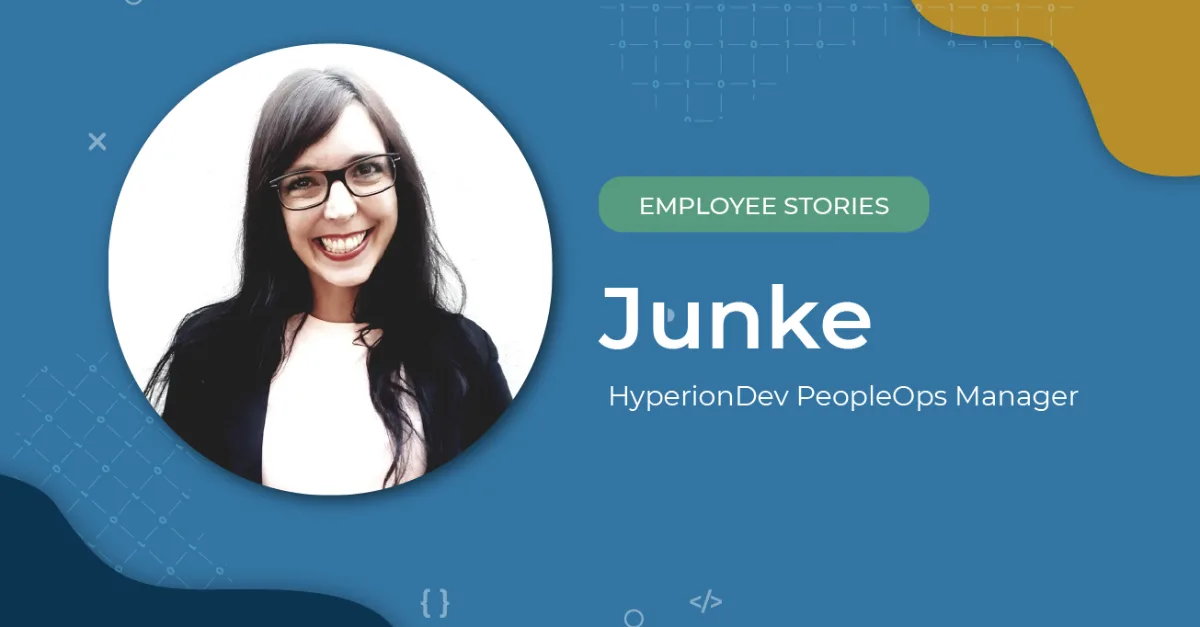
HyperionDev employee stories: Junke Schoeman
This HyperionDev employee story explores the background and role of our PeopleOps Manager, Junke Schoeman. With over a decade of human resources experience, Junke empowers our teams to work at their best by making sure they have what they need, and by keeping our organisation ticking along smoothly. We asked her a few questions.
A company, team, or bootcamp can’t be the best if it’s not working smoothly. Work stress, job equipment, dispute resolution, and help resolving issues – these issues are all just as critical to your team being an A-team as them being hard-working, diligent, or experts in their field.
That’s where PeopleOps manager Junke Schoeman comes in. Her over a decade of experience in human resources, as well as her tireless work connecting, smoothing, and empowering our teams, is an integral part of what helps our bootcamps claim the title of leading tech education provider in Southern Africa.
Whether it’s hiring to fill roles, organising team training and events, resolving disputes and issues, or making sure everyone has what they need to work (or the innumerable other daily tasks she does), Junke is a key figure in making HyperionDev tick as smoothly as it does.
We asked her some questions about what it’s like to work at HyperionDev, what her roles and responsibilities are, and how she got to this point in her professional career.
What do you enjoy most about working with HyperionDev?
Our super dynamic team is definitely one of our biggest assets as a business, and it is such a pleasure to work with every single person in the company. It’s also great to work with such a diverse group of people: our team is very diverse and is a true representation of South African society. I also really enjoy being able to get involved in projects beyond the scope of my normal duties. The variety keeps things interesting and challenging.
What’s the heart and soul of your role?
My role is to support the business to deliver people-related processes, to ensure we have a workplace that is fair and compliant with labour laws and to promote employee wellness. I do what I do, because I’m passionate about creating a positive workplace culture, helping employees with their professional development and resolving labour issues.
What motivates you to come in (log on) in the mornings?
Often not knowing what the day will hold – it keeps me on my toes.
Tell us a bit about your professional development as a HyperionDev employee
I’ve been in my current role since January 2020 and have been exposed to many new projects and initiatives during this time. I think this exposure has really helped me to improve my project management skills, and has allowed me to develop my professional skill set in areas of human resources which I have not previously been exposed to. One of our core values as a business is Progress Always, and from personal experience I can say that this is certainly something we’re constantly doing.
How do you ensure that you keep yourself upskilled & knowledgeable in your field of expertise?
I’m part of a bigger HR network where we’re constantly keeping each other updated in terms of outcomes of labour court matters, where we can debate and ask questions and provide general support to each other. It’s been fantastic to be part of a bigger group of like-minded professionals and where we’re all able to learn from one another. I also follow a number of HR blogs and have done a few crash courses to ensure I stay on top of trends.
Which of HyperionDev’s core values resonates with you most & why?
People Forward. I think this is an obvious one for the PeopleOps Manager. Like Richard Branson said, “If you take good care of your employees, they will take good care of your customers”, and this is a win-win situation for everyone.
What’s a fond memory you have of working at the company?
There are so many, it’s hard to narrow one down. We’ve worked hard together but we’ve also had a lot of fun together. My fondest memories are definitely all of the times when the entire team has been together.
How is HyperionDev different from other places you’ve worked?
I come from a very corporate environment where the wheel tended to turn very slowly. It has been a breath of fresh air to work in an environment where you’re not held hostage by red tape. In our environment you can affect positive change very quickly, you have the freedom to try new things and to make some mistakes along the way.
What makes you feel PROUD to be a HyperionDev employee?
It’s great working for a company whose mission I believe in. We offer a great product and are making a real social impact.
At HyperionDev, we’re always looking for talented professionals to join our team. Whether you’re a specialist in project management, a gifted developer, or someone who can code and is passionate about tech education, there’s a place for you in our diverse and international team. As a HyperionDev employee, you’ll enjoy more than just fulfilling and challenging work with a fast-growing, internationally scaling start-up – we provide medical insurance, extensive remote working allowances, a generous leave policy, and real avenues for career growth, experimentation, and promotion.
Do you think you could be our next star HyperionDev employee? Visit our career page to see all our available positions and apply to join our team today!

Career Advice
Lolontle Moatshe: How to stay motivated as a part-time developer
Doing developer work, and staying motivated to keep developing your career and technical skills can be hard, especially when deadlines are tight and code needs writing. HyperionDev alumnus Lolontle Moatshe shares his fresh perspective on staying motivated in your coding education and career.
Staying motivated as a part-time developer is a difficult thing. Your motivation to continue to learn coding comes and goes, especially when the daily challenges of modern life get in the way. Managing your time, passion, and love for the art of coding is what will get you through the tough times when your code does not compile, or when you get errors you have never seen before. Here are my tips to new developers who are looking for ways to make consistent progress in their journeys of learning to code.
1. Every little bit counts
Making time to learn coding while balancing a full-time job, your family responsibilities, your social-life, or other aspects of modern life is not an easy task. I found it tremendously useful to examine my timetable to see where I could fit in coding, and taking every small window of opportunity I could to practice. This could be, for example, making time to code whenever you have a break:during your lunch break, while waiting for your pasta to finish boiling, or even while waiting for the kettle to boil. Just get it done when you can, even if it is coding for a short amount of time, as often as you can. That is how you make real and consistent progress in learning to code: you make it a priority.
2. Side projects make perfect
I believe that side projects and side hustles are key to helping you move to the next step in your career. These projects are a good way to find out what you really like and what you are passionate about, and they allow you to practice creating a real project (as well as solve the real problems that every project inevitably throws at you).
3. The critical importance of goal-setting (and the cycle of success)
I cannot emphasise enough how important it is to set daily, weekly, and monthly goals that will keep you on a long-term learning track. Working towards these goals doesn’t just keep you learning, however: I found that each new success and benchmark I reached kept me motivated and determined to keep on coding. What helped me stay determined to succeed is that as I got better at coding, my love for it grew more and more, and ended up being something that I became passionate about.. However, I would advise that you try not to overwhelm yourself with a huge amount of work the next day, if you did not achieve your goals the day before. This “playing catch up” doesn’t usually work: usually it stresses you out more, and sets you back even further. Just pick up where you left off and keep moving forward.
Also, remember to make your daily goals realistic. Try not to get yourself down by trying to code 8 hours one day and not being able to achieve it because you never had 8 hours to spare to begin with.
4. Use resources and join communities!
Don’t be afraid to ask for help or use online resources to solve a problem – it’s not “cheating”. One of the resources I used frequently while learning to code is Stack Overflow. I used this to gain a deeper understanding of what my runtime errors were and how to fix them, with detailed explanations from expert developers who have solved that problem themselves.. Another resource is Geeks for Geeks. This site was very useful for understanding fundamental programming topics, which are explained using examples in many different programming languages. Finally, one of the most important resources I used was the HyperionDev Discord server. It is a great resource because you’ve got access to all the personal coding mentors as well as past and present students. Everyone on the server knows what you are going through, and you are able to discuss questions and topics that are giving you a hard time. It’s also a great support system as well, if you’re having issues with coding.
In short, I really believe that the key to making consistent progress in learning to code is a mixture of consistency, good time management, and passion. These three things will get you far on your journey of learning to code. Just keep practising and soon enough you will see results.
Are you interested in sharing your thoughts, knowledge, or experiences in coding on our blog? We want to hear from you, and share your perspective with our students, alumni, and audience. If you’d like to write something for us, just let us know by filling in this form here.
Our specialised 1-on-1 mentor-led coding bootcamps will help you to learn practical tech skills in web development, data science, or software engineering. With our industry-aligned curriculum, focus on practical, hands-on programming, and consistent mentor guidance with expert code review, you’ll become job-ready for your life-changing tech career in less than 6 months. Best of all, our bootcamps can be taken online or part-time to suit your schedule.
Apply for your coding bootcamp here, or contact an Admissions consultant to discover your personalised plan to study at HyperionDev.
Student Success Stories
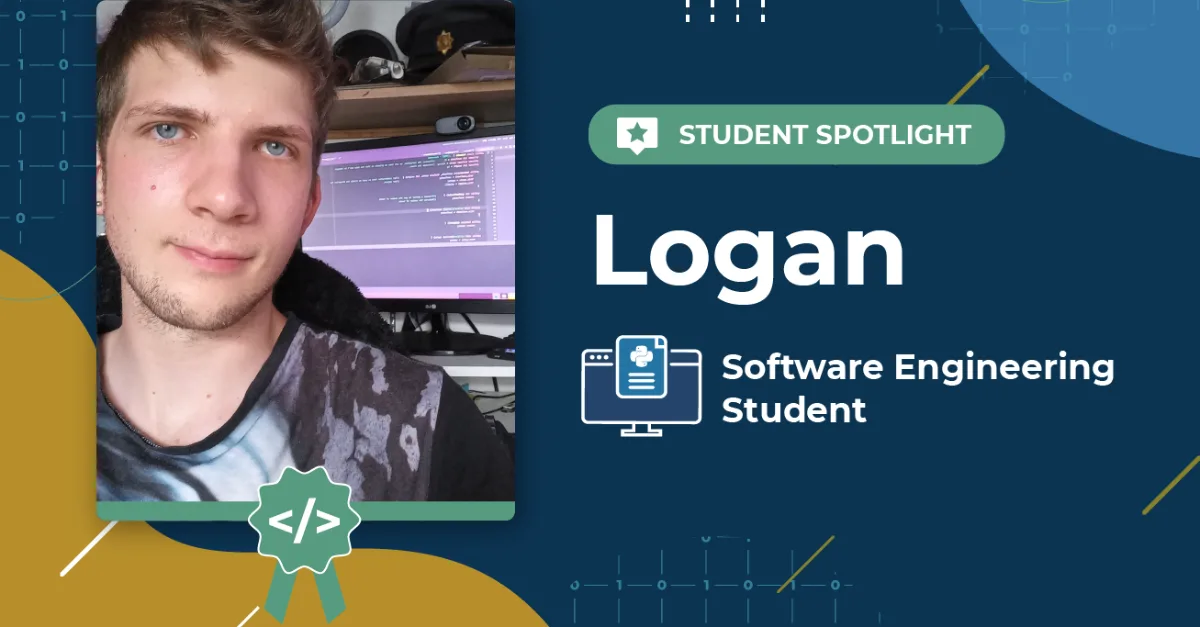
Student Spotlight: Logan Meadows – Software Engineer
In this HyperionDev student spotlight, we asked a few questions to Software Engineer bootcamp student Logan Meadows, who is learning the job-ready tech skills that will let him pursue his passion for tech education.
Ever since his teen years tinkering with Minecraft servers, 20-year-old Logan Meadows has always had a passion for programming. However, it was only later in life, while he was working as an IT technician, that he decided to pursue his passion and develop his tech skills further, with the practical, job-ready skills taught in the HyperionDev Software Engineer bootcamp. In this HyperionDev student spotlight, we asked Logan a few questions about his experiences on the bootcamp so far, why he signed up for a bootcamp, and what his plans for the future are.
Why did you decide to join your HyperionDev Software Engineer bootcamp?
“I’ve had a passion for programming since I was 14. I discovered Minecraft servers and how I could create amazing new add-ons that no other server had by programming. However, my issue was that no matter how hard I had tried, I struggled to learn Java by myself – even after taking multiple online courses. After I matriculated in 2019 I knew my true passion was in programming. So after my gap year, I joined HyperionDev in hopes of finally understanding the depths of programming, and after 2 months of non-stop hard work, I can finally say I’ve started getting the skills I’ve dreamed of having for years.”
What were you doing before your Software Engineer bootcamp?
“I did a lot of volunteer work as an IT technician for the medical department at Wits University. My main job there was setting up computer labs during the lockdown period, as well as assisting both students and academic staff with all the computer issues they had. This took my love for tech and education and put them together into a perfect first job.”
What do you most enjoy about your bootcamp?
“The thing I love the most about the course is the way it approaches education. In every task we do there is always a problem you have to figure out and solve. The reason I love this is that I’m not just being spoon-fed documents and then thinking I’ve learnt something when I haven’t. The tasks we get really show me how much I’ve learnt and understood, and have really reinforced all the things I’ve learnt . They’ve truly helped me get to the point I’m at today.”
What excites you about the future of programming?
“Everything! I love seeing how programming has had such an impact on the world. Programming and tech are improving and changing the world massively, and knowing that I could be part of these massive breakthroughs excites me more than I can express.”
Could you comment on what it’s like having a mentor during the HyperionDev program?
“I can’t really comment much on it other than marking, seeing as I’ve never actually needed to have a call with the mentors. However, based on the reviews I’ve gotten of my coding submissions, they’ve been great. I’ve always had speedily reviews and my feedback has been able to help me improve certain sections of my code.”
How are you experiencing the code review process?
“The code review really takes my coding to a new level. It feels very professional – just like it’s done in the industry.”
What app (or website) would you have loved being involved in as a coder – and why?
“I actually have a huge goal to one day work as a developer for Discord, because it’s an app I am always using. I’d also really love to be able to contribute to one of the few social media applications that I actually use – that would also be an amazing job.”
What is your advice for people thinking about coding as a career?
“My advice is something I don’t think many say: if the only reason you’re looking at a coding career is that ‘I can quickly change my job and make lots of money’, then this is not the path for you. However, if you really have an interest in how programming works, how applications are made, and so on, I highly suggest joining the bootcamp. It’s been really insightful and has really boosted my confidence and abilities in programming.”
What kind of dev work do you dream of doing in the future?
“My current goal is actually to become a mentor for HyperionDev. A job that would combine my two biggest loves: teaching and programming. I can tell it’s something I love because since Day One on my coding bootcamp I’ve actively been helping other students on the discord (including getting into calls with other students) and the student forum and I can’t help but smile when a student just goes “ohhhhhh” when the thing I’ve helped them with clicks, or when they just say “thank you so much it means the world to me.” So during my entire time at HyperionDev, I’ve been working hard and aiming high to hopefully become a mentor after I graduate.”
If you want to make a fresh career start, follow your coding passion for software engineering, or learn essential tech skills to secure the future of your current job, our coding bootcamps are your perfect fit. HyperionDev offers online bootcamps in Full Stack Web Development, Data Science or Software Engineering, with no previous coding experience or even a Matric required to sign up.
All of our bootcamps are available full-time or part-time to suit your schedule, and with our dedicated campuses in Johannesburg and Cape Town, there’s a bootcamp for every learning style and preference.
Apply for our next bootcamp cohort at www.hyperiondev.com.
Student Success Stories
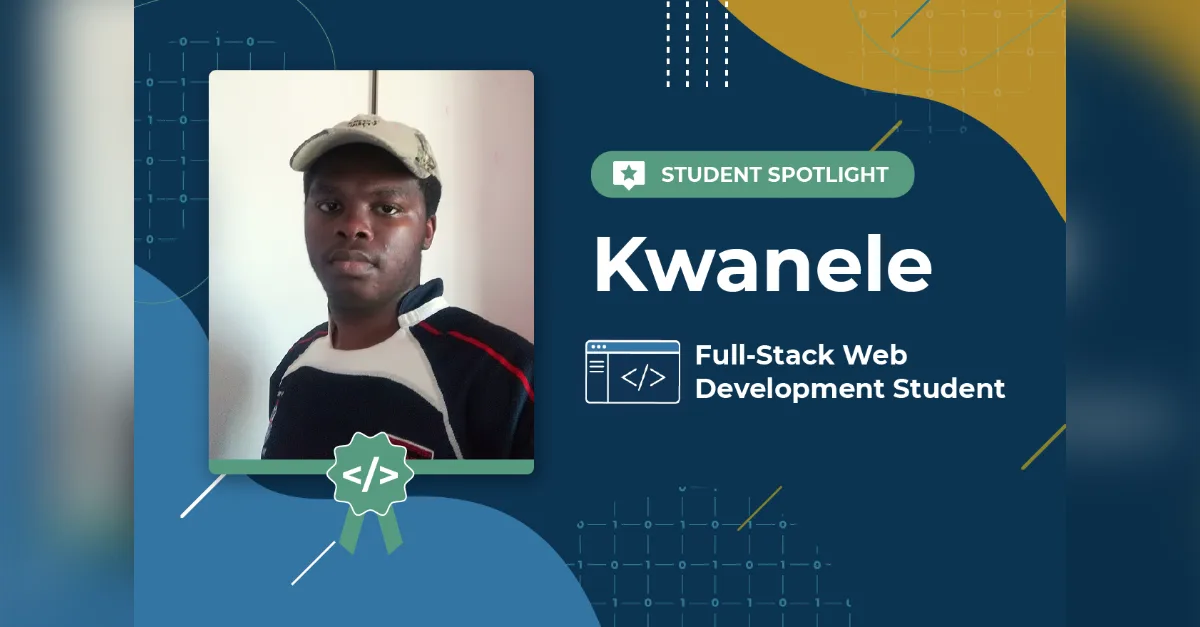
Student Spotlight: Kwanele Ndenze – Full Stack Developer
In this student spotlight, we introduce you to Full Stack Web Developer bootcamp student Kwanele Ndenze, who recently won a bursary to learn to code at HyperionDev. Already hard at work on his web development bootcamp, he hopes to learn skills that will unlock his full career potential, and allow him to be his own boss
Kwanele Ndenze knew that he wanted to learn to code. While looking for jobs that would bring him a bright future, Kwanele realised that essential tech skills would be at the heart of not just the best jobs vacancies he found, but of every job of the future. Now, thanks to a bursary that we created for new students, Kwanele has been able to join a HyperionDev Full Stack Web Developer bootcamp, and is learning the full stack and web development skills to become a professional developer.
“I want to work in a stimulating job. earning an excellent salary, and perhaps working remotely from home, where I’m my own boss and I work the hours I want to work. I joined this coding bootcamp to upskill myself so I can increase my chances of securing an internship as a developer. I believe that tech will become critical in everything: inventions like The Internet of Things will be the new norm, and developers will be employable forever.”
The 24-year-old from Bloemfontein recently started his Full Stack Web Developer bootcamp, and has been hard at work learning beginner and advanced techniques in full stack development in his online, full-time course. Thanks to HyperionDev’s bootcamp design and focus on accessibility and openness, Kwanele is making good progress on his bootcamp.
“I love the fact that I’m able to do my tasks at my own pace. I’m working hard: I’ve been able to complete all my coding tasks by myself. The code reviewing process has been very supportive, because I know if I’m on the right or wrong track.”
Our bootcamps are designed to accommodate people who have never had any coding experience – in fact, around 73% of our graduates have had little to no coding experience before joining us.
They’re also open to anyone, of any age and any educational background – no matric required.
According to our 2020 Student Snapshot report:
- 27.8% of HyperionDev students had only their Matric when they started
- Over 50% of students have not been educated past university
- 76.2% of all students have little to no coding experience
Find out more about our bootcamps’ newcomer-friendly, accessible design, and the thousands of students we help learn to code in our 2020 Student Snapshot, available for download here.
If you’re interested in learning to code, or want to upgrade or secure your career with essential tech skills, our bootcamps are the perfect starting point. They’re beginner friendly, accessible, and open – they require no previous coding experience. HyperionDev offers online bootcamps in Full Stack Web Development, Data Science or Software Engineering, or on our modern campuses in Cape Town or Johannesburg. Our beginner-friendly course structure and close mentor support ensure you have the support you need to make consistent progress toward graduating as a job-ready developer.
Apply now by clicking here – it takes just minutes to register.

News & Announcements
March 11, 2021
Introducing HyperionDev’s new Graduate Program
To stand the best chance in the industry, you need a rich network, fantastic portfolio and CV, and help in cultivating new opportunities.
When you’re learning to code and starting your new tech career, knowing how to program is only half the battle. We understand better than anyone else the challenges that new developers face when entering the tech space for the first time – that’s why our newly launched HyperionDev Graduate Program adds a deeper, more refined level of career development support to help new graduates as they prepare enter the working world.
This new program is an overhaul of our post-bootcamp careers support, and has been designed to help graduates cultivate their industry networks, find new job opportunities, and maximise their candidacy for job opportunities.
“The graduate program is an opportunity for graduates to develop a refreshed career mindset,” says Amena Hayat, HyperionDev’s Career Services Manager. “It equips them with both technical and practical career development skills that they will need to enter the job market. Embarking on this journey alongside a dedicated career services team ensures that they are supported throughout their journey to start a new career.”
The HyperionDev Graduate Program is provided free of charge to all HyperionDev students, and it includes three levels of focused career development. Let’s take a look at what it helps you with.
Level 1 – Technical Career Readiness
This level of development is all about building up the graduate’s skills, portfolio, and career readiness to its full potential. To help you build a strong foundation to enter your job seeking phase, this level of support focuses on building up your technical and professional eligibility through in-depth coaching and career readiness reviews.
“Ensuring that our graduates are equipped with career support that understands the current job market and the future of work is at the core of our graduate program,” says Amena. “We’ve designed the core of Level 1 support to ensure that the graduates we send into the market are confident, interview-savvy, and prepared for the world of work that awaits them.”
Level 1 includes:
- Career development learning webinars,
- Career consultation sessions,
- Full CV review and assistance,
- Assistance with creating and fine-tuning your portfolio,
- LinkedIn professional profile review,
- Interview coaching & mock interview sessions,
- Assignment of technical reading material.
This is our most critical part of the career development support process, and it requires you to pass an end-of-level review before moving on to the next level.
Level 2 – Alumni Networking
Once you are deemed technically ready to enter the job market, you’ll get the opportunity to join the Alumni network. The Alumni network is a group of graduates who can guide and support you in networking and finding the right job opportunities.
“The current job market is competitive and can take a lot out of a new graduate who is excited to start working and using their new skills, but is finding it difficult to find a job,” says Amena. “Creating a sense of community creates a healthy space for our graduates to continue being motivated in their job search and to share job search experiences with colleagues who are going through their job searches too.”
During level 2 of the HyperionDev Graduate Program, you’ll receive a range of support tasks and assistance that will help you to discover, enter, and grow the professional networks that will be critical to your job success.
With its focus on networking, Level 2 includes:
- Membership to the HyperionDev alumni network,
- Collaborative exercises with other alumni,
- Invitation to meet-ups with industry experts and affiliate alumni,
- The chance to ‘pay it forward’ by contributing to the community through your own alumni & community projects, presentations, or events.
“‘Paying it forward’ during the grad program doesn’t just allow our graduates to add a notable piece of experience to their CV’s,” says Amena. “It also helps them develop a sense of camaraderie and connection between newly graduated alumni and current students who want to join the alumni network, make new connections, and find career opportunities.”
Level 3 – Introduction to the Industry
This final level of the Hyperiondev Graduate Program builds on to the networking development of level 2, but with a greater emphasis on job seeking, professional networking, and cultivating new career opportunities.
“I often share the common notion that ‘what you know‘ gets you into the room, but ‘who you know’ gets you a seat at the table’,” says Amena. “This has proven to be true in many professional situations and the best way to bolster this power of personal connection is through active networking. Networking is vital to career growth: it allows graduates to build long-term relationships and develops their professional reputation.”
During level 3, you’ll get the final booster you need for your career development, through a range of rich networking and connection-building activities, including:
- Memberships to the HyperionDev Affiliate alumni network
- Membership to the exclusive LinkedIn HyperionDev networking group
- Introduction to our hiring partners
- Invitation to external networking meetup events
- The opportunity to get involved in the wider community of developers.
This new HyperionDev Graduate Program is just a part of our online and on-site coding bootcamps’ focus on creating job-ready developers who can find high-paying, rewarding careers in months rather than years.
Our coding bootcamps do more than just teach job-ready, industry-aligned practical skills in full stack web development, software engineering, and data science; we also help students maximise their chances at entering the professional tech space, through career development, practical skills refinements, and networking opportunities.
To learn these essential tech skills, and get your kick-start into the tech industry, simply click here to register for your bootcamp. All of our bootcamps are accessible and meet your schedule, with part-time, full-time, online, and on-campus structures to fit your personal, educational, and career goals.
If you’re a current student and haven’t yet received your career development assistance, opt-in for the Graduate program by clicking here.

Career Advice
Connor Gladwin: Dealing with Rejection as a Self-Taught Dev
HyperionDev alumnus, Connor Gladwin, weighs in on how he deals with rejection as a self-taught, junior web developer.
Being faced with rejection while searching for a job can feel like the end of the world. Unfortunately it is inevitable and unavoidable, regardless of how qualified or experienced you are. HyperionDev alumnus, Connor Gladwin, weighs in on how he deals with rejection as a self-taught, junior web developer. This article was originally published by Connor here.
The field of software engineering and web development is one of the few in which a person can join, and even thrive, with only self-taught knowledge. There is no shortage of success stories to prove that this is true. But even though there are these success stories, the sad reality is that there are far more where failure is a constant.
When asking those that have succeeded how they did it, the most common thread is that it’s a numbers game, throw enough at the wall and something is bound to stick, another is that they were able to get the ear of a dev or hiring manager at a certain company and that was their way of getting their foot in the door. I’m not trying to dismiss these, or deny that they are viable ways of getting into the industry, but they are far harder than they’re made out to be.
For most who are in a position similar to mine, rejection is a common occurrence. We’ve played the numbers game, we’ve spoken to recruiters and other devs, but the prevailing answer at the end of the day is this: “You don’t have the level of experience that we’re looking for.”
This line of reasoning becomes a vicious circle of “I don’t have enough experience to get a job but I need experience to get a job but I don’t have enough experience to get a job etc…”. And so, the rejection continues. This rejection comes in another form, which is no answer whatsoever, you send through your CV in eloquent and well thought out email and after weeks of waiting nothing comes back. This, in my opinion, is the worst.
The rejection hurts. The resulting headspace is one of a deep demotivation and reconsideration whether all of the time and effort you’ve sunk into learning this new craft was worth it. If you’re worth it.
I can only speak for myself here, but I have applied for, through the most popular job search platforms available to me, over 100 jobs, and I have managed to get two positive responses: a phone screen and a tech interview. Both unsuccessful because I was too junior.
The way I personally handle these feelings, and motivate myself to keep going is this, a single sentence: “I’m better than this”. In the grand scheme of things this is just a tiny blip on the timeline that is my career, and I will overcome it.
I remind myself of the success stories, and of my love of creating things, because no matter what, I still sit down and write code and keep learning whenever I have the time to. And you should too.
Another way to keep yourself up is to learn something new, find a new technology that excites you and build something. You can even go as far as starting to contribute to an open source project. Even if it’s something that the market isn’t looking for in a candidate, do it for yourself.
Never stop looking for opportunities, because you only lose if you stop playing the game.
Are you a current student or alumni interested in writing for us? Enquire here.

Student Success Stories
Student Success Story: Sonny – from Sales Consultant to Solutions Architect
Within weeks of his HyperionDev Software Engineer bootcamp, Sonny Dube went from Sales Consultant to Solutions Architect for a banking group.
Working in retail is a tough, often unglamorous job – especially during a lockdown, where customers start spending less with each new month of lockdown belt-tightening. For Johannesburg-based Sales Consultant Sonny Dube, it was a temporary stepping stone to what he had always wanted to do: software engineering. He knew that companies relied on tech to keep their businesses competitive, and that learning the skills they needed were the best road to a brighter future and more fulfilling career. So he decided to enrol in a HyperionDev Software Engineer bootcamp.
“I was a Sales Consultant at an iStore in Sandton, and I’d been working in retail for about 3 years. I decided to take the bootcamp because I’ve always had the passion to be in the technology sector. For me it was about upskilling. Originally I had a Computer Science background, but I didn’t finish up my degree. The HyperionDev course really boosted my existing skills.”
Sonny wanted to upskill, but didn’t have the luxury of going back to college full-time. He needed to work and pay his bills – and our Software Engineer bootcamp allowed him to do that with the freedom to learn programming skills in a structure that suited him.
“The bootcamp fitted quite well. The only thing that I had to do on my own side was just time management, but it fit quite perfectly with my needs at the time.”
The bootcamp didn’t just teach him in-demand programming skills, it also challenged him with things he’d never encountered before – a task he found exciting. Thanks to the close attention of his personal mentors and the frequent expert code review he received on his work, he always made steady progress towards graduating a job-ready software engineer.
“I really enjoyed the Java programming part of the course, but the bootcamp also had its share of challenges. For me it was the Data Science section . It was really challenging for me, and by the grace of God , I managed to complete it! It was really helpful and the mentors knew what they were doing. I was filled with knowledge and insight from them. Plus, the code reviewing process was great, because it showed me alternative ways of solving programming challenges.”
Now, just months after starting his first coding bootcamp tasks, Sonny has found a long-term position as a Junior Solutions Architect at ABSA group.
“My responsibilities are pretty widely varied. My main role is to manage the nodes that are running in the system, but day-to-day programming and systems maintenance is also really important. I’m learning every day, and using new techniques in languages such as OpenShift , Kubernetes, Docker, and Kibana . For now I’m still learning how to go about doing that – I’m still new in the field, but it’s exciting to learn so much new stuff, like how containers help with developing and deploying applications. The bootcamp really helped me in finding this job, because the Bootcamp qualification was valid and the skills that I learnt were in demand.”
Sonny’s journey from selling handsets and phones to being a professional developer is something that fills him with excitement, and he readily recommends that anyone thinking of learning to code and uplifting their future and career go for it.
“It is the greatest decision that you will ever make . Software is slowly eating up the world , and the demand for software developers will forever be high. So I would advise people who want to code to actually take the chance and become software developers . It is really a rewarding career. And when you’re learning to code , never give up and always ask for help . Learning from other people as well , will make you a better coder!”
Software engineering is one of the largest, fast-growing, and highest in-demand fields in the world right now. With millions of people coming online every day, and thousands of businesses across the world relying on software and computer systems to keep their operations afloat, demand has never been higher for talented developers. If you’re looking to potentially double your salary and open up career opportunities that could take you overseas, we recommend you learn to code on our online and on-site coding bootcamps in Software Engineering, Data Science, and Full Stack Web Development.
Click here to find out how our coding bootcamps will take you from beginner coder to job-ready developer in as little as three months.
News & Announcements
February 26, 2021
HyperionDev employee stories: Mitso Qalaba
This HyperionDev employee story explores the background and responsibilities of our new Front-end Developer, Mitso Qalaba. Mitso brings nearly a decade of development experience to our team, and keeps our systems, website, and bootcamps running smoothly. We asked her a few questions.
Our bootcamps rely on more than just amazing mentors, up-to-date educational material, and expert code review to help students graduate as job-ready developers. They also need a stable online learning platform, a responsive and functioning website, and reliable internal systems. Our development team is a crucial part of what makes our affordable bootcamps so accessible – and the latest member to join this critical team is Mitso Qalaba.
Mitso is a talented Front-end Web Developer with nearly a decade in professional web development. Tasked with keeping our website looking and working great, turning designs, copy, and wireframes into working sites, and making consistent improvements to our student portal, Mitso has her hands full in making sure our websites are visually appealing, easy to use and load optimally.. This is a critical part of our mission to close the growing global tech skills gap.
We asked her some questions about what it’s like to work at HyperionDev, what her roles and responsibilities are, and how she got to this point in her professional career.
What do you enjoy most about being a HyperionDev employee?
I love working in a small, young collaborative and reliable team of engineers that are flexible to pick frequently changing tasks and quick to jump to resolving bugs. What’s more, Hyperiondev is a diverse and inclusive company, whose leadership comprises many people across the gender and race spectrum. It’s a truly optimistic outlook in the SA tech space in general. I also think HyperionDev is a great place to be because it’s constantly growing. It has a great product that is helping to solve an enormous burden in the country’s skills shortage, The company continually reevaluates itself, and isn’t afraid to change and adopt new ways of working based on the changing business and education landscape.
What’s the heart and soul of your role at HyperionDev?
The core of my role is front end engineering builds and maintaining our software features for the different business projects such as the hyperiondev.com website, the student dashboard, and so on. I work with HTML, django templates and views, Sass and Javascript. Applying a component base approach on the frontend using BEM, SMACSS methodology as well as introducing javascript framework such as node, webpack and Next.js to our technology stack. For example, I maintain our main HyperionDev bootcamp offerings website components, collaborate with the designer to translate visual design to code from Figma and update the various pages with new information or page layouts, create new web pages for campaigns (like our yearly Black Friday specials), and much more. Finally, I assist with the integration of third-party platforms like Intercom and Sendgrid into our platform as well as website optimisations. Of course, all of this comes with the typical version control (we use gitlab), hosting (ssh to a server and deploying the codebase), performance (we use Chrome Lighthouse, Google Analytics, pagespeed insights) and testing processes on Sentry, checking AWS instances and uptime robot status, and the other usual tasks that every developer is familiar with.
What motivates you to come in or log on in the mornings?
Being able to lead and finish off campaigns, and working in a collaborative environment with smart and hard-working stakeholders from almost every team at HyperionDev. I also love our missions of giving people an alternative way to study, up skill and become job-ready developers.
Tell us a bit about your professional development as a HyperionDev employee.
Being at HyperionDev is itself a continuous learning and development experience. I’ve only just scratched the surface of the product components we use, and there are so many moving parts that I discover new software components and new challenges to solve almost every day.
How do you ensure that you keep yourself upskilled & knowledgeable in your field of expertise?
Practice and self-driven learning. I read technology news in the industry from platforms such as Smashing magazine, JS Weekly, CSS Weekly, and various industry blogs I follow, and I pick up new techniques and insights from the learning material I receive on community-based Slack groups, like ZATech. I also keep myself busy with mini projects during weekends and holidays.
Which of HyperionDev’s 4 core values resonates with you most & why
People First! Ideas come organically with people; and solutions, ideas, and hard work come organically when people are able to speak, are listened to, treated well, included, and valued.
What’s a fond memory you have of working at the company?
When Gary and the engineering team threw a surprise birthday party! They all put up cool celebration props at our big team meeting, and this happened just as I had started working here. It was an amazing gesture. I also have countless fond memories of working with the various departments and outside team members on projects over the last few months. It’s been such a pleasure to work with them all. Also, meeting new people and forming new acquaintances – it’s been a pleasure to do so.
How is HyperionDev different from other places you’ve worked?
HyperionDev’s inclusivity and diversity give it an advantage in forming strong teams. The other thing is that HyperionDev cares. It doesn’t just want to close the skills tech gap; it cares a lot about getting more people studying and learning code. It’s also exciting that HyperionDev chases so many different avenues to fund students to enrol with us, for example our partnership with entrepreneur and DJ Black Coffee to create a scholarship fund and spread the word about coding to SA youth.
What makes you feel PROUD to work for HyperionDev?
Hyperiondev works with students with little to no tech skills. This is a hard thing to do and being successful at doing so is an incredible accomplishment. It makes me proud to know that this is something the company is able to do on a daily basis.
At HyperionDev, we’re always looking for talented professionals to join our team. Whether you’re a specialist in project management, a gifted developer, or someone who can code and is passionate about tech education, there’s a place for you in our diverse and international team. As a HyperionDev employee, you’ll enjoy more than just fulfilling and challenging work with a fast-growing, internationally scaling start-up – we provide medical insurance, extensive remote working allowances, a generous leave policy, and real avenues for career growth, experimentation, and promotion.
Do you think you could be our next star HyperionDev employee? Visit our career page to see all our available positions and apply to join our team today!
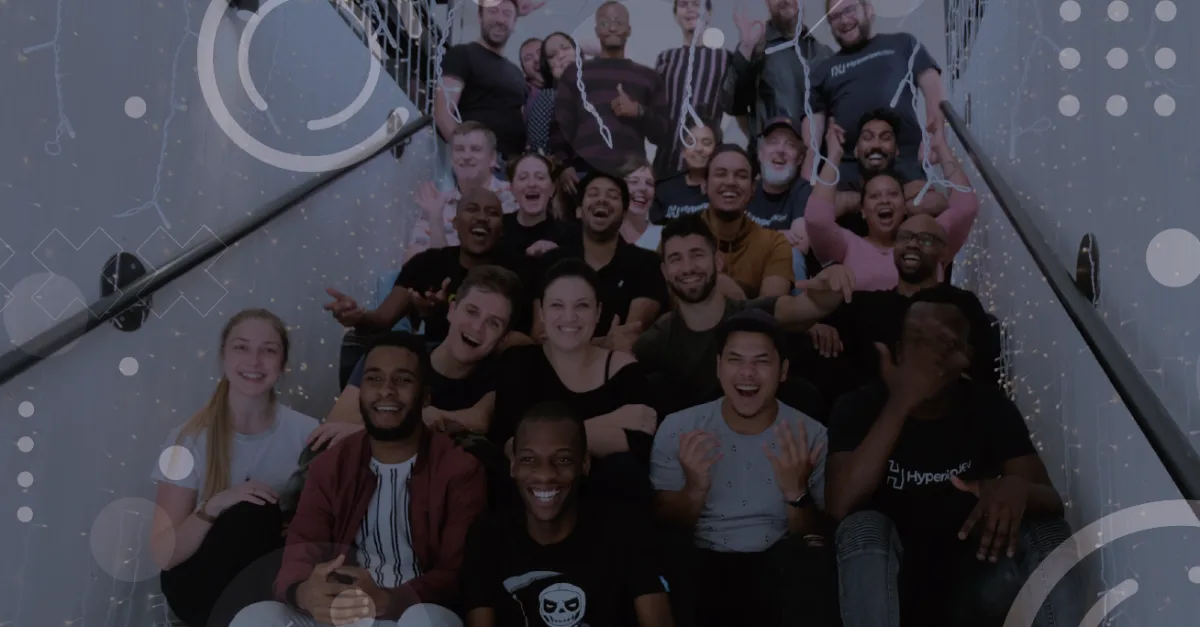
Career Advice
6 Key Considerations When Choosing an Employer
When you’re choosing where to work, it can be downright overwhelming. However, picking your next employer doesn’t have to be hard. With 6 key pieces of job seeking advice, our latest careers blog will help you to pick the best employer for your needs, wants, and career aspirations.
Our society has reached a time where employers can differ like night and day. We have suits versus flip flops, bean bags versus office chairs, a two minute walk to our home desk versus an hour commute to an office, clouds versus papers, innovation versus tradition, and just about everything in between. Navigating the world of increasingly varying employers can feel like entering a new country with a malfunctioning GPS.
Considering these six key factors when choosing an employer can help with getting you on the right road:
Company Values and Mission
When it comes to an employer’s values and mission, there are two main things to consider: how do they align to your own values and what you care about, and how actively does the employer incorporate them into their day-to-day operations. There’s a significant difference in work satisfaction and intrinsic motivation when the work you do is something you feel truly matters. Similarly, when an employer’s values align with your own, you’re more likely to feel comfortable with the actions and way in which actions are taken by the employer.
Most employers will have a mission and a set of values but whether they are kept front of mind when decisions are made, is not a given. Understanding how values are incorporated into day-to-day operations is key.
As an example, here are are our values and some of the ways we keep them front of mind:
- Purpose First: Our mission to close the global tech skills gap by enabling education that is an accessible alternative to traditional university degrees, remains at the heart of everything we do. We know that what we do is bigger than just us, and this means that decisions are always in line with our mission – even when that makes our work more difficult.
- Progress Always: Our teams work collaboratively to ensure that we have new ideas from various team members, in different departments, contributing to our plans. This allows us to constantly learn from each other and come up with innovative ideas.
- Problem Solving: When we hire, we ensure that each new team member has an entrepreneurial spirit and a growth mindset. We always want to remain a team that can hit a wall and find an interesting way to get around it.
- People Forward: Our team members all have growth plans so that we as a company, understand their aspirations and how we can assist (this is explained a bit more below).
Company Culture
This is probably one of the most important for your day-to-day happiness. We spend more than 50% of our waking hours a week at work. Among others, whether the environment is high pressure and fast-paced or relaxed and slow, casual or formal, remote-friendly and flexible or office-centred and strict on hours, is vital. The types of people you will work with contribute so much to culture as well. It’s not always easy to understand this through a hiring process, these are good questions to ask to probe this: How diverse is the team, how social is the team, what type of personality would fit into the team and how do teams collaborate? A company culture fit is a very personal thing, one type of culture can be perfect for one person and horrible for the next. Our team for example, likes collaborating, being social and lighthearted, and relaxed but we’re also fast-paced, high energy, and flexible and agile in our approach.
Growth Prospects
Where are you in your career? When you’re someone who still wants to develop, challenge yourself and grow in seniority, you need to consider how an employer will support that. The key things to understand is how fast the company is growing, what they consider a specific role’s progression path is (and whether there even is a more senior role to grow towards), how they would support your personal development and whether current employees have been promoted, and how fast. As mentioned we use personal growth plans to ensure our team is always allowed opportunities to develop. Every team member has a plan that they discuss with their line managers outlining where they want to grow and how we, as a company, can contribute to that growth and allow exposure to new challenges.
Stability
When you work in tech, chances are you’re going to be attracted to a start-up at some point in your career. Start-ups offer amazing opportunities that are rarely found in established, corporate type companies. The drawback however is that financial stability is often not as guaranteed. Always, but especially when considering a start-up employer, you need to make sure you understand where the company is financially, how stable their funding is and how established their product/service is in the market. Researching the rate of growth can be a key indicator that a specific start-up is financially stable – or not. Although HyperionDev probably shouldn’t call ourselves a start-up anymore, indicators of our stability would include aspects like Facebook and Google funding, our recent Crowdfunding campaign that raised almost £2 million, more than double our initial funding and the fact that we’ve achieved >600% in the past two years.
Management
Every person is different, some of us want constant support, some of us want to focus on our own, some of us want to run with ideas and get feedback later, and some of us want to check in with someone every step of the way. The management style of an employer tends to be consistent throughout their company, however it’s worthwhile asking about the management style of who would be your direct line manager to ensure it would be an environment you flourish in.
Remuneration
At the end of the day, the vast majority of us work to sustain our lives. Considering remuneration is a given but the same total cost to company from one company to another can be structured in vastly different ways. It’s important to consider how this is structured, and what non-financial benefits are being offered along with it. HyperionDev for example offers generous leave to allow our employees the time they need outside of work as well as medical benefits, and flexible hours and remote working options, among others. These are important to consider because the amount of income tax you pay on benefits often differ from when you need to pay for these after your salary deductions are made. Having flexibility with your hours means you often don’t need to dip into your annual leave to see to day-to-day admin and necessary appointments and additional annual leave – of course – means you get more time to yourself.
Choosing an employer, within a society of such vastly different approaches to work, can be difficult to navigate. But focusing on key factors like these can help make some sense of the journey you’ll be starting when you walk into the office or log in on that first day, and where it will take you. If the examples of our company culture above, sound like something you’d flourish in we’d love to meet you!
You can see our available jobs here, and you can join our Talent Community to keep in touch, should there not be a suitable role right now.
Student Success Stories
Student Success story: Craigen – from Waiter to Java developer
Shortly after graduating, Craigen found a job as full-time software developer – all thanks to the skills he learnt on his bootcamp.
Craigen Chitate worked as a waiter in Johannesburg, but wanted something more. He knew that hard work and determination were half the battle; he also needed the right set of in-demand tech skills to find work and pursue a career with greater opportunities and a more comfortable lifestyle. He registered for a HyperionDev part-time online Software Engineer bootcamp. Only months after starting his first coding bootcamp, he has landed a job as a contracted software engineer, working in Java development for the ABSA group.
“I wanted a drastic career change and better pay. I always had the desire to work with computers: the idea of being a programmer fascinated me, and coding itself is something that I love. The reason I applied for a bootcamp was to better understand programming. I knew that if I wanted to work for companies as a programmer, I would have to develop the skills they were looking for.”
Craigen signed up for a part-time online coding bootcamp, which allowed him to strike a healthy balance between working and developing the skills he needed for his career as a Software Engineer.
“The Software Engineer bootcamp helped me to balance work and learning as I needed the cash for my day-to-day needs and studying times were flexible. It also allowed me to understand code.”
We get hundreds of students from different walks of life on our coding bootcamps, but many of them are just like Craig: they have work responsibilities and need a study program that is as flexible as it is accessible. Our bootcamps are specifically designed to accommodate these needs, and are designed to suit your educational and career goals.
Learning essential skills, with personalised 1-on-1 mentorship
Of course, learning a brand new set of skills in complicated programming languages isn’t easy. That’s why Craigen’s mentor was there every step of the way, to ensure that he was making consistent progress towards graduating with job-ready programming skills.
“It was a great opportunity for me, having mentors. They helped me whenever I got lost. The code reviewing process was also great, because it showed me alternative ways of solving programming challenges. The code review really took my coding to a new level.”
From newcomer to paid professional developer in just months
Soon after graduating from his coding bootcamp, Craigen was offered a job working as a Java developer for the ABSA group. In this contract position, Craigen puts the skills he learnt on his bootcamp to use every day.
“My new responsibilities are analysing code as well as implementing new ideas and programming in Java language. Let’s just say it’s very different from my old waitering job!”
Now a professional software developer, Craigen hopes to grow in his new career, become a better programmer, and help other young programmers on their journeys in learning to code.
“My advice, if you’re thinking about learning to code, is simple: go for it! Coding is the future, and it allows you to find out who you really are.”
Do you want to learn essential skills for a future-proof career? Software engineering is one of the fastest-growing fields in the world, and with millions of businesses and people coming online every day, talented developers are in high demand.
Our bootcamps teach you vital computer programming skills that give you a competitive edge in the job market, whether you’re looking for greater job security, better upward mobility, or even a new career. You’ll learn job-ready, practical skills in web development, software engineering, or data science with your own personal mentor and receive frequent expert review of the code you write. Best of all, our bootcamps fit your schedule, so that you can learn part-time from your couch, or full-time on our modern campuses to suit your needs.
It’s all a part of getting you ready to find your new career in tech in less than 6 months. Find out more about our affordable, accessible coding bootcamps by clicking here.

News & Announcements
February 17, 2021
Own a piece of HyperionDev’s future | 2021 Crowdfund
Now is your chance to be a part of what we know is the tech education model for the future, and join us on our next phase of growth as we expand into international markets and build technology that enables humans to support one another in tech education in more sophisticated ways.
Now is your chance to be a part of what we know is the tech education model for the future, and join us on our next phase of growth as we expand into international markets and build technology that enables humans to support one another in tech education in more sophisticated ways.
We’re offering the public a time-limited opportunity to join leading investors in our mission of closing the tech skills gap in a way that recognises the potential of both people and tech in the online education space.
See Transcript:
You’ve heard the old joke. Teaching a developer is like growing mushrooms. You keep them in the dark and feed them bullsh*t.
There’s just one problem: developers are not mushrooms.
They’re not sheep. They’re not bots. They’re not bricks in the wall.
They’re people.
At HyperionDev we believe that the future of humans is technology, and that the future of technology is humans.
Since 2012 we’ve been teaching humans – not mushrooms – to code, using personal mentorship that’s affordable, accessible, and gives people what they need: real tech skills they can use to find work.
“Hi, my name is Riaz Moola. I’m the founder and CEO at HyperionDev. I started this company to find an effective way to teach people coding using a combination of humans that teach online and technology. Today we’ve grown into one of the largest providers of tech education, not just in Africa and the UK, but the world. We’re opening up this opportunity to let you invest in us and be a part of our journey.
Edtech is one of the world’s fastest growing industries, as millions of people and businesses come online and depend on technology to work, live, and stay connected. This growth in internet and tech use is so rapid that there’s a critical shortage of people with the skills to use them. To put it plainly, there’s a growing tech skills gap across the world, which we’re filling, one student at a time.
Our personally mentored bootcamps teach people the essential tech skills that our world and every industry rely on. They’re an affordable and accessible alternative to expensive and time-consuming traditional education, putting critical skills into the hands of people who need them in months, not years, and without a mountain of student debt.
Coding can be confusing. It’s even harder, when online portals and bot-led bootcamps reject your code for… er, we’re not sure why.
That’s where our beginner-friendly human mentorship model comes in.
A human mentor understands the challenges that new programmers face, they can explain confusing concepts, and they won’t reject your code because it doesn’t match a pre-programmed answer.
Our 1-on-1 mentorship has led to incredible student retention and lower dropout rates, so that students have a better chance at graduating as intended. The way we do things has helped thousands of students graduate as professional developers.
Our model is even designed for low-bandwidth or limited-access students, so that people can learn to code anywhere, even when reliable internet isn’t a thing. That makes our bootcamps easy to launch and scale anywhere in the world.
“With HyperionDev, your investment is based on real, natural growth and a track record of intercontinental recognition and financial backing.”
You want numbers? We’ve got numbers.
Since HyperionDev began, we have over a hundred thousand student registrations. We’ve received $300k in seed funding from Google and Facebook. What’s more, our revenue has grown 640% in just two years and we’ve hit profitability in 2020. Plus, we have achieved 254% active user growth during lockdown in the same year.
Our bootcamps aren’t just successful and financially sustainable. They’re also popular and well received by the people we teach.
This success is all thanks to our growing team of 72 passionate educators and experts.
“I’m Nico, Head of Education here at HyperionDev. My team is responsible for making sure that our content and teaching approaches are relevant, dynamic and aligned to industry standards. Our boot camps are a trusted way to get into the tech industry and we make sure that we teach our students only the tech skills that they really need in order to succeed.”
“Hey there, I’m Nizaam. I’m part of the mentorship team. I personally mentor students on how to code. Coding can be a very difficult and frustrating venture if you’ve never done it before. Everyone has a different way of learning – that’s why we’re here to help tailor this experience to everyone’s needs. It’s a human touch that just works.”
“I’m Julia and I’m part of the Career Services team at HyperionDev. For us, it’s not just about teaching students how to code – it’s so much more than that. We help them with support as mock interview training, career coaching and planning sessions – all with the aim of helping to connect them with the right opportunities or internships in the tech space.”
“Our mission is to close the growing tech skills gap. We’d like to offer you the opportunity to join leading investors to help HyperionDev achieve this goal.”
“We just started off as a community of students helping other students to achieve their goals and graduate with a computer science degree. Today we support more students in becoming developers than nearly all of these original computer science departments combined and have grown to one of the largest tech education providers, not just the UK and Africa, but the world.”
“We’ve grown revenue nearly 700% in just two years and reached profitability, proving that our model is scalable. Be a part of the next phase of our growth as we expand into international markets and build technology that enables humans to scale education.
Click here to see our pitch.

News & Announcements
January 27, 2021
Invest in HyperionDev & Support Social Impact in Tech
The HyperionDev investment campaign is your chance to be a part of HyperionDev’s profitable education model, and uplift hundreds of students with millions of rands in coding scholarships as we scale.
Today, I am very excited to announce that everyone will be able to own a piece of HyperionDev, thanks to our new public social impact investment campaign. For as little as R200 (£10), you’ll be able to invest in HyperionDev and own an equity stake in our education model, which has enjoyed phenomenal success in the past few years (and especially during the global lockdown).
With this investment, you’ll be a part of our next planned phase of growth, as we expand into international markets. What’s more, your investment will help to uplift hundreds of students, with up to R3.5 million (£175k) in full coding scholarships. That’s our commitment to helping our community as we bring our world-class online bootcamps to thousands more students.
Invest in HyperionDev as we take our edtech success to the global stage
The past few months have been challenging for many industries and businesses, but our success proves that we’re a pivotal part of the online education revolution that’s happening. Anyone who has watched schools, universities, and businesses deal with the global lockdown can see how integral online services and education have become to everything we do. HyperionDev has a tremendous market advantage, with our affordable, low-bandwidth, accessible bootcamps. As of January 2021, HyperionDev has grown more than 660%, surpassed 100,000 student registrations, and tripled user activity during lockdown. This year, we’ll help over 4,000 people graduate with job-ready tech skills. Through all this, we reached profitability – and all from less than R15 million (£550,000) in raised capital.
When you invest in HyperionDev, you’ll officially become a HyperionDev stakeholder. That means you’ll be a part of our growth as we scale our bootcamps into international markets, and bring our accessible, beginner-friendly online coding education to thousands of students across the globe.
Your investment will help us to positively impact thousands of lives with scholarships and tech skills
Your investment won’t just help us to grow – it’ll also help hundreds of deserving students and communities across South Africa and the world. This social impact investment campaign will award up to R 3.5 million in coding scholarships to deserving students, who have already started sharing their stories about how they’ll change the world with this opportunity. The more we raise through the crowdfund, the more we will be able to give back. We’ve already received dozens of inspiring and amazing entries from students looking to change the world and their lives through a coding bootcamp. You can see them on our scholarship page and see the lives that you’ll be directly changing forever when you invest in HyperionDev.
Our early investor allocation is filling up fast, but you can still get exclusive priority access
As part of our early investment drive, we allocated 1,000 investment spots to early interest parties. The response to this opportunity has been overwhelming, with over 600 registered investors signing up in just days after the initial outreach was started.
It’s not too late for you to be a part of this early allocation. Sign up now before these spots fill up, to be first in line.
I can’t wait for you to join us on our next phase of exciting growth.
Invest in HyperionDev now for as little as R200 (£10) at https://www.hyperiondev.com/invest/
*Investments of this nature carry risks to your capital. Please Invest Aware.
Software Engineering
Software Engineering: What It Is & What Engineers Do
Software engineering dominates the rankings for highest paying jobs in the world – and with thousands of companies going online and remote, demand for these professionals is skyrocketing. In this post we take a look at what a software engineer does and how you can join this fast-growing field.
We’ve all seen the headlines and reports: if you’re looking for a career space that pays extremely high salaries and will always have a job for you, software engineering is the industry for you. With billions of people on the internet and using technology to connect, work, and relax, and hundreds of thousands of businesses going online and remote to adapt to the changing economic landscape, software engineers are in high demand and paid very well for what they do.
But what is software engineering, what does a software engineer do, what is the industry really like, and how does one get into the field? We will be answering all of those questions below.
What does a software engineer do?
Software engineers use programming languages, databases, servers, frameworks, and other technologies to turn an idea into an app, a game, a robot, an operating system, and many, many other useful computer products.

- The typical work routine of a software engineer is quite varied, but it usually involves most of the following:
- Interacting with clients or users to figure out what they want from a piece of software or product
- Designing, developing, and testing the software that their client wants.
- Creating documentation of the system and how it works so that the clients and users can understand it and make better use of it
- Keeping the system or software running in good order, with regular maintenance, testing, and updates.
In general, a software engineer figures out what problem their client is having, figures out a solution to it, and works with their team to create a piece of software that solves that problem (with additional work to keep that software usable and stable in the long term).
How do you start out in becoming a software engineer?
Every software engineer starts with the basics: they develop their fundamental skills in programming by learning one or more computer programming languages.
There are thousands to choose from, with the most popular ones being widely recognised languages like Python, Java, Ruby, Go, Swift, C#, and many more, which power your computer’s operating system and programs, the games you play, the apps you use, and the device you’re reading this on.
Traditionally, you’d need to study computer science for years at a university to get into the software engineering field. This can be a challenge because of the barriers of entry, high cost, and time commitment of a university degree; however, in recent years an increasing amount of focus is being placed on your abilities rather than your qualifications.
More and more, companies are realising that skilled software engineers don’t need to have gone to university for fours years, leaving online courses and coding bootcamps as accessible, affordable ways to learn the skills you need to build a portfolio of software that’ll get you hired.
What skills does a software engineer need?
To be a good software engineer, you should be methodological, able to solve problems in efficient ways, and able to think logically and abstractly.
Here’s a short list of the skills you should have as a software engineer:
- Problem solving – A curiosity for understanding a problem and trying to fix it through trial and error is a must-have for programmers.
- A quick learner – The ability to grasp structure and logic quickly makes learning new techniques and ways to solve difficult problems that much easier
- An attitude of constant self-learning – A good programmer needs to remain aware of the latest coding practices and tools to ensure their code is lean, efficient, and up-to-date
- High-level of abstraction – figuring out a problem is tough, but finding ways to turn your solution into written code that works is a whole other challenge. A good programmer should be able to imagine real-world implementations of his solution.
- Objectivity and refinement – there’s no space to get touchy about the programs you write, as they can always be improved. A good programmer knows there are always quicker, faster, more efficient, less resource-hungry ways of writing a piece of code.
What is the career path for a software engineer?
Once you’ve developed a good baseline of professional software engineer skills, there are three major branches of software engineering that you can pursue.

- Software developer/programmer – this is the person at the heart of the software. A software developer writes all the code that makes the system of software work. WIthout them, there would be no working application or piece of software.

- Systems engineers – systems engineers still write code and create software applications, but take on a more strategic role. They develop code and do hands-on programming work, but the majority of their efforts are spent on how to design, integrate, and manage complex systems over their life cycles.

- Developer operations (DevOps) – this is perhaps the most strategic, high-level kind of software engineer work you can pursue. It is the most strategic of the three, and it combines IT, software engineering, and business management to decide what kinds of technology a business needs and the process for implementing those technologies.
Of course, being a software engineer has nearly limited potential outside of just these three broad roles, simply because of how in-demand developer skills have become. The fundamental skills that you learn as a software engineer translate to almost any tech job, even if that organisation uses different programming languages and technology stacks.
Perhaps the best thing about software engineering is that you can work anywhere in the world, since nearly every country in the world is hungry for skilled developers. In the past decade, almost every country has added developer jobs to their critical skills lists, which will get you a priority visa to work in their country.
How much does a software engineer earn?
According to PayScale, the average annual salary of a software engineer is R366,532.
This pay level depends on various factors, such as the number of years you’ve spent on the job. Here’s what PayScale says the average data scientist’s pay looks like over the course of their career:
- Beginner pay: R178,000 – R483,000 per year
- Middle pay: R337,000 – R912,000 per year
- Senior pay: R397,000 – R1,000,000+ per year

In fact, software engineering routinely dominates the global rankings for best and highest-paying careers, with skilled senior developers taking home six- or even seven-figure salaries for the work they do.
Software engineering is, simply put, one of the best careers to get into, for a variety of reasons:
- It pays extremely well.
- It has low barriers for entry, as anyone can learn to code.
- Software engineering relies on learning skills that are in greater demand than ever before, and which are highly transferable.
- It has a high potential for international and fully-remote work, meaning you can work for any company in the world without ever having to commute again.
Are you thinking about becoming a software developer so that you can benefit from amazing salaries, fulfilling work, incredible career opportunities at home and overseas, and some of the best job security around? Our specialised 1-on-1 mentor-led coding bootcamps will help you to learn practical software development skills to build a portfolio of real software apps and become job-ready for your new career in tech in months and not years. Best of all, they can be taken online or part-time to suit your schedule, so that you can fit a tech future into your spare time.
Sign up for our free trial, or contact an admissions consultant to discover your personalised plan.
You can also check out our list of other essential tech bootcamps in web development and data science if you think that software engineering is not for you.
Web Development
What is full stack web development, and what does a full stack developer do?
This blog covers what a full stack web developer does, what their work and salary looks like, and the skills you need to become one yourself.
In 2020, more businesses and companies went online and remote than any time in human history. Brick and mortar stores became online shops; boardroom meetings became online syncs; and even things as simple as buying groceries were increasingly done online. Behind all of this digital activity are full stack web developers. These tech professionals keep us connected and working in a world that relies on information communication technologies to run.
But what is a full stack web developer, what do they do on an average day, how much do they earn, and how do you become one? We will answer all these questions and more below.
What does a full stack web developer do?
When you look at any website or webpage, what you’re actually looking at is two different things: the visual appearance and visible parts of the website (known as the ‘front end’), and the code behind everything which makes those buttons, webpages, and websites work (known as the ‘back end’). A full stack developer works across both of these ends using the “full stack” of technologies that front and back end engineers each use, to make sure that websites don’t just look great, but that they work perfectly too.
The general daily responsibilities of a full stack web developer include some of the following:
- Work with clients to determine their needs from a website, in terms of both appearance and functionality.
- Plan and design ways to implement those client needs
- Write back end code in languages like Python, Java, PHP, Ruby, and so on, to make the website function.
- Write front end code in HTML, CSS and Javascript to make the site look great.
- Frequently test the code you’ve written to validate the web application against the client’s need
- Monitor, maintain, and make frequent improvements or fixes to the web applications so that it runs smoothly.
How do you start out in becoming a full stack web developer?
Most full stack web developers start by building basic skills in a widely used web development programming language, such as HTML, CSS, or Javascript, and then learn additional technology stacks and languages to enrich their websites with increasing layers of sophistication and functionality. For example, they might learn to use SQL to allow their websites to create and manage databases, they could use React to make their website even more user-friendly, or they could use Angular to create an incredibly mobile-friendly version of their website.

In many cases, a full stack web developer will learn a large ‘stack’ of technologies that allow them to work on both the front and back ends of a website, such as the MERN stack (MongoDB, Expres, Angular.js, and Node.js).
What is the career path of a full stack web developer ?
The power of a full stack developer lies in their rich and varied skill set. It allows them to fulfil a number of roles across the web development space, and even outside it, as they utilise techniques and languages that translate across tech specialisations.

- Front End Developer – These developers are responsible for everything you see on the ‘front end’ of a website, such as its design, layout, buttons, and appearance. This job isn’t just about being a developer, it’s also about having an eye for design, UX, UI, and aesthetic, and brand strategy all in one.

- Back End Developer – In this specialisation, your work is dedicated to making sure the websites buttons, tabs, and boxes actually work. This is done by using code, database management, and a range of tech stacks to ensure there’s functional code on the ‘back end’ of a website to make the ‘front end’ do what it says on its buttons, menus, and headings.
- Full Stack Developer – these developers work with the ‘full stack’ of technologies that are used on the front end and the back end of a website. They create the visual layouts and frames of the website, and also turn them into working web applications that communicate with the user and server, store information, and work properly. Full stack development is both of the above jobs rolled into one.
A full stack developer could even branch out into developer operations, systems engineering for online services, or other tech spaces that involve online and internet communications.
What skills does a full stack web developer need?
Full stack web developers need the basic skills that every other programmer or developer needs to learn, grow, and succeed, but there are a few skills that are particular to this niche.
- An eye for design – an ugly website is a website no one visits. Knowing how to code a webpage is one thing, but knowing how to lay that page out, which colours to use, and how to organise the pages and domains is extremely valuable to the development process.
- Organisation – this isn’t just for laying out a website in a way that’s nice to look at and well constructed. The multi-faceted nature of full stack development (which covers both the front and back end of a website) means you have to manage both ends at one, and make them work with one another.
- Abstract thinking – it’s not just about creating a pretty website that works, but about turning great ideas and creativity into lines of real, working code.
- A rich, multi-faceted skill set – design, copywriting, photography, videography, UI/UX, and programming are all vital in creating beautiful and functional websites that stand out from the rest. The more feathers in your cap the better.
How much does a full stack web developer earn?
According to PayScale, the average annual salary of a software engineer is R299,855.
This pay level depends on various factors, such as the number of years you’ve spent on the job. Here’s what PayScale says the average full stack web developer ’s pay looks like over the course of their career:
- Entry level: R48,000 – R265,000 per year
- Mid career: R84,000 – R487,000 per year
- Experienced: R153,000 – R760,000 per year
- Senior pay: R409,000 – R1,000,000+ per year

That’s just in South Africa; across the world, Web Developer salaries are on the rise. According to Indeed, in the United States web developers can expect to make an average annual salary of $76,271.
The pay for a full stack web developer is difficult to exactly state, because of the wide range of responsibilities that the role entails, but in general it follows a simple rule: the more you do, the better you earn. A full stack developer who does vital work across large sections of the front and back end of a website earns significantly more than a developer who specialises in a single stream.
Best of all, a full stack developer’s skills are highly transferable, making it easy to jump from one specialisation into another (or even into new branches of developer work).
Our 1-on-1 mentored coding bootcamps make becoming a professional full stack web developer faster, cheaper, and more accessible. Not only are our bootcamps affordable, accessible, and made to fit your schedule and learning goals, they’re also completely open to everyone, even if they have no matric certificate or previous coding experience.
And if you’re not sure that full stack web development is for you, can take a look at our other coding bootcamps that teach the skills needed to find jobs in the high paying data science and software engineering fields.
Start your rewarding career in tech today by signing up for your free trial or by chatting to one our friendly and expert admissions consultants.

Career Advice
4 things you can do with basic coding right now
Coding can seem confusing and complicated. However, with just a few bare essentials of basic coding, there’s actually a lot of cool, powerful, and useful things you can do right now. We share 4 tricks of basic coding here.
Programming. Just the word triggers images of floating VR graphics, walls of Matrix-style cascading symbols, and tech wizards talking in jargon to one another. However, coding is a lot more straightforward than it seems: at its heart, it’s just using language-based instructions to get a computer to do things for you – and with just a bit of the coding basics, there’s a lot of really useful things you can do right now.
Here are 4 things you can do with basic coding, right now, with just the bare essentials of programming knowledge.
1. Unlock the true power of spreadsheets
It might not sound like coding, but this is actually one of the most common ways that ‘coding’ is used. The commands you type into your spreadsheet – whether it’s to add two cells together, or find the average of a range of data points – are essentially coding instructions because they follow a very specific syntax and structure.
These instructions – such as =sum(), =prod(), and =concatenate() – are called functions, and they’re almost identical to the functions you’d see written in programming languages like Python and Java. If you’ve ever added two values together in a spreadsheet, you were using a programming function.
Perhaps the coolest thing you can do with these functions is translate your spreadsheets automatically by using Google’s integrated translator:
With just this one line of ‘code’, you can automatically update your spreadsheet to be accessible in 109 different languages!
That’s not where it stops, either:, you can write hundreds of different functions into your cells to do all kinds of work, from displaying information in a certain way, checking the validity of cell entries, or even creating trackable links for your analytics programs.
This basic coding is what makes spreadsheets such powerful business tools: it saves time, effort, and money.
2. Simplify content formatting
The built-in interface used by some blogging platforms or website content management interfaces often leave a lot to be desired.
In some cases, your default blog or website settings – like font, style, and font size – clash with the formatting of the website content or blog text you’re copy-pasting from your word processor. This clash can result in inconsistencies in text size, font, layout, or even the intended look and feel of the content. For example, if you want your stanzas in a piece of poetry, or your image captions and headers for an image, to look a particular way, this issue might ruin that layout.
Luckily, you can avoid this with a bit of basic coding with in-line HTML.
By using HTML’s tags to structure your content, like <div> for divisions of the page, <h1> for main headings, <h2> for smaller headings, <p> for paragraphs, and <br /> or /n for line breaks, you can force the platform to display your text in a particular structure – and that’s just the start. You can further define these tags with elements like style=“font-family:”, =“color”, and =“font-size:”, as well as hundreds of other tags to take precise control over how your blog post, poem, or web page appears to your hundreds of readers or clients.
3. Beat the news paywall
So you see an interesting article (or tempting bit of clickbait) on social media. You click it to read it – but just as the page loads, you see the article cut off after 50 words, with a big “PAY TO READ THIS ARTICLE” pop up.
However, you don’t actually have to click away disappointed you couldn’t read the piece, if you know some basic coding and what to look for.
By right-clicking the page and clicking “Inspect element”, you can see all the code that makes up the website. Once you see this code, there are two ways you can read the “hidden” news article.
One way is finding the actual banner or overlay that’s hiding the article you’re trying to read. By knowing how HTML elements are created, you can find the division where this blocker lives, and simply delete that block of code. The pop-up will vanish, uncovering the news you want to read. You can also do this by clicking the ‘click to inspect element’ button, and then click on the banner. This will highlight the code for you, making it easy to remove.
However, some developers know you can do this, so they make that pop-up part of the webpage – meaning if you delete it, you delete the article too. Luckily, you know what <div> and <p> tags are, so you can go looking through these sections to find the actual text of the article itself.
With basic coding knowledge, you start to find all kinds of useful tricks and tools like this.
4. Simplify life with Hyperlinks
What if I told you that hyperlinks can do more than just share website addresses?
By applying a bit of HTML know-how, you can make web pages easier to navigate, and even make one-click automated emails.
With basic coding knowledge of HTML, you can create anchor tags using <a href=“”>. By assigning a piece of text a unique id, you can easily take the reader to that particular spot.:
You can then send people to that exact bit of information by adding it with a # after the main website URL:
http://www.example.com/webpage.html#the-part-I-want-them-to-read
This is really useful for saving people time by taking them to the information they want, like a particular section of a wiki entry, or a particular part of a company’s lengthy terms and conditions page.
That’s not all: you can also use a hyperlink :mailto function to create one-click email responses for people (because it’s easier to get people to reply with a click than get them to write back a long response themselves). You can do this by using functions like ?subject= and %body= with the function for a new line, %0d.
For example, you can write this text in your email: “Click here to tell me you want to come to the party on Saturday”.
And then make that text into a hyperlink with the following ‘code’:
Just like that, you’ve saved everyone the hassle of writing out their own RSVP. This basic coding is a powerful way to automate email responses, and you can use it to account for all sorts of generic or frequent replies.
Of course, this is only scratching the surface of the great things you can do with code – and that’s where our mentor-led bootcamp design comes in. Knowing how to work with websites, software, and datasets has become essential in today’s online and remote economy – and our mentored bootcamps teach you these essential skills in a proven structure that suits your lifestyle, schedule, and career goals. With a free trial and our mentor-guided support, you’d be able to do so much more, including creating beautiful websites, complex data systems, or awesome computer programs from scratch. Our bootcamps are ideal for career professionals and school leavers alike: you can start coding right now, without any needs for previous programming experience or even a Matric!
If you’re curious about learning some basic coding, your best bet is one of our free trials, where you can master the fundamentals and try your hand at a few practical code exercises – no previous experience necessary! They’re perfect for you, whether you’re looking to get started in full stack web development, data science, or software engineering.
Best of all, you don’t need any previous coding experience or even your Matric to start, learn job-ready tech skills, and graduate to your tech career in just 3 to 6 months. Sign up for your free trial here.
Data Science
What is data science, and what does a data scientist do?
Data scientists unlock the research breakthroughs, profits, and truth hiding in the mountains of data our world and businesses generate. In this blog, we explore the rewarding career of a data scientist, how much it pays, the skills you need to become one, and how to get started.
Every day we create a mountain of data. Every time you use an app, send a message, watch a video, browse the internet, travel, or shop, you create information about yourself and the world you move in. To us, this is just unorganised, nonsensical records of what we ate, what we looked at, and what we brought; but to businesses, research centres, and policy makers, this information is a goldmine that’s the key to smoother operations, bigger breakthroughs, and higher profits.
A data scientist is the person digging into this mountain to find the gems that lead to better business operations, research breakthroughs, and profits. These professionals use a variety of tools and techniques to organise, manage, analyse, and understand Big Data and complex datasets; and their analyses and results are used to make business, research, or policy better.
In this blog, we’ll answer all your questions about data science, what data scientists do, what the career space is like, and how to start your career in this fast-growing industry.
What does a data scientist do?
A data scientist uses various tools, such as mathematics, statistics, and programming, to collate, manage, organise, and understand large quantities of data. They’ll analyse the data they collect, and present it in a way that’s accurate, useful, and comprehensible to their company, colleagues, and other people.
The average work tasks of a data scientist can be neatly summed up as follows:
- Collection – gathering the data they want to take a look at. This can be through experiments, research, surveys, or even taking pre-existing databases
- Organisation – much of the data that these researchers use has missing entries, incorrect data points, or needs to be changed somehow before they can interpret it. A data scientist will use the tools at his disposal to clean up and organise the data in a way that makes it easier to process and understand. ,
- Processing – this is the fun part. Data scientists will use software tools, statistics, maths, and analytical techniques to find interesting patterns and valuable insights in the data they’re looking at.
- Analysis & interpretation – complex statistical tables and spreadsheets full of numbers don’t mean much to a board of directors or room full lay people. Data scientists need to turn those hard numbers into comprehensible insights and visualisations that are digestible.
What skills does a data scientist need?
The work of a data scientist takes a level-headed, regimented person who has a love of numbers, among other crucial skills and attitudes. The best kinds of data scientists are problem solvers with a keen interest in discovering the source of problems, understanding them deeply, and solving them with innovative solutions and detailed insights.
A data scientist should be
- Organised – data scientists always need to clean up messy or incomplete data into formats that are easier to process, analyse, and understand
- Curious – at the top of a data scientist’s head should be inquisitiveness. A natural drive to discover why things are a certain way, what the causes of things are, and finding evidence-backed solutions are vital.
- Multi-skilled – Data scientists should be able to use a variety of tools, including statistics, mathematics, and data analysis and processing software, to do their work.
- Able to talk plainly – THe ability to understand what the data means and present this often complicated set of findings in a way that other people can understand is vital to a data scientist. The insights are not useful if they’re as confusing as the complex spreadsheet they came from.
- A learner – new tools and data processing techniques are coming out every year. A data scientist should always be open to new way who explores new avenues to understand new data in more meaningful ways
- Tech-savvy – Data processing can be complicated and time-consuming. A data scientist should know how best to use the programming, machine learning, and data processing tools available to them that make their job fast and efficient.
- Ethical – Data isn’t just about stats and numbers. There are human beings behind these datasets, and a good data scientist understands the ethics and morality of lawful collection and research practices.
What is the career path of a data scientist?
In general, to become a data scientist you would start out by slowly developing two vital skills: the ability to process and analyse data, and the ability to understand and present their findings. Data scientists typically start out their career by learning fundamental skills in programming languages and tools that are popular in data processing, such as Python, scikit-learn, NumPy, Matplotlib and pandas. This serves as the core skill for their daily work. They would also develop their skills in more advanced data processing techniques, such as data modeling, machine learning, and artificial intelligence.
Once you’ve learned to design data collection kits (such as surveys, polls, or other quantitative tools), you can follow one of three career paths:

- Data scientist – a generalist who uses a combination of maths, statistics, and programming to organise and understand data, and then use those understandings to promote certain strategies.

- Data engineer – a computer scientist or software engineer whose primary specialisation is processing data. A data engineer is an expert in using programming and tech tools to organise, collate, interpret and present data.

- Data analyst – a data expert who focuses on interpretation, examines large collections of data, and writes reports about what it all means for their business or research team. They discover and communicate useful trends, patterns, or secrets in data to help people and business.
Of course, data scientists aren’t just restricted to these job titles. As we’ve written about in the past, the work that data scientists do is seen across hundreds of industries, and is vital almost everywhere because of the value it creates through its analysis and findings.
How much does a data scientist earn?
According to PayScale, the average annual salary of a data scientist is R407,905.
This pay level depends on various factors, such as the number of years you’ve spent on the job. Here’s what PayScale says the average data scientist’s pay looks like over the course of their career:

- Beginner pay: R178,000 – R483,000 per year
- Middle pay: R337,000 – R912,000 per year
- Senior pay: R304,000 – R1,000,000+ per year
Data science is a very promising career space to be in, with a lot of cross-industry applications and freedom to choose between careers because of the universal value of data science.
Are you interested in learning how to use data science, algorithms, and machine learning to unlock huge profits, improve your business, or fast-track groundbreaking research? Our Data Scientist bootcamp teaches you everything you need to know to get started on seeing, managing, and using data for a wide range of applications. Start your career in data science by signing up for our free trial here, or by chatting to one of our expert admissions consultants.
Student Success Stories
Student spotlight: Monique van Zyl – Data Scientist bootcamp student
In this student spotlight, we asked a few questions to Data Scientist bootcamp student Monique van Zyl, and her journey through two of our HyperionDev coding bootcamps. She hoped our bootcamp would help her switch careers – what she didn’t know is that it would be the start of a newfound passion for programming.
In the past year, it has been made abundantly clear to all of us that tech skills are essential for growing your career and opening up new job opportunities. One person who quickly realised the importance of learning 21st-century tech skills was HyperionDev Data Scientist bootcamp student Monique van Zyl. With the ‘new normal’ of 2020 changing things on a daily basis, Monique knew that a rich and varied set of tech skills would be essential for having a competitive edge and career advantage in the New Year.
Monique first signed up for a HyperionDev Full Stack Web Developer bootcamp during lockdown, with the hopes of building a set of skills that would allow her to expand out of her career in Real Estate. In this bootcamp, she fell in love with programming, and decided to enrol in our Data Scientist bootcamp online part-time to build an expansive and multi-disciplinary tech skill set in a learning structure that fit her schedule. We asked Monique a few questions about her decision to start a coding bootcamp, her experiences on the bootcamp and how mentorship helped her to grow, and her plans for the future.
Why did you decide to join the HyperionDev Data Scientist bootcamp?
I just completed the Full Stack Web Developer Bootcamp during the national lockdown and decided to take the next step to learn more about Data Analytics to get a firmer understanding about Python and SQL.
What were you doing before you joined our Data Scientist bootcamp?
I worked in Real Estate and started the initial Full Stack Web Developer Course as part of a career change.
What do you most enjoy about your course?
Each coding task is like a puzzle you need to solve.
What excites you about the future of programming?
The impact coding has to improve our daily lives.
What was the support you got in your Data Scientist bootcamp like?
My mentors have been super supportive and available. What’s more, the code reviewing process is very supportive, because I then know I’m on the right or wrong track.
What app (or website) would you have loved being involved in as a coder, and why?
My dream would be part of a company such as Affectiva that works with emotive AI.
Is there anything else you’d like to add for people who are thinking about learning to code?
Learning how to code is not easy. You will want to compare yourself to those around you and every other programmer in the world. Forget about all the external comparisons and focus on why you learned how to code in the first place. This helps you to celebrate your wins and to power through the tough times. Also, don’t let age or social status prevent you from pursuing a career in coding.
Are you looking to secure your current career with skills every industry now relies on, or want the ability to change careers to a high-paying, fast-growing job in tech? Or maybe you’d like to discover a challenging, rewarding, and fulfilling new passion in programming and solving human problems with technology, just like Monique did?
Whatever your career ambitions and hopes are, our bootcamps are your ideal choice. Our in-depth and personalised coding bootcamps teach you to become a job-ready industry-grade programmer in just 3 to 12 months. Our bootcamps specialise in mentored, 1-on-1 learning that is designed to get you writing industry-standard code for real problems, so that you can join the tech industry without years of study or a mountain of student debt.
Our bootcamps can be taken online or on our campuses in Joburg and Cape Town, and full-time or part-time to fit your schedule. Best of all, they focus on job skills and practical learning so that you can do what professional programmers do, and have a portfolio of real coding projects you can use to land your first tech job.
News & Announcements
January 7, 2021
HyperionDev employee stories: Dayle Klinkhamer
This HyperionDev employee story shines a light on the newest member of our mentorship team: Dayle Klinkhamer. A graduate from HyperionDev’s software engineer bootcamp, Dayle’s familiarity with the program and fantastic work ethic help students overcome the challenge of learning to code and become job-ready developers.
Our bootcamps stand out because of the personal, expert mentorship that every student gets. Our mentors aren’t just better than bots at helping students to learn how to code; they also bring their personal experience and insights to help students understand why code is written a certain way, strengthen their coding skills, and learn industry-standard coding practices. More importantly, our mentors understand what it’s like to learn how to code as a total beginner. This experience helps them to guide new coders and present difficult concepts in easy-to-understand ways. In this HyperionDev employee story, we look at one of our newest team members, Dayle Kinkhamer, and his role in our mission-critical team of mentors.
Dayle Klinkhamer is the latest coding mentor to join our team, and he doesn’t just understand coding well – as a HyperionDev bootcamp graduate, he knows our bootcamps like the back of his hand. Mentors like Dayle make all the difference not just in our mission to close the growing global tech skills gap, but in being a friendly and helpful human face that helps people in their journey to learning to code and becoming job-ready developers.
What do you enjoy most about being a HyperionDev employee?
I am new to the company but was made to feel welcome instantly and I did not feel like I had to fight to be heard. Everyone seems to sit at an equal status level which is awesome!
What’s the heart and soul of your role at HyperionDev?
I want to use my skills I have learned in the tech space to help others in their journeys as I find this to be a rather fulfilling effort.
What motivates you to come in or log on in the mornings?
I know that I will have students waiting for me that need my assistance!
Tell us a bit about your professional development as a HyperionDev employee.
HyperionDev has offered me the opportunity to work for them as a full-time mentor while also giving me the chance to do additional courses allowing me to upskill while I work.
How do you ensure that you keep yourself upskilled & knowledgeable in your field of expertise?
I am fully immersed in the tech sphere and have been for as long as I can remember, it is easy to be in the know when you are passionate and surrounded by like minded people who are just as driven
Which of HyperionDev’s 4 core values resonates with you most & why?
I would have to say that the core value of ‘Problem Solving’ resonates with me the most. I have always had a curious mind and have always enjoyed a challenge and there is nothing quite like the thrill of that ‘A-ha!’ moment when you figured something out or you can see it working. It’s that, “wow look what I managed to do after all that struggling” feeling that makes it all worth it. So sharing that with others is amazing
What’s a fond memory you have of working at the company?
As I am new, I suppose it would have to be landing the job! However, I was also given the chance to take on a new project within the company shortly after joining.
What makes you feel PROUD to be a HyperionDev employee?
Every time I can see a student just grasped something new that I once struggled with.
At HyperionDev, we’re always looking for talented professionals to join our team. Whether you’re a specialist in project management, a gifted developer, or someone who can code and is passionate about tech education, there’s a place for you in our diverse and international team. As a HyperionDev employee, you’ll enjoy more than just fulfilling and challenging work with a fast-growing, internationally scaling start-up – we provide medical insurance, extensive remote working allowances, a generous leave policy, and real avenues for career growth, experimentation, and promotion.
Do you think you could be our next star HyperionDev employee? Visit our career page to see all our available positions and apply to join our team today!
Career Advice
How working professionals can finance their bootcamp
In this blog, we show you how easy it is to finance up to 100% of your bootcamp with our financing partner, Manati.
Getting a study loan can be a confusing mountain of paperwork, fine print, and legalese. However, with our latest financing partner Manati you can quickly and easily apply to get up to 100% of your bootcamp financed upfront. That means less time spent worrying about making your monthly tuition payments, budgeting this expense into your salary while you work, and more freedom to focus on what’s important: learning to code and developing practical, job-ready developer skills for your tech career.
Our funding partners are the ideal choice for working professionals who are looking to upskill or even launch into a new career in tech.
Here’s how financing with Manati works at HyperionDev.
How Manati loans and financing works
Manati is a simple and quick way of paying for your coding bootcamp at a highly advantageous interest rate.
Manati’s financing works in close conjunction with South African banks: they apply for financing on your behalf (or on behalf of your sponsor, for example your parents, family, employer, or other financial supporter), which gives them a highly regulated structure with great interest rates over other financing providers.
Based on your income and the other information you supply, Manati and the bank will structure a payment plan that best fits you. They’ll pay for your entire bootcamp upfront, so that you can study with peace of mind. Once you graduate, you can repay the tuition over a period of 10 months to a maximum of 5 years.
Best of all, your application for financing is quick and easy, and will be approved in around 7 working days.
What you need to apply for a Manati loan
To apply, simply choose your bootcamp and complete any necessary applications for your chosen study path. Once you’ve completed this process, you can apply for Manati funding through your payment dashboard, by clicking on the Manati partner icon on your bootcamp course page or by contacting any one of our admissions consultants.
To complete your application, you’ll need the following documents:
- A copy of your Identity Document and/or your sponsor’s Identity Document
- Proof of Residence for you or your sponsor
- Latest Payslip for you or your sponsor
- Latest 3-month bank statement for you or your sponsor
For more information on how Manati funding works and to see if you qualify, visit our funding page or you can speak to one of our Admissions consultants.
At HyperionDev, we understand the barriers and challenges that stand in the way of getting a world-class tech education. Since our grassroots origins as a mentor network, to our rise as southern Africa’s largest provider of tech education, we’ve actively worked to make an essential tech skills education affordable and accessible to all, with no need for hundreds of thousands of rands in tuition, years of study, previous coding experience, or even a matric.
If you’d like to explore your funding options with a person who cares about your access to a great coding education, please contact one of our admissions consultants. They’ll help you to navigate all your options when it comes to funding your coding bootcamp.
Still have questions?
Contact our Admissions Team, and a real person will get back to you.